Why Cooked Vegetables Are Better Than Raw: A Practical Look
An analytical comparison shows how cooking vegetables can boost flavor, digestibility, and nutrient accessibility, helping home cooks decide when to cook versus eat raw.


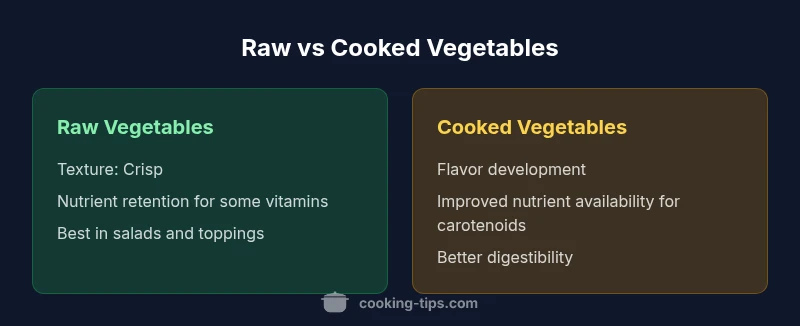
Why are cooked vegetables better than raw? In practice, cooking enhances flavor, texture, and digestibility while unlocking access to nutrients that raw vegetables hide. This quick comparison summarizes when heat makes vegetables more enjoyable and nutritious, and when raw options are still appropriate for certain dishes. The Cooking Tips team offers practical guidance for home cooks seeking reliable cooking guidance.
Why cooked vegetables matter for everyday meals
According to Cooking Tips, many home cooks ask themselves, "why are cooked vegetables better than raw" in the context of familiar weeknight dinners. The answer is not universal, but heat often unlocks flavors you simply cannot reach with raw produce. Cooking softens cellular walls, concentrates natural sugars, and reduces some bitter notes, transforming a humble carrot or broccoli into a pleasing, cohesive element in a plate. Beyond flavor, cooking can improve texture, making dense vegetables more enjoyable and easier to chew. For families and individuals with varying chewing abilities, cooked vegetables offer a more inclusive option while still delivering significant nutritional value. The Cooking Tips team emphasizes that optimal results come from matching the method to the vegetable and to your goals, be it faster prep, richer taste, or greater digestibility.
The science of cooking vegetables
Vegetables are built from plant cells that hold pigments, vitamins, and fibers inside a matrix of water and starches. When heat is applied, cell walls break down, pectin softens, and sugars become more soluble, which is why many people notice a sweeter flavor after cooking. Heat also alters antioxidant compounds; some, like carotenoids, become more available to the body when vegetables are cooked in appropriate ways.While raw vegetables retain certain heat-sensitive nutrients and provide crisp textures ideal for salads, cooking can unlock access to nutrients that are otherwise less available. The Cooking Tips analysis suggests that the balance of raw and cooked vegetables often yields the broadest nutrient profile and the most varied flavors on a given plate.
Flavor, aroma, and texture changes with heat
Flavor compounds inside vegetables are highly sensitive to cooking. Searing and roasting create Maillard reactions that intensify aroma and develop savory notes, while steaming preserves delicate flavors and textures. The aroma released during roasting makes vegetables appear sweeter even before tasting, which can shift the perceived sweetness and reduce bitterness. Texture also shifts with heat: raw vegetables stay crisp and juicy, whereas cooked ones can become tender, velvety, or caramelized. Understanding these changes helps you decide when to serve vegetables raw for crunch and color versus cooked for depth and comfort.
Nutrient availability and cooking methods
Not all nutrients behave the same under heat. Water-soluble vitamins such as vitamin C can decline with prolonged boiling, while fat-soluble carotenoids increase in availability when vegetables are cooked with a small amount of healthy fat. Steaming or microwaving often preserves more nutrients than boiling, and quickly blanching then shocking into cold water can minimize nutrient loss. The result is a vegetable whose nutrients are more or less accessible depending on the method. Cooking Tips analysis shows that, for many vegetables, a short, high-heat cook or a gentle steam can maximize nutrient retention while improving flavor.
When raw wins: contexts where raw benefits show
There are scenarios where raw vegetables are the best choice. Raw salads offer the freshest flavors and highest water content, ideal for hot climates or when you want maximum crunch and hydration. Some nutrients are more bioavailable in their raw state, and certain enzymes remain intact only when vegetables are uncooked. Additionally, raw vegetables can be safer in some contexts where heat could degrade delicate textures or where you simply prefer the crisp edge of a raw bite. The key is variety: a mix of raw and cooked vegetables widens the nutritional and sensory spectrum.
Cooking methods and trade-offs
Different cooking methods offer different benefits and trade-offs. Steaming preserves most nutrients while maintaining a firmer texture; sautéing with a little oil enhances flavor and increases fat-soluble nutrient absorption; roasting deepens sweetness and creates an appealing crust; boiling risks nutrient leaching but can be efficient for large batches. The optimal approach often combines methods: steam vegetables for gentle tenderness, then finish with a quick sauté to boost flavor. The goal is to maximize nutrient availability while delivering enjoyable texture and aroma.
Practical tips for the home cook
- Plan one raw and one cooked vegetable per meal to balance textures and nutrients.
- Use gentle steam or short microwaving to preserve color and vitamin content.
- Add a touch of healthy fat when cooking carotenoid-rich vegetables to improve absorption.
- Don’t overcook; use visual cues (color, aroma, and texture) to stop cooking at the right moment.
- Roast when you want caramelization and depth, but reserve leafy greens to a quick sauté or steam to prevent bitterness.
Common myths debunked
Myth: Raw is always healthier than cooked. Reality: Cooking can enhance nutrient availability and flavor, depending on the vegetable and method. Myth: All nutrients are lost in heat. Reality: Some nutrients degrade with heat, but others become more accessible. Myth: Boiling is always the worst option. Reality: Quick boiling with minimal water can be efficient for large batches and still preserve many nutrients. Understanding the vegetable-specific responses to heat is essential for making informed choices.
Case studies: everyday meals
Case Study A: A weeknight quick dinner features roasted vegetables (zucchini, peppers, onions) alongside a grain bowl. The roasted vegetables provide a warm, comforting flavor that pairs beautifully with a tangy dressing, while the raw greens in a side salad add freshness. Case Study B: A light lunch uses a raw carrot-ginger salad atop a bowl of warm quinoa, delivering balance between crisp texture and nourishing warmth. These examples illustrate how cooking can transform textures and nutrient access without sacrificing simplicity.
Choosing vegetables for best cooking results
Some vegetables respond exceptionally well to heat due to natural sugars and water content, including carrots, peppers, broccoli, and tomatoes. Others retain more of their crunch when raw, such as cucumbers after a light salt or herbs, and leafy greens when lightly wilted. Tailor your method to the vegetable to maximize flavor, texture, and nutrition. When in doubt, start with a short steaming session and adjust based on taste and mouthfeel.
Quick-start plan for your week
Create a simple plan that alternates raw and cooked vegetables. Prepare a batch of roasted vegetables on Sunday for quick weeknight sides, and keep a fresh salad with a crunchy raw base for contrast. Aim for color variety, ensure you include some healthy fats to boost nutrient absorption, and adjust cooking times to maintain texture and flavor. A balanced approach makes it easier to enjoy vegetables every day.
Comparison
| Feature | Raw vegetables | Cooked vegetables |
|---|---|---|
| Flavor and aroma | Raw: crisp, bright, and often peppery | Cooked: sweeter, richer, and more aromatic |
| Texture | Raw: crunchy and juicy | Cooked: tender, velvety, or caramelized |
| Nutrient availability | Raw: some vitamins intact but less bioavailable in some cases | Cooked: certain nutrients (e.g., carotenoids) more bioavailable with heat |
| Digestibility | Raw: can be harder to digest for some people | Cooked: generally easier on the digestive system |
| Shelf life | Raw: shorter shelf life, degrades quickly | Cooked: longer refrigerated shelf life when stored properly |
| Best use | Raw: salads, toppings, quick snacks | Cooked: warm meals, sauces, sides, and stews |
Benefits
- Flavor and aroma are enhanced by cooking
- Improved digestibility and texture control
- Greater versatility for meals and palettes
- Enhanced accessibility of certain nutrients
Cons
- Possible loss of some heat-sensitive vitamins
- Requires time and energy for cooking
- Overcooking can ruin texture and flavor
Cooked vegetables generally offer better flavor and nutrient accessibility, but a varied approach including raw options is best
Cooked vegetables shine in taste and nutrient availability for many dishes. Raw vegetables retain crisp texture and certain nutrients; use both to maximize meals.
Quick Answers
Does cooking destroy nutrients in vegetables?
Cooking can reduce some heat-sensitive vitamins, but it can also increase the bioavailability of others like carotenoids. The net effect depends on the vegetable and the method. Short, gentle cooking often preserves more nutrients.
Cooking can decrease some vitamins, but it can also unlock others. The method and duration matter for nutrient retention.
Which cooking method preserves nutrients best?
Steaming or microwaving generally preserves more nutrients than boiling, while roasting can enhance flavor and certain antioxidants. Aim for short cooking times and minimal water exposure.
Steaming or microwaving often preserves nutrients best; quick roasting also helps with flavor and antioxidants.
Are there vegetables that should be eaten raw more often?
Leafy greens and crunchy vegetables are great raw in salads, while many root vegetables benefit from light cooking to improve texture and digestibility. Variety supports a broader nutrient profile.
Raw greens and crunchy veggies can be great, but mix in cooked versions for balance.
How can I combine raw and cooked vegetables in a meal?
Build meals that mix textures—raw salads with warm roasted veg, or grain bowls topped with both sautéed vegetables and crisp toppings. This approach broadens flavor and nutrient range.
Mix raw crunch with cooked warmth for texture and nutrition.
Does freezing affect nutrient availability?
Freezing can preserve many nutrients well when vegetables are blanched briefly before freezing. While some losses are possible, frozen vegetables are still a nutritious option especially when fresh options are limited.
Frozen vegetables can be a convenient and nutritious choice with proper prep.
Top Takeaways
- Pair raw and cooked vegetables for balance
- Use steaming for nutrient retention and gentle tenderness
- Finish with a quick sauté or roast for depth
- Incorporate healthy fats to boost nutrient absorption
- Adjust methods to each vegetable for best results