Is Cooked or Raw Spinach Better? A Nutrient Comparison
Explore whether cooked or raw spinach is better for nutrients, iron absorption, and flavor. This practical, evidence-based guide helps home cooks decide when to use raw or cooked greens.


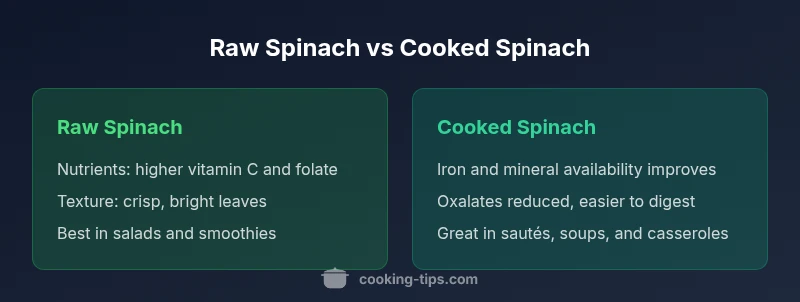
When asked 'is cooked or raw spinach better,' the answer depends on your goal. Raw spinach preserves vitamin C and folate but has oxalates that can hinder mineral uptake, while cooking boosts iron absorption and reduces oxalates but bleeds water-soluble vitamins. For most people, a mix of raw on salads and cooked greens offers the best balance.
Why Spinach Matters: Nutrition and Bioavailability
Spinach is a pantry staple for many home cooks, prized for its versatility and bright flavor. When considering whether is cooked or raw spinach better for your meals, it helps to start with the basics: spinach is rich in vitamins A, C, K, folate, and many minerals, along with plant compounds that support health. According to Cooking Tips, spinach remains a practical source of lutein and other carotenoids that support eye health, especially when included regularly in a varied diet. But nutrient availability depends on how you prepare it. Raw spinach preserves heat-sensitive nutrients and adds crunch to salads and smoothies, while cooking can improve the body's ability to access certain minerals. For most households, the best approach is not a single method but a balanced pattern: using raw spinach in fresh preparations and cooked greens in warm dishes. This subtle distinction matters because the same leafy green can deliver different health benefits depending on whether you eat it raw or cooked. As you plan meals, keep in mind how the cooking method affects texture, flavor, and nutrient bioavailability, and tailor your choices to your weekly menu and personal health goals.
The Science Behind Cooking Spinach: Oxalates, Iron, and Absorption
Oxalates in spinach can bind minerals such as iron and calcium, reducing their absorption in the body. Cooking spinach—whether steaming, sautéing, or blanching—helps lower soluble oxalate levels and makes iron more available for absorption. This doesn’t increase the total iron content, but it can improve how much your body can use from the same amount of spinach. Water-soluble vitamins, especially vitamin C, are sensitive to heat, so some loss is expected with cooking. The balance you strike between raw and cooked forms can depend on your iron status, dietary goals, and taste preferences. For example, those who routinely rely on iron-rich foods might favor cooked spinach in certain meals to enhance mineral uptake, while others may prioritize vitamin C-rich raw leaves in salads for immune support and antioxidant intake.
Vitamin Stability: Vitamin C, Folate, and Other Nutrients
Raw spinach contains the highest levels of vitamin C and folate among common preparations, making it a quick way to boost antioxidant status and one-carbon metabolism. Cooking reduces some of these nutrients, but it preserves others, such as beta-carotene precursors and certain carotenoids that become more available when the plant’s cell walls are softened. Folate, a B vitamin essential for DNA synthesis and repair, is relatively heat-sensitive; therefore, portioning spinach across meals and cooking methods can help safeguard a broader nutrient profile. For home cooks balancing nutrient goals, rotating between raw and lightly cooked spinach is a practical strategy.
Practical Cooking Scenarios: When to Choose Raw vs Cooked
Raw spinach shines in salads, sandwiches, and smoothies where a crisp texture and refreshing flavor are desirable. It also works well as a vibrant topping for pizzas and omelets. Cooked spinach excels in warm dishes like sautés, soups, stews, and casseroles, where its softened texture blends into other ingredients and its minerals become more available. If you rely on iron-rich foods, consider incorporating cooked spinach at least a few times per week to maximize absorption. For vitamin C and folate, keep some raw leaves in your diet most days. A practical approach is to plan two or three meals per week with raw spinach and two or three meals with cooked spinach, mixing forms within single recipes when possible.
Flavor, Texture, and Culinary Uses
Taste and mouthfeel evolve with cooking. Raw spinach provides a bright, peppery note and a crisp, leafy texture that adds lightness to bowls and smoothies. Cooking softens the leaves, concentrates flavors, and creates a mellow, savory backbone ideal for soups, stews, and sautés. The texture difference—crisp versus wilted—also influences how you pair spinach with fats: raw spinach benefits from a light dressing, while cooked spinach pairs nicely with olive oil, garlic, and nutty cheeses. For variety, alternate between raw and cooked spinach across meals to enjoy a spectrum of textures and flavors while broadening nutrient intake.
Storage, Freshness, and Safety
Fresh spinach keeps best in the crisper drawer of the refrigerator and should be used within a few days of purchase. Washing spinach only before use helps minimize nutrient loss and reduce microbial risk. Cooked spinach should be cooled promptly and stored in airtight containers in the fridge for a short period. Reheating is fine, but repeated heating can degrade quality and nutrients. Handling spinach with clean equipment and proper washing reduces safety concerns, especially when consuming raw greens. If you have a health condition that affects mineral absorption, you may prefer cooking spinach more often and combining it with vitamin C-rich foods to enhance iron uptake.
Common Myths About Spinach in Everyday Cooking
A common myth is that raw spinach is always healthier than cooked spinach. In reality, both forms offer distinct benefits. Another misconception is that cooking destroys all nutrients; while some vitamins decline, other compounds become more bioavailable. Finally, some home cooks worry that spinach is inherently unsafe raw; proper washing and handling are sufficient to reduce risk. Understanding these nuances helps home cooks make informed choices about when to eat spinach raw or cooked, and how to incorporate both forms into a balanced diet.
Quick Decision Framework: Make the Call Based on Your Meal
For meals centered on iron and mineral absorption, favor cooked spinach. For immune support and quick color boosts, load up on raw leaves. A balanced approach—use raw spinach in salads and smoothies, and cooked spinach in warm dishes—often yields the most comprehensive nutrient benefits. This strategy aligns with practical cooking tips and supports long-term dietary variety.
Comparison
| Feature | Raw Spinach | Cooked Spinach |
|---|---|---|
| Nutrient Retention | Higher vitamin C and folate in raw spinach | Heat-sensitive nutrients decline with cooking; some minerals become more accessible |
| Iron Availability | Lower iron absorption when raw (oxalates can impede uptake) | Improved iron absorption after cooking due to reduced oxalates |
| Oxalate Content | Contains oxalates that can bind minerals | Oxalates reduced by cooking, easing mineral access |
| Texture and Flavor | Crisp, bright leaves; vivid flavor | Wilted, mellow texture; concentrated flavor |
| Best Uses | Salads, smoothies, raw toppers | Sautés, soups, casseroles, warm sides |
| Prep Time | Ready-to-use immediately in raw form | Requires washing, heating, and cooking time |
| Storage & Shelf Life | Best consumed fresh; refrigerate promptly | Cooked spinach stores shorter and should be refrigerated promptly |
| Overall Preference | Great for vitamin C and green freshness | Strong for mineral bioavailability and texture in hot dishes |
Benefits
- Raw spinach is quick to add to meals and preserves heat-sensitive nutrients like vitamin C and folate
- Cooking spinach increases mineral availability by reducing oxalates, aiding iron absorption
- Both forms are versatile and can be used in a variety of recipes
- A mixed approach helps maximize overall nutrient intake while maintaining flavor and texture
Cons
- Raw spinach contains oxalates that can inhibit mineral absorption for some people
- Heat-sensitive nutrients decline with cooking, especially vitamin C and folate
- Cooking can reduce the fresh, crisp texture some diners prefer
A balanced, mixed approach is best for most home cooks
Use raw spinach for vitamin C and folate-rich meals, and cooked spinach to boost iron availability and mineral absorption. Rotating between forms across the week helps maximize nutrient intake while keeping meals enjoyable.
Quick Answers
Is cooked spinach better for iron absorption than raw?
Yes, cooking spinach can improve iron absorption due to reduced oxalates and easier mineral access, though the total iron content remains similar. Pair cooked spinach with vitamin C-rich foods to further enhance absorption. This consideration is especially helpful for individuals at risk of iron deficiency.
Cooking spinach helps your body absorb iron better, especially when you pair it with vitamin C-rich foods. Raw spinach keeps iron but absorption is slower due to oxalates.
Does raw spinach have more vitamin C than cooked spinach?
Raw spinach contains higher vitamin C than cooked spinach because heat degrades this nutrient. Cooking reduces vitamin C content, so if maximizing vitamin C intake is a priority, include raw leaves in meals. Balance with cooked greens to maintain overall nutrient variety.
Raw spinach keeps more vitamin C, while cooking lowers it.
Can I eat spinach daily raw or cooked?
Both raw and cooked spinach can be part of a healthy daily diet. Vary forms to balance nutrient intake and minimize potential concerns with oxalates. If you have specific health concerns, consult a clinician or dietitian for personalized guidance.
Yes, you can eat spinach daily; just mix raw and cooked to keep things balanced.
How should I store raw spinach to maximize freshness?
Store raw spinach refrigerated in a breathable bag or container and use within a few days for best freshness. Do not wash until ready to use to prevent moisture buildup that speeds spoilage. Proper handling helps keep nutrients intact and reduces waste.
Keep raw spinach cold and use soon after purchase.
Is spinach safe to eat raw?
Spinach can be eaten raw when washed thoroughly and handled with clean equipment. Bleach-free washing under cold running water is typically sufficient. If you’re pregnant or immunocompromised, consult healthcare guidance for raw leafy greens.
Yes, if washed well. If you’re sensitive, consider cooking.
Does blending spinach into smoothies count as cooked spinach?
Blending spinach into smoothies does not cook it; nutrient retention is similar to raw spinach. If your goal is maximum iron availability, heating a portion can help, but for vitamin C and folate, raw blends remain valuable.
Blending is still raw spinach; it doesn’t cook the greens.
Can cooking spinach destroy all nutrients?
Cooking does cause some nutrient loss, particularly heat-sensitive vitamins like vitamin C and folate. However, it can increase the bioavailability of minerals by reducing oxalates. A mix of raw and cooked spinach provides a broader nutrient profile.
Cooking reduces some nutrients but improves mineral availability.
What is the simplest way to add both raw and cooked spinach to a weekly menu?
Plan two or three meals with raw spinach (salads or smoothies) and two or three meals with cooked spinach (sautés, soups, or quiches). This approach keeps flavors varied and nutrients diverse. Batch cooking spinach can save time while maintaining flexibility.
Rotate raw and cooked greens across meals for best nutrition.
Top Takeaways
- Prioritize raw spinach for vitamin C and folate gains
- Cook spinach to improve iron absorption and reduce oxalates
- Use raw in salads and smoothies; cook for warm dishes and sauces
- Aim for variety across meals to maximize overall nutrient intake