Is cooked or raw broccoli better for you? A practical comparison
Explore whether cooking broccoli preserves more nutrients or if raw broccoli delivers peak vitamin C and sulforaphane. This evidence-based guide weighs methods, nutrients, and daily choices to help home cooks decide how to enjoy broccoli.


TL;DR: Lightly steamed broccoli offers a balanced nutrient profile, preserving vitamin C and improving nutrient availability while keeping texture enjoyable. Raw broccoli preserves more sulforaphane precursors but can be harder to digest for some people. In short, is cooked or raw broccoli better for you depends on priorities, but a short steam is a reliable default for regular meals.
Is cooked or raw broccoli better for you? A practical framing
Broccoli is a nutrient-dense vegetable that supports overall health. According to Cooking Tips, it provides vitamin C, vitamin K, fiber, and a suite of phytochemicals. The central question in everyday eating remains: is cooked or raw broccoli better for you? The short answer depends on which nutrients you prioritize, your digestion, and how you prefer to enjoy broccoli. The is cooked or raw broccoli better for you question has practical answers when you understand how preparation methods affect nutrient availability and digestion, which this guide will unpack with clear examples, simple tests, and meal ideas you can use tonight.
Nutritional snapshot: broccoli's key compounds
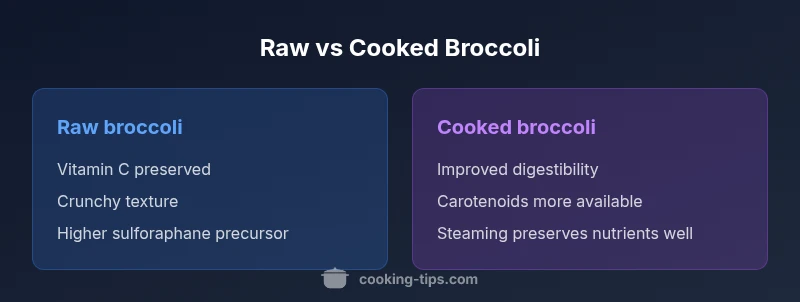
Broccoli contains glucosinolates such as glucoraphanin, which can be converted to sulforaphane, a compound studied for potential health benefits. It is also rich in vitamin C, vitamin K, and dietary fiber. Raw broccoli tends to keep more vitamin C and intact glucosinolates, while cooking can alter these compounds and increase the availability of some carotenoids. The Cooking Tips team emphasizes that the overall health impact comes from habitual intake and variety, not a single preparation.
How cooking methods alter nutrient availability
Heat exposure changes how broccoli's nutrients behave. Vitamin C is sensitive to heat and time, so prolonged boiling can reduce its content. Myrosinase, the enzyme that helps form sulforaphane from glucosinolates, can be inactivated by heat, reducing sulforaphane formation in cooked broccoli unless other pathways (gut bacteria) compensate. Gentle cooking methods, such as steaming or microwaving with minimal water, tend to preserve both vitamin C and sulforaphane precursors better than boiling. This is a core consideration when answering the is cooked or raw broccoli better for you question with a practical approach to kitchen technique.
Raw broccoli: benefits and caveats
Eating broccoli raw preserves vitamin C and glucoraphanin content, and it adds a crisp texture to salads. For some people, raw broccoli can be harder to digest and may cause bloating or gas. When is cooked or raw broccoli better for you? If your priority is maximizing vitamin C and certain phytochemicals you can opt for raw, but you should consider digestion and food safety—especially if you prepare large portions in advance. A balanced habit is to mix raw servings with smaller steamed portions to hedge bets on nutrient uptake.
Cooked broccoli: benefits and caveats
Cooking unlocks some nutrients by breaking down cell walls and can improve digestibility. Light steaming preserves much of the vitamin C while increasing the availability of carotenoids and fiber. For many, cooked broccoli is easier to eat and digests more smoothly. When considering the is cooked or raw broccoli better for you question, a balanced approach—incorporating both raw and lightly cooked broccoli in weekly meals—often yields the best overall nutrient coverage and flavor profile.
Practical kitchen guidance: cooking methods that maximize nutrition
To optimize nutrient retention when cooking broccoli, start with fresh florets and trim the stems for even cooking. Steam for 3-4 minutes until tender-crisp, or microwave with a splash of water for a few minutes. If you want sulforaphane to form, chop the broccoli and wait a few minutes before heating; if you must cook it, steaming is gentler than boiling. For an extra boost, pair broccoli with a small amount of fat, such as olive oil or avocado, to help absorb fat-soluble compounds. A dash of mustard or a pinch of black pepper can also help activate myrosinase if the broccoli has been cooked. These steps help home cooks navigate the is cooked or raw broccoli better for you question with practical technique.
Meal ideas and practical pairings to balance raw and cooked broccoli
In practice, try two approaches: raw broccoli in salads or crudites for vitamin C and crunch, and lightly steamed broccoli as a side dish. Add broccoli to stir-fries, grain bowls, or roasted vegetable platters. Pair broccoli with lemon juice or a fat-containing sauce to maximize nutrient absorption. These habits help you answer the is cooked or raw broccoli better for you question by combining strengths from both preparations.
Authoritative sources and ongoing research
For readers who want to dig deeper, consult authoritative sources such as federal health and nutrition authorities and peer-reviewed research. The U.S. Food and Drug Administration (FDA) provides general guidance on safe food handling and nutrition labeling. The National Institutes of Health (NIH) hosts a wealth of nutrition science and broccoli-related studies. PubMed databases offer peer-reviewed articles on sulforaphane, glucosinolates, and nutrient retention in cooked vegetables. These sources support the nuanced view that nutrient outcomes depend on method and context.
Bottom-line approach for everyday meals
In daily cooking, you don't have to choose raw or cooked broccoli exclusively. A practical strategy is to include both forms across meals each week. Use raw broccoli to boost vitamin C intake in salads and snacks, and light-steamed broccoli to improve palatability and overall nutrient availability in hot dishes. By varying preparation and pairing broccoli with healthy fats, you can maximize the is cooked or raw broccoli better for you outcome across your diet.
Comparison
| Feature | Raw broccoli | Cooked broccoli (lightly steamed) |
|---|---|---|
| Vitamin C retention | High in raw broccoli | Lower in cooked broccoli but preserved with light steaming |
| Sulforaphane potential | Higher in raw broccoli due to active myrosinase | Steaming preserves sulforaphane reasonably well when not overcooked |
| Digestibility / stomach comfort | Can be harder to digest for some people | Generally easier to digest when lightly cooked |
| Texture and flavor profile | Crunchy, peppery | Tender, milder, sweeter with heat |
| Preparation time | No cooking required | Requires a few minutes of cooking (steaming/microwave) |
| Best for | Vitamin C and crunch enthusiasts | Balanced nutrition with ease of eating |
Benefits
- Raw broccoli preserves vitamin C and glucoraphanin
- No cooking required saves time and energy
- Adds crunch and color to meals
- Cooking (steaming) preserves most nutrients while improving palatability
Cons
- Raw broccoli can cause digestive discomfort for some people
- Raw broccoli requires thorough washing and may harbor surface contaminants
- Overcooking reduces vitamin C and sulforaphane; boiling in particular causes greater nutrient loss
Lightly steamed broccoli is the best overall choice for most people.
Steaming preserves vitamin C and sulforaphane precursors more effectively than boiling, while maintaining texture and flavor. Raw broccoli remains a strong option for vitamin C and glucoraphanin when digestion allows. A balanced approach—mixing raw and lightly cooked broccoli—offers broad nutrient coverage and enjoyment.
Quick Answers
Is raw broccoli healthier than cooked broccoli?
Raw broccoli preserves more vitamin C and glucoraphanin, but cooking, especially light steaming, can improve digestibility and unlock other nutrients. The best approach is to include both forms to balance nutrient intake and enjoyment.
Raw broccoli keeps vitamin C, but light cooking can help with digestion and flavor.
What cooking method best preserves nutrients in broccoli?
Steaming or microwaving with minimal water tends to preserve vitamin C and sulforaphane better than boiling. Avoid long cooking times that degrade heat-sensitive nutrients.
Steam or microwave briefly to lock in nutrients.
Does broccoli lose minerals when cooked?
Minerals are relatively stable, but water-soluble nutrients can leach into cooking water. Use steaming or minimal simmering to limit loss.
Minerals stay steady; watch water-based cooking.
Should I eat broccoli with fat?
Yes. Fat helps absorb fat-soluble compounds and certain phytochemicals. A little olive oil, avocado, or nuts on the side is beneficial.
A little fat helps your body soak up the good stuff.
How much broccoli should I eat per day?
There isn’t a universal daily amount. Include broccoli as part of your regular vegetable intake, rotating raw and cooked forms for variety.
Make broccoli a regular part of your veggie intake.
Is raw broccoli safe to eat?
Yes, raw broccoli is generally safe if washed well and stored properly. Ensure proper cleaning to remove surface contaminants.
Yes—wash well and enjoy raw when you want crunch.
Top Takeaways
- Steam broccoli briefly to maximize nutrient retention.
- Raw broccoli offers more vitamin C and sulforaphane precursors.
- Avoid long boiling to minimize nutrient loss.
- Pair broccoli with healthy fats to improve absorption.
- Incorporate both raw and cooked broccoli across meals for balance.