Are Cooked or Raw Vegetables Better for You? A Practical Guide
Are cooked or raw vegetables better for you? This in-depth comparison highlights nutrient availability, cooking methods, and practical tips to maximize health by balancing raw and cooked vegetables.


Are cooked or raw vegetables better for you? Defining the question
The phrase are cooked or raw vegetables better for you often surfaces in grocery lists and nutrition chats. In nutrition science, the answer is nuanced: the ‘best’ approach depends on which nutrient you want to maximize, which vegetable you’re eating, and how you’ll prepare it. For home cooks, the goal is practical balance—enjoying a wide spectrum of vegetables prepared in ways that preserve texture, flavor, and overall intake. This article treats the question as a spectrum rather than a single winner, and it emphasizes strategies you can apply across meals. Throughout, you’ll see recommendations that reflect broader patterns observed in nutrition research: heat changes nutrient availability, fiber structures, and the digestibility of plant compounds. The practical takeaway is simple: include both raw and cooked vegetables to cover a broad nutrient base, while tailoring methods to the vegetable type and your digestion.
According to Cooking Tips, a mixed approach supports fiber diversity and flavor enjoyment, which in turn promotes consistent vegetable consumption. By recognizing how heat affects different nutrients, you can design meals that are not only healthy but also satisfying. The body benefits from variety, texture, and the sensory appeal of vegetables in multiple forms.
How cooking transforms nutrient availability
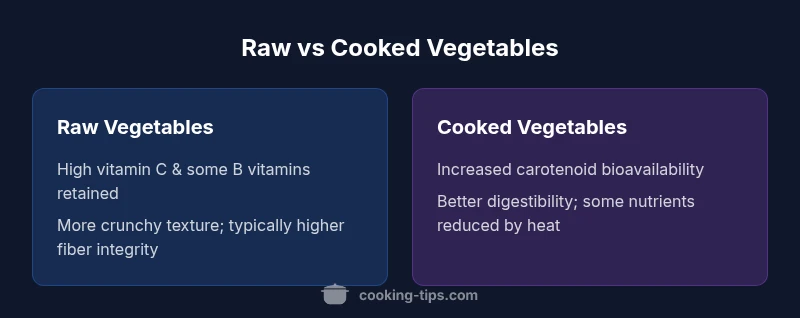
Cooking can dramatically alter how our bodies access plant nutrients. For some compounds, heat increases bioavailability; for others, it can degrade or reduce content. A widely observed pattern is that carotenoids—such as lycopene in tomatoes and beta-carotene in carrots and greens—can become easier to absorb after heating or gentle cooking. This does not mean raw vegetables are unnecessary; rather, it highlights that heat can unlock nutrients locked inside the plant’s cellular structure. On the flip side, heat-sensitive vitamins, especially vitamin C and several B vitamins, are prone to decline with prolonged exposure to heat, water, or air. Cooking methods that minimize water contact and excessive heat—from steaming to quick sautéing—tend to preserve more of these fragile nutrients. Some compounds, like polyphenols, can behave variably depending on the vegetable and the cooking method. The takeaway is practical: choose cooking techniques that preserve texture and minimize nutrient loss, while not avoiding cooking altogether when it improves nutrient access.
Vitamins and minerals: what's gained and lost with heat
Heat can reshape the vitamin and mineral landscape of vegetables. Vitamin C is highly sensitive to heat and oxidation, so raw forms often retain more of this vitamin than heavily cooked equivalents. Folate, another water-soluble vitamin, can also decline with extreme cooking. In contrast, minerals such as calcium, iron, and potassium are generally more stable during cooking, though they can leach into cooking water if boiled and discarded. Some B vitamins may diminish with boiling, while others remain relatively stable if vegetables are cooked briefly or using methods with less water contact. Because minerals are less affected by heat than some vitamins, a practical approach is to incorporate both raw and cooked vegetables to ensure a broad mineral intake, while not overcooking highly vitamin-sensitive items. This balanced approach aligns with recommendations from major nutrition authorities and Cooking Tips analyses for 2026.
Antioxidants, fiber, and texture
Antioxidants like polyphenols and certain carotenoids can either increase or decrease with cooking, depending on the plant matrix and treatment. In some vegetables, mild heating helps release bound antioxidants, improving absorption. In others, raw consumption preserves heat-labile antioxidants that would be degraded by heat. Fiber dynamics also shift with cooking: raw vegetables contain intact dietary fiber, which can contribute to satiety and gut health, while cooking softens fiber, potentially aiding digestion for some people. Texture and flavor are not mere afterthoughts; they influence how much and how often people eat vegetables. By balancing raw and cooked forms, you support variety in taste, texture, and nutrient access, making it easier to hit daily targets without sacrificing enjoyment.
Practical guidance by vegetable type
Different vegetables respond differently to heat. Leafy greens (spinach, kale) lose some folate and vitamin C with long cooking, and benefit from quick blanching or sautéing for flavor. Cruciferous vegetables (broccoli, Brussels sprouts) release certain antioxidants when lightly steamed, but overcooking can reduce sulfur-containing compounds. Root vegetables (carrots, potatoes) often thrive when cooked to tenderness, which improves carotenoid bioavailability and starch digestibility; raw carrots give you crisp texture and higher water content. Nightshades (tomatoes, peppers) gain from gentle heating where lycopene and beta-carotene become more accessible, yet raw tomatoes preserve vitamin C and certain flavonoids. Alliums (onions, garlic) contribute flavor and fiber in both raw and cooked forms, though heating alters sulfur compounds that affect aroma and health benefits. A practical approach is to pair raw greens with a warm vegetable medley to maximize nutrient coverage and culinary appeal.
Cooking methods that balance nutrition and flavor
Choosing cooking methods that minimize nutrient loss while maximizing taste is a practical skill. Steaming and microwaving are effective for preserving water-soluble vitamins and heat-sensitive compounds because they limit water contact and shorten cooking times. Light sautéing or quick stir-fries with a small amount of healthy fat can enhance carotenoid absorption and flavor without excessive heat exposure. When boiling, using the cooking water in soups or sauces helps recover minerals that might otherwise be discarded. Avoid overcooking to protect texture and reduce nutrient degradation; instead, aim for crisp-tender vegetables that retain color, aroma, and bite. Additionally, planning meals that rotate between raw and cooked options ensures broad nutrient coverage across the week.
How to pair raw and cooked vegetables in a meal
A balanced plate includes both raw and cooked vegetables, offering complementary nutrient profiles. Start with a raw salad or sliced cucumbers and peppers for vitamin C, folate, and fiber, then add a warm portion of steamed broccoli, roasted carrots, or sautéed greens to boost carotenoids and mineral availability. When building menus, think in terms of color diversity—include greens, reds, and oranges to signal a range of phytonutrients. Prepare extra portions of vegetables that store well, so you can mix raw and cooked options throughout the week. This approach supports satiety, flavor variety, and sustainable eating habits.
Common myths and misconceptions about raw vs cooked vegetables
Myth: Raw vegetables are always healthier than cooked ones. Reality: Nutrient outcomes depend on the specific nutrient and vegetable. Myth: Cooking destroys all nutrients. Reality: Proper cooking can improve the availability of certain nutrients and flavors. Myth: Boiling is always bad for nutrition. Reality: When you use the cooking water or minimize water contact, boiling can be a viable option. These clarifications help you craft meals that leverage the strengths of both raw and cooked vegetables.
Practical daily plan and sample menu
To translate theory into practice, create a simple 3-phase daily plan: a raw vegetable starter, a cooked vegetable side, and a mixed dish that combines both forms. For breakfast, add a fresh tomato and spinach omelet with a side salad. Lunch could feature a quick steamed veggie medley with beans, and dinner a stir-fry that includes peppers, broccoli, and onions. Keep a stash of crunchy raw veggies for snacking and a batch of quick-cooked vegetables for easy weeknights. Regularly rotate vegetables to ensure a broad nutrient spectrum and constant flavor variety.