Are Cooked or Raw Carrots Better for You? A Nutrition Guide
Are cooked or raw carrots better for you? This analysis compares vitamin C, beta-carotene, and digestion, plus tips to maximize absorption through smart prep and cooking methods.


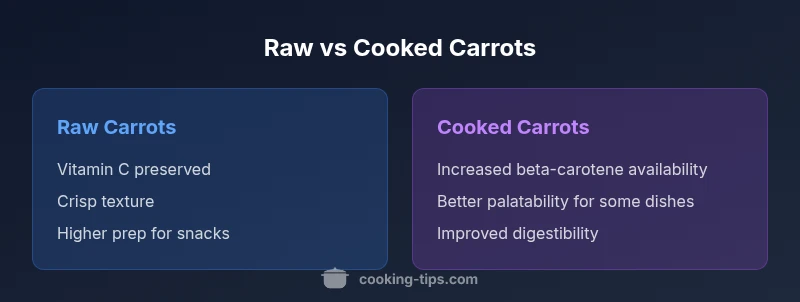
Raw carrots preserve vitamin C and crunch, while cooked carrots boost beta-carotene absorption when eaten with a small amount of fat. Both forms offer unique advantages, and the best approach is to include both forms across meals. By alternating raw snacks with lightly cooked sides, you can maximize nutrient coverage without sacrificing taste.
are cooked or raw carrots better for you
In practice, are cooked or raw carrots better for you? The answer isn’t a single yes or no. Raw carrots deliver more vitamin C and retain certain enzymes, and they add a satisfying crunch to snacks and salads. Cooking carrots, on the other hand, increases the bioavailability of beta-carotene and can make fiber easier to digest for some people. According to Cooking Tips, variety matters most: incorporating both raw and lightly cooked carrots into your weekly plan helps cover multiple nutrient pathways and keeps meals interesting. This approach also aligns with practical cooking habits for home cooks who juggle time, budgets, and family preferences.
How cooking method influences nutrient availability
Cooking methods dramatically influence nutrient availability in carrots. Gentle heat, brief cooking, and adding a small amount of healthy fat can amplify the body’s ability to absorb beta-carotene, a precursor to vitamin A. Steam or microwave carrot pieces just until they are tender-crisp to minimize nutrient loss. Boiling can leach water-soluble vitamins such as vitamin C if carrots are overexposed to water. The key is using minimal water, short cooking times, and a fat source such as olive oil or avocado to optimize fat-soluble carotenoids. Cooking Tips analyses emphasize that different methods favor different nutrients, so a mixed approach is most dependable for meeting diverse dietary goals.
Raw carrots: benefits and limitations
Raw carrots are a reliable source of vitamin C and a good source of fiber when eaten in whole form. They also retain plant compounds that may degrade with heat. However, some people may find raw carrots harder to digest, and certain beta-carotene precursors are less bioavailable without prior heating. For most people, raw carrots work well as a snack or salad base, providing a quick, crunchy contrast to warmer dishes. If you’re prioritizing vitamin C or enzyme activity, keep some raw carrots in meals; if you aim to maximize carotenoids, plan for cooked portions as well.
Practical guidelines for maximizing nutrition
To maximize nutritional benefits from carrots, combine raw and cooked forms across meals. When cooking, use brief, high-quality heat such as steaming or sauteing, and always add a small amount of fat to aid carotenoid absorption. Slice or chop carrots evenly to ensure uniform cooking. Store carrots properly in the refrigerator to preserve texture and vitamin content, and avoid soaking cut carrots in water for long periods, which can reduce water-soluble nutrients. Pairing carrots with olive oil, nuts, or avocado enhances fat-soluble nutrient uptake and overall palatability.
Practical examples and meal ideas
Try these simple, practical ideas to incorporate both textures:
- Raw carrot sticks with hummus or yogurt dip for a quick snack.
- Lightly steamed carrot rounds tossed with lemon juice and olive oil as a side dish.
- Oven-roasted carrots with olive oil, garlic, and herbs alongside lean protein and whole grains.
- Add raw shredded carrot to wraps or salads for crunch and fiber, then serve a warm carrot side dish with a touch of fat for beta-carotene enhancement.
- Include a small bowl of raw carrot slices at meals to ensure a vitamin C boost while your main course supplies carotenoids through cooked carrots.
These options support a balanced intake that aligns with practical kitchen routines and family tastes.
Special considerations for different diets or populations
Some people may have digestive sensitivities when consuming raw carrots, while others may rely on cooked carrots to improve palatability and nutrient absorption. Vegetarian and vegan eaters particularly benefit from fat-assisted beta-carotene absorption when carrots are cooked with olive oil, tahini, or nuts. For older adults or individuals with reduced stomach acid, lightly cooked carrots may be gentler on digestion while still providing a robust beta-carotene supply. Always tailor carrot preparation to personal tolerance and dietary patterns.
Common misperceptions debunked
A common myth is that raw carrots are always superior because of vitamin C preservation. While raw carrots do retain more vitamin C than heavily cooked carrots, cooking can dramatically improve beta-carotene absorption, especially with a small amount of fat. Another misunderstanding is that all carotenoids are equally affected by heat; in reality, beta-carotene becomes more bioavailable with gentle cooking, whereas other carotenoids may respond differently. By acknowledging these nuances, you can choose cooking strategies that align with your nutrient priorities.
Building a balanced carrot plan for the week
A practical weekly plan includes both raw and cooked carrots to balance vitamin C with beta-carotene. Start with raw carrot sticks at two meals each day (with lunch and snack options), and include a 1-2 serving portion of a cooked carrot dish (steamed, roasted, or sautéed) on the other meals. Rotate methods—steam, roast, and quick stir-fries—to keep flavors appealing. This approach supports sustained carrot intake without monotony and helps manage budget and time considerations for busy home cooks.
Comparison
| Feature | Raw carrots | Cooked carrots |
|---|---|---|
| Vitamin C content | higher (raw) | lower (cooked) |
| Beta-carotene availability | lower bioavailability raw | increased bioavailability with cooking (especially with fat) |
| Fiber and digestion | firmer texture, may require more chewing | softer texture, easier digestion for some |
| Glycemic impact | slightly lower glycemic impact when raw | can be higher GI when heavily cooked or pureed |
| Best uses | snacks, salads, crudités | sides, soups, roasted vegetables |
| Storage stability | longer shelf life when refrigerated raw | shorter shelf life once cooked; refrigerate promptly |
Benefits
- Offers nutrient coverage through both raw and cooked forms
- Cooking with a bit of healthy fat boosts carotenoid absorption
- Raw carrots provide vitamin C and crunch for snacks
- Flexible incorporation into a wide range of meals
Cons
- Overcooking can reduce water-soluble vitamins
- Raw carrots may be harder to digest for some people
- Texture and flavor changes may affect meal satisfaction
- Cooked options require more cooking steps in busy weeks
Mixed preparation is best for maximizing carrot nutrition.
Eating both raw and lightly cooked carrots optimizes vitamin C and beta-carotene absorption. Pair cooked carrots with a small amount of fat to boost carotenoids, while keeping some raw carrots on hand for crunch and vitamin C.
Quick Answers
Are there nutrients that are more available in raw carrots?
Yes. Raw carrots preserve vitamin C and some enzymes that can degrade with heat. They also provide fiber in its most intact form. Beta-carotene, while present in raw carrots, becomes more bioavailable when cooked with fat.
Raw carrots preserve vitamin C and enzymes, with crunchy texture; beta-carotene becomes more available when cooked with some fat.
Does cooking carrot destroy nutrients?
Cooking can reduce water-soluble vitamins like vitamin C if carrots are boiled for long periods. However, short, gentle cooking with little water can preserve or even enhance the absorption of carotenoids when fats are present.
Cooking may reduce some vitamins but increases beta-carotene absorption when done gently with a little fat.
Is microwaving carrots better than boiling for nutrients?
Microwaving tends to preserve more nutrients than boiling because it uses less water and shorter heating times. Steaming and quick sautéing are also nutrient-friendly options. The key is minimal water and short exposure to heat.
Microwaving and steaming preserve nutrients better than boiling when done briefly.
What cooking method preserves nutrients best?
Steaming or microwaving with brief cooking times, followed by a small amount of healthy fat, helps preserve and optimize nutrient absorption. Avoid prolonged boiling and high-heat roasting that can degrade sensitive nutrients.
Steaming or quick microwaving with a little fat is a nutrient-friendly approach.
Should raw carrots be stored differently from cooked ones?
Yes. Raw carrots store best in the refrigerator, dry and unwashed to extend shelf life. Cooked carrots should be cooled promptly and stored in an airtight container, typically for a shorter window. Always check for signs of spoilage before consuming.
Keep raw carrots cold and dry; store cooked carrots in airtight containers and use promptly.
How can I fit more carrots into a busy week?
Plan for both raw snacks and quick-cook options. Keep carrot sticks ready for salads and meals, and prepare a simple roasted carrot dish a few times a week. Batch cooking makes it easier to maintain variety without extra effort.
Prep raw sticks for snacks and roast a batch for weeknight meals.
Top Takeaways
- Include both raw and cooked carrots in meals
- Pair cooked carrots with healthy fats to maximize carotenoids
- Keep raw carrots for vitamin C and crunch
- Avoid overcooking to minimize nutrient loss
- Tailor prep to your digestion and taste preferences