Are cooked or raw beets better? A practical comparison for home cooks
A comprehensive, evidence-based comparison of cooked versus raw beets, exploring nutrition, digestibility, flavor, storage, and practical serving ideas for home cooks.


Both cooked and raw beets offer valuable benefits, with trade-offs that depend on your goals. Raw beets preserve heat-sensitive nutrients and natural enzymes, while cooking softens texture, enhances sweetness, and can improve the digestibility and accessibility of certain compounds. For a balanced diet, including both methods often provides the broadest nutrient spectrum and flavor range.
Are cooked or raw beets better for nutrition?
Are cooked or raw beets better for nutrition? The short answer is that both forms offer distinct advantages, and understanding them helps home cooks decide what to serve. Raw beets preserve heat-sensitive nutrients and natural enzymes, offering crisp texture and a strong earthy flavor. Cooking, on the other hand, softens the beet, enhances sweetness, and can increase the digestibility and accessibility of certain compounds. For many people, a mix of both forms throughout the week provides the broadest nutrient spectrum and the most varied flavors. In this guide from Cooking Tips, we break down what each method contributes and how to arrange meals to maximize health and enjoyment. The same guidance helps ensure you can enjoy beets without sacrificing taste or practicality.
Temperature and time matter for nutrient retention. Gentle steaming or roasting tends to preserve more delicate nutrients than prolonged boiling, and utilizing the beet skins can help maintain fiber and color. Raw beets also slide easily into salads, smoothies, and slaws, offering a quick boost of earthy flavor without added heat. This combination approach aligns with practical kitchen routines for busy home cooks who want reliable results across meals.
Flavor, texture, and culinary versatility
Beets respond dramatically to preparation. Raw beets deliver a crisp bite and bright earthy flavor that pair well with bold greens, citrus zest, and crunchy toppings. Cooked beets offer a tender flesh, deeper caramel notes, and a smoother texture that shines in warm salads, purées, and roasts. This versatility translates to more recipe options and better alignment with dietary goals. The Cooking Tips team notes that combining raw and cooked beets across meals can help maintain interest and maximize nutrient intake while minimizing monotony. When choosing methods, consider the overall dish character you want—crunchy contrast versus creamy, roasted warmth versus raw intensity.
Flavor and texture aren’t the only differences. Cooking can alter the perception of earthiness and sweetness. Roasting tends to amplify natural sugars, while steaming preserves a lighter beet flavor. Raw beets retain a stronger, cleaner vegetable snap that works well in quick dips and veggie-forward plates. In practice, many households blur the line by including both forms across the week, matching cooking method to the meal’s purpose and the eater’s preferences.
How preparation affects nutrient availability
Heat changes how nutrients become available to the body. Raw beets retain heat-sensitive compounds, including vitamin C and certain folates, because they are not exposed to high temperatures. Cooking can reduce these nutrients somewhat, particularly with water-based methods like boiling where some soluble compounds leach into the cooking water. However, heating can make other components more accessible; betalains and some minerals can become more available after cooking, depending on the method and duration. Chop size, cooking method (steaming, roasting, or boiling), and whether you consume the cooking liquid all influence the final nutrient profile. Short, gentle cooking can balance flavor development with nutrient retention, while raw preparations preserve the integrity of sensitive compounds. Keep in mind that beets are relatively resilient, so both methods can fit into a nutrient-conscious plan. Cooking Tips recommends considering your daily goals and using a mix of preparations to cover a broader nutrient spectrum.
Practical scenarios: salads, roasts, juices, and more
In everyday cooking, beets appear in a wide range of dishes. Raw beets shine in crisp salads, grated into slaws, or blended into vibrant smoothies. They provide a crunchy texture and a peppery-earthy note that brightens mild greens or fruit-forward dressings. Cooked beets, whether roasted, steamed, or boiled, bring a silky texture that suits warm salads, grain bowls, and purées. Roasted beets pair beautifully with goat cheese, walnuts, and citrus, while steamed beets complement earthy mushrooms and whole grains. Juicing is another option for raw beets, offering a quick nutrient boost without the fiber intact. The key is to align beet preparation with the dish’s texture and flavor profile while keeping an eye on nutrient retention—steaming and roasting tend to preserve more nutrients than boiling.
Digestive considerations and fiber
Beets are a good source of fiber, which supports digestive health and steady energy release. Raw beets can be harder to digest for some people, especially when eaten in large quantities or in combination with other gas-producing foods. Cooking softens the texture, often making beets gentler on the stomach and easier to digest for sensitive individuals. Some people may experience temporary beet-related effects like pink urine or stool, which is harmless but can be surprising if you aren’t expecting it. If you’re trying to avoid digestive discomfort, start with small portions of raw beets and gradually increase, or favor quickly cooked preparations that retain fiber while reducing raw density.
Safety, storage, and food safety tips
Practical beet storage protects flavor and color while reducing spoilage. Raw beets keep best when kept cool and dry, with greens removed to prevent moisture and decay. Cooked beets should be cooled promptly and stored in the refrigerator in sealed containers, ideally consumed within a few days for best flavor and texture. When preparing beets, scrub thoroughly, trim the ends, and consider wearing gloves to avoid staining hands. If you’re batch-cooking, reserve a portion of cooking liquid and use it in dressings or soups to reclaim any nutrients that may have leached out during heating. Precision in timing and temperature helps maintain both taste and nutrition. Cooking Tips emphasizes safe handling and proper storage to preserve the benefits of both forms.
Special dietary goals and beet preferences
Dietary goals can influence whether you choose cooked or raw beets. People seeking higher nitrate intake for cardiovascular or athletic considerations may favor methods that preserve or concentrate these compounds, though nitrates are present in both raw and cooked beets. Others prioritizing vitamin C or folate might lean toward raw preparations to maximize retention of heat-sensitive nutrients. If you have digestive sensitivities or are managing oxalate intake, adjusting the balance between raw and cooked beets can be a practical strategy. The key is to tailor beet preparation to your health objectives, culinary preferences, and the overall meal plan.
How to combine methods for variety
A practical weekly plan combines both forms to maximize nutrition and enjoyment. Start with a few raw beet preparations for quick salads and smoothies, ensuring you wash and slice thinly to improve digestibility. Add roasted beets to warm bowls and side dishes for flavor depth and texture contrast. Roasting concentrates sugars and deepens color, making them a robust partner to leafy greens, grains, and proteins. Consider planning a beet-focused dish twice a week with different prep methods to keep meals interesting. This balanced approach helps you exploit the strengths of each method while avoiding monotony and nutrient gaps.
Quick-start ideas and a simple recipe slate
- Raw beet ribbons in citrus salads
- Roasted beet bowls with quinoa and feta
- Beet smoothie with cucumber and apple for a refreshing option
- Beet soup or purée with roasted vegetables for a comforting meal
- Pickled beets as a tangy side to brighten plates
The goal is to integrate both forms across the week so you enjoy a range of textures, flavors, and nutrient profiles. Start with a small batch of roasted beets on Sunday and a jar of raw beet salad ready for quick lunches during the week.
Building a practical beet strategy for a busy kitchen
To implement a balanced beet strategy, plan meals that explicitly call for both raw and cooked beets. Create a simple weekly template: one raw beet dish, one cooked beet dish, and a couple of mixed dishes using both forms. Use cooking methods that fit your equipment and preferences—roasting on a sheet pan, steaming for quick side dishes, and blending raw beets into smoothies or salads. This approach ensures you get a broad spectrum of nutrients while enjoying diverse textures and flavors. The Cooking Tips team recommends keeping a small amount of both forms on hand for flexibility in weeknight meals and meal-prep days.
Comparison
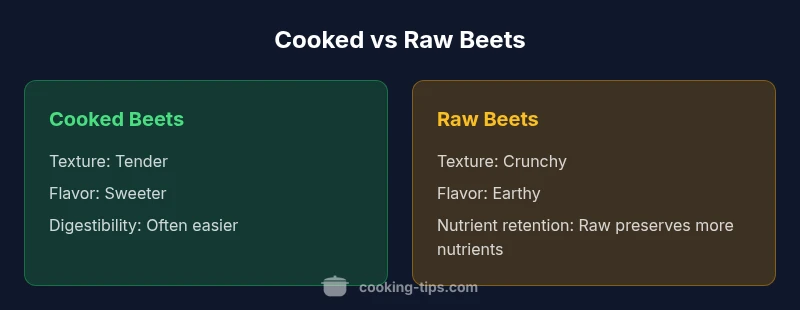
| Feature | Cooked beets | Raw beets |
|---|---|---|
| Texture | Tender, creamy flesh when roasted or steamed | Crisp, crunchy bite with strong earthy notes |
| Taste profile | Sweet, caramelized notes after roasting | Earthy, bright flavor with sharp bite when raw |
| Nutrient retention | Some heat-sensitive nutrients reduced; coloring pigments remain | Higher retention of vitamin C and folate; fiber preserved |
| Digestibility | Generally easier to digest due to softened texture | May be harder to digest for some; raw fiber is intact |
| Nitrate content | Nitrates present but can be affected by cooking method | Nitrates largely preserved; raw form offers maximum intake potential |
| Flavor versatility | Excellent in warm salads, bowls, and purées | Excellent in salads, slaws, juices, and raw toppings |
Benefits
- Raw beets preserve heat-sensitive nutrients
- Cooked beets offer richer flavor and softer texture
- Using both methods increases culinary options
- Beet pigments remain present in both forms
- Cooking can improve digestibility for sensitive individuals
Cons
- Raw beets can be harder to digest for some people
- Cooking may reduce some water-soluble nutrients
- Beets can stain surfaces and hands during prep
A mixed approach typically serves home cooks best
Raw beets excel at nutrient retention and crunch, while cooked beets shine in flavor, texture, and digestibility. Combining both forms across meals maximizes nutrient coverage and culinary variety.
Quick Answers
Which method preserves more vitamin C in beets?
Raw beets generally retain more vitamin C because they are not exposed to heat. Cooking can reduce vitamin C, especially with long or boiling methods. If vitamin C is a priority, include some raw beet preparations in your weekly plan.
Raw beets keep more vitamin C, while cooking lowers it a bit; include both forms to cover vitamin needs.
Do beets lose their nitrates when cooked?
Beet nitrates are present in both raw and cooked beets, but some cooking methods can reduce their level slightly. Steaming or roasting tends to preserve more nitrates than boiling with discardable cooking water.
Nitrates stay in beets, but certain cooking methods can reduce them a bit; steaming or roasting helps preserve more.
Is it better to roast or boil beets to maximize nutrition?
Roasting tends to preserve flavor and some nutrients better than boiling, especially water-soluble ones. Steaming is a middle ground that balances flavor with nutrient retention. Both methods can fit into a nutritious plan when used thoughtfully.
Roasting preserves flavor and some nutrients; steaming is a good middle ground; both work well when planned well.
Can you juice raw beets?
Yes, raw beets are commonly juiced for a quick nutrient boost. Juicing concentrates nutrients but removes dietary fiber, so balance with whole beets in other meals to maintain fiber intake.
You can juice raw beets, but remember you lose fiber in the juice; pair with whole beets to keep fiber on track.
How should I store raw beets and cooked beets?
Store raw beets in a cool place or fridge and use promptly after purchase. Cooked beets should be cooled quickly and kept in the fridge; reuse cooking liquid to reclaim nutrients where appropriate.
Keep raw beets cool and use soon; refrigerate cooked beets and use within a few days. Save the cooking liquid if you can.
Are beet greens edible and should I eat them with beets?
Beet greens are edible and nutritious, offering vitamins and minerals. They can be eaten raw in salads or lightly cooked for a tender side dish. Including beet greens with beets increases overall nutrient intake.
Yes, beet greens are edible and nutritious. Enjoy them raw in salads or cooked as a side with beets.
Top Takeaways
- Mix raw and cooked beets to maximize nutrition
- Raw preserves heat-sensitive vitamins, cooked enhances flavor and digestibility
- Use roasting for sweetness and texture; raw for crunch and brightness
- Plan meals that incorporate both forms for variety
- Store and prep beets to minimize nutrient loss and waste