Are Cooked or Raw Beets Healthier? A Practical, Nutrient-Focused Guide
Explore whether cooked or raw beets are healthier, comparing nutrient retention, digestion, and practical tips. This Cooking Tips guide helps home cooks decide how to include beets for maximum benefit.


For many people, both forms offer valuable health benefits, but the choice depends on your goals. Raw beets tend to preserve heat-sensitive nutrients and higher nitrate levels, while cooking can boost digestibility and flavor. A balanced approach—incorporating both raw and cooked beets—often provides the broadest nutrient coverage and culinary flexibility.
Are cooked or raw beets healthier? A nuanced assessment
The question of whether are cooked or raw beets healthier is not binary. It depends on which nutrients you prioritize, how you plan to use beets in meals, and how your body responds to the different textures. According to Cooking Tips, beets offer different nutritional profiles when raw versus cooked, and the healthiest approach is often a mix that suits your taste and digestion. This article dives into the science behind both forms and translates it into practical guidance for home cooks seeking reliable cooking advice.
Nutrient profile: what changes with cooking
Beets are a nutrient-dense root vegetable, but heat changes their nutrient landscape. Raw beets preserve more heat-sensitive vitamin C and some water-soluble phytonutrients, while roasting or steaming can reduce these components somewhat. Minerals such as potassium and folate are relatively stable, though trace amounts can leach into boiling water. If your goal is maximize vitamin C intake, raw beets will generally deliver more per serving. If you seek minerals and fiber in a softer form, cooked beets still contribute meaningfully to daily intake.
Bioavailability and antioxidant activity in raw vs cooked
Antioxidant compounds in beets, including betalains, offer anti-inflammatory and antioxidant benefits. The stability of betalains can be affected by heat, with some degradation occurring during cooking. However, cooked beets may still provide substantial antioxidant activity, and certain beet-derived compounds become more accessible after cooking due to matrix breakdown. The Cooking Tips team notes that the overall antioxidant impact remains positive for both forms, especially when beets are consumed as part of a varied diet.
Nitrates, betalains, and flavor dynamics
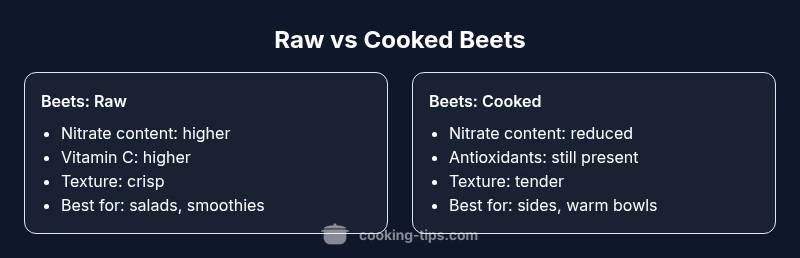
Raw beets typically contain higher nitrate levels, which can support nitric oxide production and blood flow. Cooking—especially boiling—can reduce nitrate content somewhat, while roasting or steaming tends to preserve more of these compounds. Betalains, responsible for the deep red-purple color, are sensitive to heat and can diminish with prolonged cooking. Flavor-wise, raw beets offer a crisp, earthy bite, whereas cooked beets bring a sweeter, mellow profile that pairs well with cheeses, nuts, and grains.
Digestive impact and fiber considerations
Beets are rich in dietary fiber, which aids digestion and gut health. The fiber content remains relatively stable whether beets are raw or cooked, but cooking softens the texture and may improve tolerability for some people who find raw beets too fibrous. If you struggle with gas or bloating from raw vegetables, lightly cooked beets can provide a gentler alternative without sacrificing nutritional value.
Practical meal ideas to maximize health benefits
Incorporate both forms to balance nutrients and flavor:
- Raw: thinly sliced beet salads, shredding into slaws, or blending into smoothies for texture and a nitrate boost.
- Cooked: roasted beets as a warm side dish, steamed beets in bowls, or pickled beets to extend shelf life and add flavor. The practical takeaway is to vary preparation methods to cover both raw and cooked nutrient profiles.
Cooking methods to minimize nutrient loss
To preserve nutrients when cooking beets, use methods that limit water contact and short cooking times. Steaming or roasting beet slices can retain more vitamin C and betalains than boiling. If boiling is your only option, reuse the cooking water in soups or dressings to recapture leached nutrients. These strategies help maintain a nutrient-dense beet dish without sacrificing convenience.
Beets color, texture, and culinary versatility
Color and texture influence satisfaction and consumption. Raw beets maintain bright color and scatter crunch, while cooked beets offer a creamy texture that blends well with grains, legumes, and leafy greens. This versatility makes beets a dependable ingredient across seasons, supporting a healthful eating pattern regardless of whether you are are cooked or raw beets healthier for your specific goals.
Common myths and misperceptions
A common myth is that one form is universally superior. In reality, both raw and cooked beets contribute to a healthy diet, but for different reasons—raw for certain nutrients and nitrates, cooked for digestibility and flavor. Another misconception is that beets only matter for color; in truth, their fiber, minerals, and bioactive compounds support cardiovascular and metabolic health. Embracing both forms helps mitigate potential downsides of extreme reliance on a single preparation.
When to choose raw vs cooked for different goals
If your priority is nitric oxide-related benefits, taste the raw beet for a crisp, peppery note and higher nitrate potential. If you’re aiming for easier digestion, cooking to a tender texture can be advantageous while preserving much of the beet’s nutritional value. Pairing both forms throughout the week aligns with a balanced nutrition strategy and practical meal planning.
How to store beets properly for freshness and nutrition
Storage affects nutrient retention. Raw beets keep best in the refrigerator, where they retain crunch and color for several days. Cooked beets should be cooled promptly and stored in a sealed container in the fridge to minimize nutrient loss and microbial growth. Labeling and planning meals around both raw and cooked beet preparations can help you maintain a steady intake of fiber, minerals, and phytonutrients.
Comparison
| Feature | Beets: Raw | Beets: Cooked |
|---|---|---|
| Nitrate content | Higher in raw | Lower in cooked |
| Vitamin C and heat-sensitive nutrients | Higher in raw | Lower in cooked |
| Texture and digestibility | Crunchy, firmer | Tender, easier to digest |
| Betalain stability | More stable in raw | Degrades with heat |
| Antioxidant profile | Broad raw antioxidants | Some still present post-cooking |
| Fiber content | Similar | Similar |
| Storage and shelf life after prep | Raw lasts longer in fridge | Cooked lasts shorter |
| Best uses | Salads, smoothies, fresh toppings | Roasted, steamed, pickled dishes |
Benefits
- Raw beets preserve heat-sensitive nutrients (e.g., vitamin C) and higher nitrate potential
- Raw beets offer crisp texture and visually appealing color, enhancing salads and smoothies
- Cooking beets improves digestibility and makes nutrients accessible to some who can’t handle raw produce
- Using both forms expands culinary versatility and meal variety
Cons
- Heat can degrade vitamin C and some antioxidants during cooking
- Nitrate content can decrease with cooking, especially boiling
- Raw beets may be harder to digest for some people and may cause bloating
- Earthy flavor of raw beets can be less appealing to some tasters
Balanced approach recommended: mix raw and cooked beets to maximize nutrients and enjoyment
Raw beets optimize nitrate intake and heat-sensitive nutrients, while cooked beets offer easier digestion and versatility. A combined approach accommodates different health goals and palate preferences, ensuring broader nutrient coverage across a weekly menu.
Quick Answers
Are cooked or raw beets healthier for nutrient retention?
Nutrient retention depends on the nutrient in question. Raw beets preserve more heat-sensitive nutrients like vitamin C and some antioxidants, while cooking can reduce these nutrients slightly but still leaves a meaningful nutrient profile overall.
Nutrient retention varies by nutrient; raw preserves more of some vitamins, while cooked beets still contribute valuable nutrients.
Does boiling beets destroy nutrients?
Boiling can cause water-soluble nutrients to leach into cooking water. Steaming or roasting minimizes nutrient loss and can help keep more of the beet’s beneficial compounds.
Boiling can wash out some nutrients; try steaming or roasting to keep more nutrition.
Are raw beets better for athletic performance due to nitrates?
Raw beets often have higher nitrate levels that may support blood flow, which could benefit athletic performance. Cooked beets still provide nitrates, just typically in smaller amounts. Timing and total diet matter as well.
Raw beets may have more nitrates for athletic benefits, but cooked beets still help; timing matters.
How should I store raw and cooked beets?
Store raw beets in the fridge where they stay crunchy for several days. Cooked beets should be cooled and kept sealed in the fridge, ideally used within a few days for best flavor and nutrition.
Keep raw beets in the fridge; cooked beets should be kept sealed and eaten within a few days.
Can beets be eaten every day without issues?
Yes, beets can be part of a daily diet for most people when eaten in sensible portions. People with kidney stones or who are sensitive to oxalates should monitor intake and consult a clinician if needed.
Beets can fit into daily meals for most people, but watch portions if you have oxalate concerns.
What are quick ways to include beets in a weekly plan?
Incorporate both raw and cooked beets over the week: add grated raw beets to salads, roast beets as a side, and consider pickled beets for variety. This keeps meals interesting and nutrient-rich.
Mix raw salads with roasted beets for variety and nutrition throughout the week.
Top Takeaways
- Mix raw and cooked beets to balance nutrients
- Raw beets offer higher nitrates and vitamin C; cooked beets offer easier digestion
- Roast or steam beets to preserve nutrients while boosting flavor
- Use raw beets in salads and smoothies; cooked beets in warm bowls and sides
- Store raw and cooked beets properly and rotate preparations for consistency