Are Cooked or Raw Tomatoes Healthier? A Nutrition Comparison
Explore whether cooked or raw tomatoes are healthier, how heating changes lycopene and vitamin C, and practical tips to maximize nutrients in everyday meals for home cooks.


When considering are cooked or raw tomatoes healthier, both forms offer unique benefits. Cooking increases lycopene bioavailability and carotenoid uptake, especially with a bit of healthy fat, while raw tomatoes preserve vitamin C and folate. For a balanced diet, include both cooked and raw tomatoes to maximize nutrient diversity and flavor. Individual goals and tolerance can subtly shift preference.
Overview: The Nutrition Landscape for Tomatoes
Tomatoes are a versatile source of valuable nutrients, including lycopene, vitamin C, potassium, and dietary fiber. When considering whether are cooked or raw tomatoes healthier, it helps to recognize that each form emphasizes different nutrients. According to Cooking Tips, tomatoes deliver antioxidants that contribute to heart health and immune support as part of a balanced diet. Raw tomatoes preserve heat-sensitive vitamins and intact fiber within the cell walls, while cooking helps release carotenoids trapped in plant tissues and makes certain nutrients more accessible when paired with fat. This dual nature means neither form can be labeled universally healthier; a diet that includes both raw and cooked tomatoes tends to cover a broader spectrum of nutrients. Throughout this article, we compare key nutrients, discuss practical cooking methods, and offer guidance for home cooks seeking reliable, evidence-informed advice.
Lycopene and Cooking: Why heat changes the nutrient story
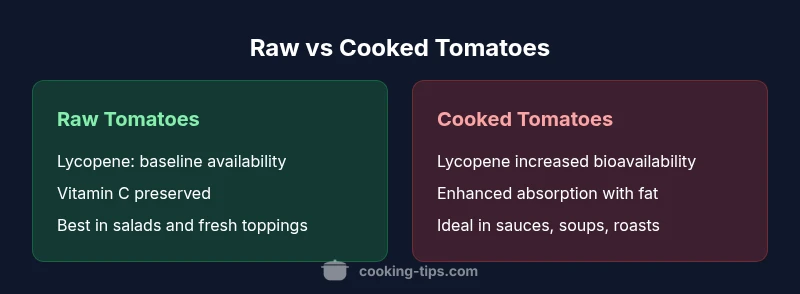
Lycopene is a heat-stable carotenoid found in red tomatoes. Heating foods breaks down cell walls and improves the release of lycopene from the tomato matrix, increasing its bioavailability. The Cooking Tips analysis shows that light cooking, especially when combined with a small amount of healthy fat, enhances lycopene absorption compared with raw tomatoes alone. In contrast, raw tomatoes provide other compounds that heat processing can partially degrade, so raw forms retain different nutrient profiles. This means that the choice between cooked and raw is not about which is better overall, but about which nutrients you want to emphasize in a given meal. For most people, a combination across meals yields the best coverage.
Vitamin C and Folate: Heat sensitivity and retention
Vitamin C and folate are more prone to heat degradation than carotenoids. Raw tomatoes typically retain higher levels of these heat-sensitive micronutrients, since brief, gentle washing and slicing cause minimal loss, and consumption occurs soon after cutting. Cooking can reduce vitamin C content, especially with prolonged cooking or high heat, but short, quick methods can preserve a meaningful portion of these nutrients. Folate, another water-soluble vitamin, is similarly sensitive to heat. The practical takeaway is to reserve raw tomatoes for vitamin C-rich dishes like salads, salsas, and fresh toppings, while using minimally heated preparations to maintain a broader nutrient profile when cooking tomatoes.
How Cooking Methods Alter Nutrient Retention
Different cooking methods have distinct effects on tomato nutrients. Steaming or brief sautéing helps preserve most of the vitamin C while releasing carotenoids. Roasting concentrates flavors and can improve lycopene availability, particularly when a healthy fat is present. Boiling or long simmering reduces water-soluble vitamins and may leach nutrients into cooking liquid, which can be recovered if you use the cooking liquid in a sauce. The key is to balance time and temperature to maximize carotenoid bioavailability while minimizing losses of heat-sensitive vitamins. Remember that using a little olive oil not only improves flavor but also enhances nutrient uptake for carotenoids.
Absorption, Fat, and Carotenoids: The fat factor
Carotenoids like lycopene are fat-soluble, meaning their absorption improves when eaten with fat. Cooking tomatoes with a small amount of olive oil or other healthy fat increases the uptake of lycopene in the gut. This is a common principle across many vegetables. The Cooking Tips analysis shows that fat pairing can make a meaningful difference in the nutrient impact of a tomato dish. Raw tomatoes still provide carotenoids, but the rate at which the body absorbs them rises when the tomatoes are heated and consumed with fat. For best results, drizzle olive oil on tomatoes in salads or sauces, or cook tomatoes in a pan with a splash of oil.
Practical Meal Scenarios: Salads, Sauces, and Roasts
In practical cooking, you might reach for different forms depending on the meal. A fresh tomato salad with a simple olive oil dressing preserves vitamin C and folate while delivering bright flavor. For sauces, stews, or roasts, cooking tomatoes unlocks lycopene and creates a rich texture, especially when simmered with a small amount of oil. Tomato soups, salsas, and baked tomatoes are all examples where a balanced approach—part raw, part cooked—can maximize flavor and nutrient diversity. The everyday kitchen can benefit from rotating between raw and cooked preparations to maintain variety without sacrificing nutrition.
Freshness, Storage, and Plant Compounds
Tomato nutrient content is influenced by ripeness and storage conditions. Fully ripe tomatoes typically offer more lycopene and flavor than under-ripe fruit, while vitamin C may decline with long storage. Cutting and exposing to air accelerates oxidation, so consuming soon after slicing helps preserve vitamin C. Refrigeration slows spoilage but can dull texture and flavor, so some cooks prefer to store tomatoes at room temperature until use. In terms of plant compounds, different varieties and colorations contribute varying amounts of lycopene, beta-carotene, and phenolic compounds. For are cooked or raw tomatoes healthier, variety and freshness matter as much as the method of preparation.
Digestive Considerations and Individual Tolerances
Some people tolerate raw tomatoes well, while others experience acidity or digestive discomfort. Cooking tomatoes can soften the tissue and reduce some of the irritants, making them gentler on sensitive stomachs for certain individuals. If you notice heartburn after raw tomato dishes, trying lightly cooked preparations or removing skins may improve tolerance. Always monitor how your body responds to different forms and adjust your pantry accordingly. This is one of the reasons why a mixed approach—eating both raw and cooked tomatoes—often works best for diverse appetites and digestion.
Diet Context: Mediterranean Patterns and Plant-forward Eating
Tomatoes are a cornerstone of many dietary patterns, especially Mediterranean-style eating that emphasizes vegetables, healthy fats, whole grains, and plant-based proteins. In such diets, tomatoes feature in salads and sauces, where the synergy with olive oil and herbs contributes to nutrient absorption and enjoyment. The health benefits rely on overall dietary patterns rather than any single food alone. Are cooked or raw tomatoes healthier? The answer is: both forms can play meaningful roles in a Mediterranean approach, offering complementary nutrients and flavors that support heart health, vision, and immune function.
Practical Tips to Maximize Nutrients
- Choose ripe tomatoes for ripeness and flavor, and use them in recipes that match your goals.
- For raw preparations, wash thoroughly and eat soon after cutting to preserve vitamin C.
- When cooking, use brief, low- to medium-heat methods and a small amount of healthy fat to boost lycopene absorption.
- Incorporate a mix of raw and cooked tomatoes across meals to optimize nutrient coverage.
- Store tomatoes at room temperature until usage; refrigerate only after cutting to slow spoilage.
Common Mistakes to Avoid
- Overcooking tomatoes, which can degrade heat-sensitive nutrients and mute texture.
- Using large amounts of water during cooking, which can leach water-soluble vitamins.
- Not pairing tomatoes with fat when cooking for carotenoid absorption.
- Relying on one form alone; the goal is diversity across meals.
Putting It All Together: A Balanced Tomato Approach
A practical takeaway is that there is no universal winner between cooked and raw tomatoes. Each form offers a different nutrient balance; the best strategy is integration. A home cook can plan a weekly rotation of dishes: fresh tomato salads, quick sautéed tomatoes with olive oil, roasted tomatoes to accompany proteins, and tomato sauces that simmer slowly. The Cooking Tips team emphasizes that greater nutrient variety comes from combining raw and cooked forms across meals, aligning with a flexible, evidence-informed approach to everyday cooking. This balanced approach keeps flavor high, while supporting a wide range of nutrients.
Comparison
| Feature | Raw tomatoes | Cooked tomatoes |
|---|---|---|
| Lycopene availability | Baseline in raw | Increased with cooking |
| Vitamin C retention | High in raw | Reductions with heat (short cooking preserves some) |
| Fat required for absorption | Not essential in raw form | Better with added fat (olive oil) |
| Texture and flavor profile | Crunchy, fresh | Silky texture with richer flavor |
| Best use case | Salads, salsas, fresh toppings | Sauces, roasts, soups |
Benefits
- Broad nutrient coverage when combining both forms
- Culinary flexibility across meals and cuisines
- Cooking boosts lycopene bioavailability with fat
- Raw preserves heat-sensitive vitamin C and folate
Cons
- Overcooking tomatoes can degrade heat-sensitive nutrients
- Raw may cause intolerance or digestive discomfort for some people
- Storage after cutting reduces vitamin C quickly
Balanced approach wins: mix raw and cooked tomatoes for maximum nutrient coverage
Lycopene absorption rises with cooking, especially with fat, while raw tomatoes retain vitamin C and folate. A practical strategy is to include both forms across meals to maximize nutrient diversity and flavor.
Quick Answers
Is raw tomatoes healthier than cooked tomatoes?
Not universally. Raw tomatoes preserve heat-sensitive nutrients like vitamin C, while cooked tomatoes increase lycopene availability. A mixed approach typically offers the broadest nutrient coverage.
Raw has its benefits, but combining both forms gives you more nutrients.
How does heating tomatoes affect lycopene?
Heating tomatoes breaks down cell walls and helps release lycopene, increasing its bioavailability. Light cooking with a touch of fat often yields the best results for Lycopene absorption.
Heat helps lycopene become more available, especially with a bit of oil.
Does adding oil improve nutrient absorption from tomatoes?
Yes. Lycopene and other carotenoids are fat-soluble, so cooking with a small amount of healthy fat enhances absorption.
A little oil goes a long way for nutrient uptake.
What cooking method best preserves nutrients?
Brief, gentle cooking methods (steaming, light sauté) preserve vitamin C while still releasing carotenoids. Avoid prolonged boiling which can leach water-soluble vitamins.
Gentle heat helps keep nutrients intact.
Are there any risks to eating raw tomatoes?
Raw tomatoes are generally safe for most people, but some may experience acidity or digestive discomfort. Wash thoroughly and adjust according to your tolerance.
Usually fine, just watch for digestion if you’re sensitive.
How can I maximize overall tomato nutrition?
Use a mix of raw and cooked tomatoes, pair with healthy fats, and choose ripe, fresh fruit. This approach broadens nutrient coverage and flavor.
Mix raw and cooked, and add a bit of oil.
Top Takeaways
- Combine raw and cooked tomatoes across meals
- Cook with a small amount of healthy fat to boost lycopene absorption
- Preserve vitamin C by using quick, light heating or raw preparations
- Store and handle tomatoes to minimize nutrient loss and maintain freshness