Are Cooked or Raw Onions Healthier? A Practical Analysis
A detailed, evidence-based comparison of cooked vs raw onions, exploring nutrient retention, antioxidants, digestion, and how to maximize health benefits in everyday meals. Includes practical tips from Cooking Tips.


Raw onions generally retain more vitamin C and some flavonoids, while cooking can increase the digestibility and caramelized flavor that helps you eat more onions overall. There is no single healthiest form; the best approach is a balanced mix that fits your nutrient goals and digestion. This quick comparison highlights the key tradeoffs and practical tips for everyday meals.
Are cooked or raw onions healthier? A Nuanced Look
Are cooked or raw onions healthier? The short answer is: it depends on what you value most—nutrient retention, antioxidant availability, digestion, and culinary use. In this article we examine both forms with a practical lens so you can tailor onion preparation to your health goals. According to Cooking Tips, there is no universal winner; the healthiest choice is often a blend that preserves nutrients while still making onions enjoyable and easy to consume. Personal tolerance matters too: some people experience gas, acid reflux, or heartburn with raw onions, while others tolerate them well or prefer the milder flavor of cooked onions. That said, several general patterns emerge: raw onions tend to keep more vitamin C and certain flavonoids intact, whereas cooking can soften the structure of the vegetable and alter its nutrient profile in meaningful ways. Throughout, we’ll reference broad nutrition principles and kitchen-tested tips to help you decide how to use onions in your daily meals, from quick salads to slow-simmered stews.
Nutrient Retention: What Changes with Heat?
Heat transforms some nutrients in onions by breaking down heat-sensitive compounds while making others more accessible. Raw onions preserve more vitamin C, which is sensitive to heat and exposure to air. Cooking generally reduces vitamin C content, especially with longer or high-heat methods. On the flip side, heat can disrupt cell walls and release flavonoids, which may become more bioavailable when heated, depending on the method. Different cooking methods have different effects: brief sautéing or steaming tends to preserve more nutrients than prolonged boiling. When you want flavor and texture without sacrificing all nutrients, consider methods that minimize water contact and shorten cooking times. This approach aligns with recommendations from Cooking Tips for maintaining nutrient density in everyday cooking.
The Role of Cooking Methods: Boiling, Sautéing, Roasting
Cooking method matters as much as whether onions are cooked or raw. Boiling onions in water can leach water-soluble nutrients and sulfur compounds into the cooking liquid, reducing their presence in the final dish. Sautéing quickly in a small amount of fat improves flavor through browning and can preserve more nutrients than boiling. Roasting caramelizes natural sugars and creates a sweeter flavor that can help you enjoy onions in larger portions without excessive amounts of salt or fat. For health-minded kitchens, high-heat methods should be balanced with shorter times and gentle heat to minimize nutrient loss. If you’re aiming to maximize nutrient density, consider steaming or a light sauté with just enough heat to soften the onion rather than fully brown it. The key is to tailor the method to the dish while keeping cooking time as low as practical.
Antioxidants, Flavonoids, and Sulfur Compounds in Onions
Onions contain flavonoids like quercetin and sulfur-containing compounds that contribute to flavor and potential health benefits. Raw onions typically retain higher levels of certain sulfur compounds and pungent flavors, whereas heating can alter the matrix of these compounds and, in some cases, increase the bioavailability of others by making them easier to absorb. It’s important to note that not all antioxidants are equally affected by heat; some can degrade with prolonged exposure, while others may become more accessible after brief heating. People who rely on dietary flavonoids may prefer raw onions for this reason, but cooks who favor sweetness and a milder bite can still gain antioxidant benefits from gently cooked onions.
Digestibility, Taste, and Gut Comfort
Digestive tolerance varies widely. Raw onions can be challenging for some individuals, causing gas, bloating, or heartburn, particularly in large amounts or when eaten on an empty stomach. Cooking reduces harsh compounds and makes onions easier to digest for many people, which can increase total intake and consistent consumption. Flavor-wise, raw onions contribute sharp, pungent notes that brighten salads and sandwiches, while cooked onions provide sweetness and depth that support long-cooked stews and sauces. For many families, a mix of both forms is a practical strategy that maximizes overall intake and enjoyment while supporting nutrient diversity.
Practical Cooking Tips: How to Maximize Health Benefits
If you want to preserve vitamin C, keep cooking times short and use methods that limit water contact, such as steaming, quick sautéing, or microwaving for brief intervals. To preserve flavonoids, avoid overcooking or boiling onions for long periods; instead, aim for light browning or inclusion in dishes added late in the cooking process. To enhance digestibility without sacrificing flavor, pair onions with acidic ingredients like lemon juice or vinegar, which can help some people digest onions more easily. Finally, don’t shy away from using both raw and cooked onions across meals: a crisp red onion in a salad alongside sautéed onions in a casserole can offer a broader nutrient profile and more consistent intake across a week.
Real-World Meal Ideas: Balancing Raw and Cooked Onions
- Crisp salad with thinly sliced raw red onion for vitamin C and quercetin; finish with a squeeze of lemon.
- Sautéed onions as a topping for whole-grain bowls, adding sweetness and aroma while preserving most nutrients.
- Caramelized onion tart or braised onions in lean broth to introduce onions into warm dishes without overpowering other flavors.
- Quick pickled onions provide a raw-crunchy texture with milder sulfur compounds and can be added to tacos, sandwiches, or bowls.
- Stir-fries that briefly flash-sear onions to preserve some crunch while delivering flavor.
Common Misconceptions About Onion Health and How to Think About Them
A common myth is that one form (raw or cooked) is universally superior for health. In reality, onions provide a spectrum of nutrients and compounds whose availability shifts with heat and preparation. The evidence suggests adopting a flexible approach that includes both raw and cooked onions to maximize nutrient coverage and culinary enjoyment. It’s also important to consider individual health goals, such as improving gut comfort, increasing antioxidant intake, or simply enjoying vegetables in a way that supports consistent eating patterns. Cooking Tips emphasizes that practical, enjoyable meals often yield better long-term adherence than strict rules about raw vs cooked.
Planning a Weekly Onion Strategy: A Simple Framework
Develop a practical plan that fits your schedule and tastes. Use raw onions in quick salads and sandwiches for rapid nutrient intake, then schedule a couple of meals each week that feature gently cooked onions—steamed, sautéed, or roasted—to extend flavor and digestion-friendly options. Store onions properly in a cool, dry, ventilated space to maintain quality and reduce bitterness. Rotate between raw and cooked preparations so you don’t rely on a single form, ensuring you capture a broad spectrum of nutrients and fit onion use into a rewardingly varied meal plan.
Evidence, Limits, and What Cooking Tips Recommends
The health effects of raw versus cooked onions are nuanced and depend on the cooking method, duration, and the context of the overall diet. While raw onions tend to preserve more vitamin C and some flavonoids, cooked onions can improve tolerability and allow for continued onion consumption in a wider range of dishes. The Cooking Tips team recommends a balanced approach: include both raw and cooked onions across meals, favor gentle cooking methods when possible, and adapt to individual tolerance and dietary goals. This strategy supports nutrient diversity and practical eating patterns over time.
Comparison
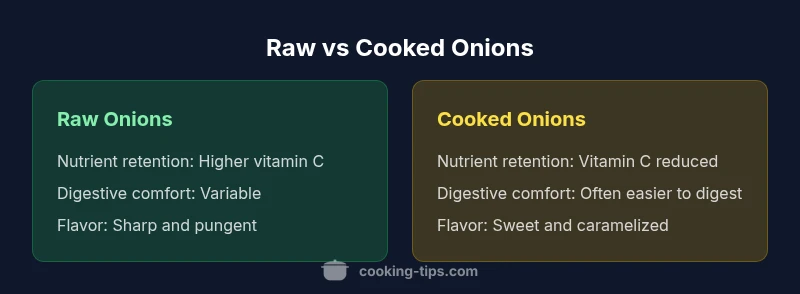
| Feature | Raw onions | Cooked onions |
|---|---|---|
| Nutrient retention | Higher vitamin C and some phytonutrients preserved | Vitamin C reduced; other nutrients preserved depending on method |
| Antioxidants accessible | Quercetin and sulfur compounds largely intact | Some antioxidants may become more bioavailable with heat |
| Digestive comfort | Can cause gas or discomfort for some people | Generally easier to digest when cooked |
| Flavor profile | Sharp, pungent, bright notes | Sweet, caramelized flavors with milder bite |
| Cooking considerations | Best in salads, salsas, and quick uses with minimal heat | Requires cooking; timing affects nutrient retention |
Benefits
- Supports nutrient variety by alternating raw and cooked forms
- Raw onions provide quick, no-cook nutrition in meals
- Cooking can improve palatability and meal adherence
- Caramelization expands recipe versatility without excessive salt
- Onions are affordable, versatile, and widely available
Cons
- Raw onions may cause digestive discomfort for some people
- Cooking reduces vitamin C and some heat-sensitive nutrients
- Overcooking can diminish flavor balance and nutrient density
- Odor and sulfur compounds can linger if not handled well
Neither raw nor cooked onions are universally healthier; use both to maximize nutrient access.
Raw onions preserve vitamin C and certain flavonoids, while cooked onions are easier to digest and can be used in more dishes. A balanced approach—incorporating both forms—best supports nutrient diversity and enjoyment in everyday meals.
Quick Answers
Are raw onions healthier than cooked onions for everyone?
Not for everyone. Raw onions preserve more vitamin C and certain flavonoids, but some people experience digestive discomfort. Cooking can ease digestion for many, while still offering health benefits. Your choice should reflect tolerance and nutrient goals.
Raw onions have more vitamin C, but cooked onions are easier on the stomach. Choose based on what works for you.
Do cooked onions retain any nutrients?
Yes. Cooking reduces vitamin C but preserves many minerals; some antioxidants may become more accessible with heat, depending on method. Short, gentle cooking helps maintain nutrient density.
Cooking reduces vitamin C but keeps minerals; some antioxidants may be released with heat.
Which cooking method preserves nutrients best?
Short, gentle methods like steaming or quick sautéing tend to preserve more nutrients than long boiling. Avoid overcooking to protect delicate compounds.
Steaming or quick sautéing preserves more nutrients than long boiling.
Do onions affect blood sugar?
Onions have a low glycemic impact overall. Cooking method does not drastically change this, but portion size matters in the context of a balanced meal.
Onions have a low impact on blood sugar; portion size matters.
How can I reduce onion odor after chopping?
Rinse hands with soap and cold water, rub with lemon juice, or wipe with stainless steel. Cooking onions away from air and using fresh blades helps reduce lingering odor.
Wash hands with soap, use lemon or stainless steel to curb odor.
Can I combine raw and cooked onions in one meal?
Yes. Use raw onions for crunch in salads and pickled toppings, and cooked onions for warmth in bowls and sautés. This approach broadens nutrient intake and flavor.
Absolutely—raw for crunch, cooked for warmth and flavor.
Top Takeaways
- Balance raw and cooked onions for maximum nutrients
- Raw form preserves vitamin C and some flavonoids
- Cooked onions enhance digestibility and flavor
- Choose quick, low-heat methods to minimize nutrient loss
- Incorporate onions across meals to boost overall intake