Are Cooked or Raw Carrots Healthier? A Practical Comparison
Explore whether cooked or raw carrots are healthier, how cooking affects nutrients, and practical tips to maximize carrot nutrition in everyday meals for home cooks.


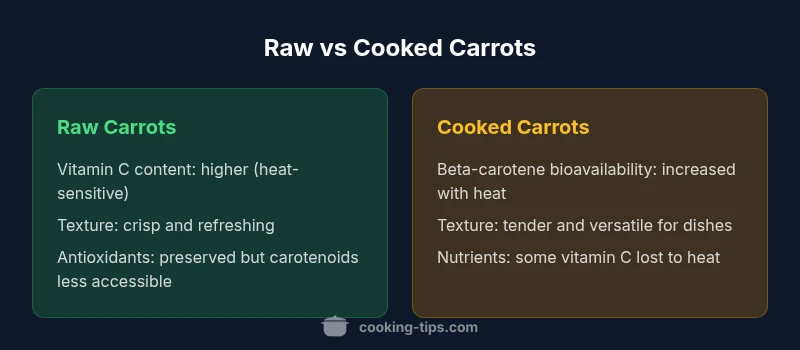
If you ask whether are cooked or raw carrots healthier, the answer isn’t absolute. Raw carrots preserve vitamin C and some antioxidants, while cooking increases the bioavailability of beta-carotene. For most people, both forms fit a healthy diet, but if carotenoid absorption is your priority, cooked carrots have an edge.
Are cooked or raw carrots healthier: Key factors
When considering whether are cooked or raw carrots healthier, it’s important to weigh nutrient stability, bioavailability, and how you plan to use them. According to Cooking Tips, the takeaways are straightforward: raw carrots excel for heat-sensitive vitamins, while cooked carrots unlock more of certain carotenoids. This doesn’t mean one form always wins; the best choice depends on your goals, kitchen habits, and overall diet. Carrots remain a nutrient-dense option whether eaten raw in salads or lightly steamed as a side, making them a practical staple for home cooks who want flexibility.
Vitamin C and antioxidants in raw vs cooked carrots
Vitamin C is water- and heat-sensitive. Raw carrots typically retain higher levels of vitamin C and certain antioxidants, which can support immune health and collagen formation. Cooking can reduce some of these nutrients, especially with prolonged exposure or boiling. However, carotenoids and certain polyphenols are more resilient, and some antioxidant activity may increase with gentle heating, depending on the cooking method. The practical takeaway is to include raw carrots for vitamin C and antioxidants while also using cooked carrots to diversify your antioxidant profile.
Beta-carotene and carotenoid bioavailability
Carotenoids, including beta-carotene, are more bioavailable when carrots are cooked, because heat helps release these fats-soluble compounds from the plant matrix. Lightly steaming, roasting, or sautéing can enhance absorption, particularly when eaten with a small amount of healthy fat such as olive oil. Raw carrots offer carotenoids too, but the body often absorbs them more efficiently after cooking, which is a key reason many nutrition guides emphasize both forms as beneficial.
Cooking methods and their nutrient impact
Different cooking methods influence nutrient retention differently. Steaming and microwaving with short times tend to preserve more vitamin C than boiling, while roasting or sautéing can maximize beta-carotene availability. Water-based methods risk leaching water-soluble vitamins into the cooking liquid, so consider using the cooking water in soups or sauces to minimize waste. For home cooks, the method choice should align with taste preference and nutrient priorities.
Practical meal ideas to balance raw and cooked carrots
A practical approach is to combine both forms across the week. For example, use raw carrot sticks in salads or as a crunchy snack for vitamin C and fiber, and serve cooked carrots as a side dish with a drizzle of olive oil to boost carotenoid absorption. A blended carrot puree can be added to soups to improve texture and carotenoid intake. Small, purposeful portions of each form can maximize nutrient diversity without sacrificing flavor.
Nutrient stability during storage and preparation
Carrot nutrient content changes with storage; raw carrots stored in the fridge maintain more vitamin C short-term, while carrots stored for longer periods may start to lose some warmth-sensitive nutrients. Cooking can further reduce certain vitamins but improves the digestibility of carotenoids. To preserve nutrients, buy fresh carrots with good color, trim the tops, and store them properly, using or cooking them within a reasonable timeframe.
Special considerations for different populations
For people who need higher carotenoid intake, cooked carrots can offer an advantage. Those prioritizing vitamin C or heat-sensitive antioxidants may benefit from incorporating more raw carrots. It’s also practical to tailor carrot consumption to age, digestion, and nutrient needs, ensuring a balanced intake from both raw and cooked forms within a varied diet.
Debunking common myths about carrots
A common myth is that raw is always superior or that cooking destroys nutrients. Reality is nuanced: some nutrients favor raw forms, others benefit from cooking, and the overall health impact depends on diet context. A well-rounded approach that includes both raw and cooked carrots aligns with most dietary guidelines and supports diverse nutrient intake.
How to optimize nutrition when using carrots in meals
To maximize nutrient intake, pair carrots with a small amount of healthy fat (e.g., olive oil or avocado) to boost fat-soluble carotenoid absorption. Preserve vitamin C by avoiding excessive heat and long cooking times for raw-ready dishes. Use cooking water in sauces or soups when possible to reclaim water-soluble nutrients and maintain overall nutrient density.
Takeaways for everyday cooking
In daily cooking, aim for a balance: eat raw carrots for a vitamin C boost and crunchy texture, and cook a portion to enhance carotenoid absorption. Vary methods (steamed, roasted, raw) to enjoy different textures and nutrients across meals. Consistency matters more than perfection; a mix of both forms supports a well-rounded carrot intake.
Final practical takeaway
The bottom line is that both cooked and raw carrots contribute valuable nutrients. Your best choice depends on which nutrient you prioritize and how you enjoy carrots in meals; a mixed approach is typically the most nutritious and satisfying. TheCooking Tips team emphasizes flexibility and consistency over chasing a single “healthier” form.
Comparison
| Feature | Raw carrots | Cooked carrots |
|---|---|---|
| Vitamin C content and heat sensitivity | High in raw | Lower after heat exposure |
| Beta-carotene bioavailability | Moderate in raw | Increased with cooking (heat aids release) |
| Texture and digestibility | Crunchy, fiber intact | Tender, softer texture enhances digestibility |
| Nutrient stability with cooking | Vitamin C can degrade | Carotenoids become more accessible |
| Best for | Vitamin C, fresh crunch in salads | Carotenoids and overall pigment intake in meals |
| Cooking method impact | Minimal heat for raw dishes | Gentle heat (steaming, light roasting) preferred for nutrients |
Benefits
- Helps readers evaluate nutrient changes clearly
- Supports informed cooking choices
- Applies to many meals and diets
- Encourages a balanced, practical approach
- Highlights nutrient interactions (fat, heat, water)
Cons
- Nutrient values vary by carrot variety and storage
- Individual dietary needs may shift the conclusion
- Some nutrient data are context-dependent
- Avoid over-interpreting small nutrient changes
Both forms have a place in a healthy diet; choose raw for vitamin C and fresh crunch, or cooked for higher carotenoid bioavailability
Raw carrots preserve heat-sensitive nutrients, while cooking boosts carotenoid absorption. A mixed approach covers nutrient diversity and taste preferences for most home cooks.
Quick Answers
Are raw carrots a better source of vitamin C than cooked ones?
Raw carrots retain more vitamin C than carrots subjected to heat. Cooking can degrade some vitamin C, but it does not eliminate all antioxidants. Including both raw and cooked carrots in your week helps maximize vitamin C and overall antioxidant intake.
Raw carrots preserve vitamin C, while cooking reduces it somewhat; a mix ensures you get enough antioxidants.
Does cooking carrots increase beta-carotene absorption?
Yes. Heat helps break down the plant matrix, making beta-carotene more bioavailable. Light cooking methods like steaming or light roasting typically maximize this benefit without excessive nutrient loss.
Cooking makes beta-carotene more available to your body.
Is raw carrots vs. cooked carrots better for weight loss?
Carrots are low in calories, whether raw or cooked. The choice between raw and cooked should be guided by nutrient goals and satiety rather than calorie content alone.
Carrots are low in calories in any form; the choice mostly depends on nutrients and meals.
Can I get all nutrients from carrots alone?
No. Carrots are nutrient-dense but not a complete source of all essential vitamins and minerals. A varied diet with multiple vegetables and other foods supports a fuller nutrient profile.
Carrots are great, but you still need a variety of foods for complete nutrition.
How should I prepare carrots to maximize nutrition quickly?
Keep cooking times short and use methods like steaming or microwaving, and pair carrots with a little fat to boost carotenoid absorption. Include raw options in snacks or salads for vitamin C and fiber.
Steam or microwave briefly, add healthy fat, and include raw carrots too.
Are frozen carrots comparable to fresh ones for health?
Frozen carrots are nutritious and convenient; flash-freezing preserves many nutrients. Fresh carrots offer crisp texture and slightly different nutrient balance depending on storage.
Frozen carrots are a solid option when fresh isn’t available, with good nutrient retention.
Top Takeaways
- Use both forms to diversify nutrients
- Pair carrots with healthy fats to boost absorption
- Steaming preserves more nutrients than boiling
- Fresh, properly stored carrots retain vitamins longer
- Balance texture and flavor to maintain consistent intake