How Long Do You Cook a Turkey? Timelines, Temps, and Tips
Learn precise turkey cooking timelines, temperatures, and tips to ensure a juicy centerpiece. From thaw to rest, get clear steps and safety guidance for unstuffed and stuffed birds.


By the end, you’ll know exactly how long to roast a turkey based on weight and whether it’s stuffed, plus how to test doneness safely. Start with thawed meat, preheated oven, and a meat thermometer. Plan for resting time after roasting to seal juices. This guide covers unstuffed and stuffed birds, plus tips for juicy results.
Why Getting the Right Cook Time Matters
Cooking a turkey isn’t just about flavor—it’s about safety, texture, and even doneness across the entire bird. If you run the clock too long, the meat dries out; if you pull it early, the center may remain undercooked. Getting the timing right also helps the breast and thighs reach safe temperatures together, making carving easier and more predictable for holiday meals. According to Cooking Tips, precise timing paired with a thermometer-based approach yields consistently juicy results. In practice, you’ll thaw fully, preheat your oven, and rely on internal temperature rather than time alone to guide you. This section sets the foundation for how weight, stuffing, and oven behavior interact with temperature targets and resting periods.
Standard Timelines for Roasting Turkey (Unstuffed vs Stuffed)
When you roast a thawed, skin-on turkey, the time you allocate depends on whether it’s stuffed. For an unstuffed bird in a conventional oven, plan roughly 13–18 minutes per pound at 325–350°F. If the turkey is stuffed, expect about 18–22 minutes per pound because the center must also reach a safe temperature. These are baseline ranges; every oven runs a touch differently, and bone-in birds can brown more quickly in the thigh. Always verify doneness with a thermometer rather than relying on time alone. In practice, use the thermometer as your final authority and tailor times to your specific roast.
How to Adjust Times for Turkey Size and Oven Temperature
Size matters. As you add weight, the absolute roasting time increases, but not linearly, since the surface area-to-volume ratio changes. If you’re cooking a larger bird, you can still stay near 325–350°F but should expect longer total times and more attention to the outer skin. Conversely, a smaller bird finishes faster, so start checking earlier. If you must adjust the oven temperature to speed things up, do so in small increments and monitor closely with a thermometer. A practical approach is to keep the oven at a moderate 325–350°F and plan for an extra 20–40 minutes per additional 4–6 pounds, then verify with internal temps.
The Thermometer Rule: Safe Temps and Carryover
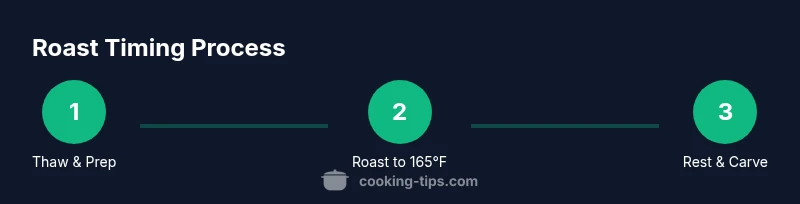
A thermometer is the only reliable way to know when your turkey is done. The target is 165°F (74°C) in the thickest part of the thigh or the breast area, avoiding the bone. After removing from the oven, let the turkey rest for 20–30 minutes; carryover cooking will raise the internal temperature a few degrees more, finishing the job without overcooking. If you’re brining or using a dry rub, keep the thermometer handy to confirm doneness without overestimation from color alone. Carryover is a natural effect of residual heat and resting, so plan accordingly.
Juiciness, Flavor, and Skin: Techniques That Help
Juiciness comes from proper moisture management and gentle heat. Consider dry brining the turkey a day ahead or lightly salting and refrigerating for several hours to tighten the skin and improve browning. Use a rack so air circulates under the bird and brush or baste only if you notice the skin browning too slowly. For crisp skin, finish with a short high-heat blast at the end (not longer than a few minutes) to set the color while the meat finishes cooking evenly. Good pan juices are the foundation of gravy, so don’t discard them—drain and use for a quick pan sauce after resting.
Common Mistakes to Avoid and How to Fix Them
- Overcooking due to relying on time alone: switch to a thermometer-based approach.
- Not thawing completely: schedule ample fridge time well before the planned cook day.
- Brined birds drying out due to over-application of salt: rinse if needed and adjust to taste.
- Skipping the resting period: juices redistribute, and cutting too soon leads to dry slices.
- Ignoring measurements in relation to stuffed turkeys: ensure the center reaches 165°F. “Trust the thermometer, not the clock.”
Rest, Carve, and Serve: Final Steps for a Juicy Slice
Once the thermometer hits 165°F in the thickest spot, remove the turkey from the oven and tent loosely with foil. Rest for 20–30 minutes before carving; this pause lets juices redistribute and makes carving cleaner. Carve against the grain in thin slices for tender portions, and consider keeping the pan juices as gravy or a pan sauce base. A well-rested turkey slices neatly and remains moist, enhancing the overall dining experience. This final stage is where timing, temperature, and patience converge to deliver a feast that’s both appealing and safe to eat.
Authoritative References and Further Reading
For additional guidance from leading food-safety authorities, see these resources:
- https://www.fsis.usda.gov/food-safety/safe-food-handling-and-preparation-guides/poultry-turkey
- https://www.cdc.gov/foodsafety/keep-food-safe.html
- https://extension.illinois.edu/
Tools & Materials
- Roasting pan with rack(Elevates the turkey for even browning and airflow under the bird.)
- Two meat thermometers (instant-read and oven-safe)(One for monitoring the inner temperature; one to stay in the oven as it roasts.)
- Aluminum foil(Optional for tenting if the skin browns too quickly.)
- Oven mitts and timer(Essential for safe handling and accurate timing.)
- Carving knife or electric knife(For neat slices after resting.)
Steps
Estimated time: Total time: about 2 hours 45 minutes to 3 hours 15 minutes depending on weight, stuffing, and oven performance.
- 1
Prepare and thaw
Ensure the turkey is fully thawed before roasting. Remove giblets and neck, pat dry with paper towels, and arrange on a rack in the roasting pan. This ensures even heat penetration and crisp skin from the start.
Tip: Thaw in the fridge for best texture; quicker thaw in cold water requires changing water every 30 minutes. - 2
Preheat and season
Preheat the oven to 325–350°F. Pat the turkey dry again, then season with salt, pepper, and optional herbs. A light dry brine gives crisper skin and more flavorful meat.
Tip: Season under the skin for deeper flavor without overpowering the meat. - 3
Roast unstuffed or prep stuffing
If roasting unstuffed, place the turkey breast side up on the rack. For stuffed, loosely fill the cavity and avoid overpacking, which slows heat penetration.
Tip: Stuffing should contain cooked ingredients or be avoided to ensure safe thermals. - 4
Monitor internal temperature
Insert thermometer into the thickest part of the thigh without touching bone. Start checking as you approach the estimated finish time; total time varies with size and oven.
Tip: Check multiple spots—the breast and thigh may read differently as the turkey rests. - 5
Rest before carving
Once thermometer reads 165°F in the thickest part, remove from oven and tent with foil for 20–30 minutes. Rest allows juices to redistribute for moist slices.
Tip: Don’t skip resting; it’s essential for juiciness. - 6
Carve and serve
Carve against the grain into even slices. Use the pan juices to make a quick gravy if desired. Serve promptly while the meat stays warm and tender.
Tip: Slice widths affect mouthfeel; thinner slices are easier to chew when hot.
Quick Answers
What is the safe internal temperature for turkey?
The safe internal temperature for turkey is 165°F in the thickest part of the thigh or breast, verified with a thermometer. Allow for a brief rise during resting.
Aim for 165°F in the thickest part, then rest to let juices redistribute.
Should I stuff the turkey or roast it unstuffed?
Stuffing can take longer to reach a safe temperature and may result in uneven cooking. If you do stuff the turkey, check the center of the stuffing as well. Generally, unstuffed is easier to cook safely and evenly.
Most cooks roast unstuffed for reliability; if you stuff, ensure the center hits 165°F.
How long should a turkey thaw in the fridge?
Plan about 24 hours of fridge thawing for every 4–5 pounds of turkey. A larger bird may require 2–3 days. Always place the turkey in a tray to catch drips.
Give yourself plenty of fridge time; larger birds need more days to thaw safely.
Can I cook at a higher temperature to finish faster?
Raising the oven above 350°F can dry the meat and unevenly cook the bird. If you need to shorten time, adjust with shorter estimated finish and monitor with a thermometer.
If you must, keep tweaks minimal and watch the thermometer closely.
How long should turkey rest after cooking?
Rest the turkey for 20–30 minutes after removal from the oven. Resting helps juices redistribute and makes carving easier.
Rest for about 20 to 30 minutes for juicy slices.
Watch Video
Top Takeaways
- Thaw completely before roasting
- Use a thermometer and target 165°F
- Unstuffed cooks faster; stuffed takes longer
- Rest before carving for juicier slices
- Let carryover heat finish the cooking process