When to Cook a Fresh Turkey: Timing, Temperature, and Tips
Learn exactly when to cook a fresh turkey for juicy meat and safe temps. This guide covers weight-based timing, target temperatures, resting, and practical steps to serve a perfectly roasted bird with confidence.


According to Cooking Tips, precise timing is the difference between a juicy, safely cooked turkey and a dry, overdone one. Knowing when to cook a fresh turkey is about weight-based planning, reliable temperatures, and a calm roasting schedule. This guide translates those basics into a practical plan you can follow for a flawless holiday meal.
When to cook a Fresh Turkey: Core Timing Logic
For a fresh turkey, you skip thawing, but you still need a reliable plan so the meat cooks evenly and stays moist. The core idea is straightforward: the total roast time depends on weight, but the sequence of actions and the thermometer readings guide you to the right moment to pull the bird from the oven. A calm, steady roast at a moderate temperature and a deliberate resting period yield the best texture and flavor. The question of when to cook a fresh turkey becomes a practical schedule rather than guesswork. This section lays out a working framework that home cooks can trust for most birds in the 12–18 pound range. Key factors include oven calibration, pan setup, whether you stuff or not, and the flexibility to adjust based on real-time thermometer readings. With a solid plan, you’ll know exactly when to start roasting for a juicy finish and crisp skin.
This guidance emphasizes the importance of consistency and a few simple checks rather than chasing a perfect minute. By focusing on weight-based timing and the target internal temperatures, you reduce guesswork and increase the odds of a well-cooked bird on the table when to cook a fresh turkey.
Incorporating flavor-friendly steps like dry patting the skin, using a rack, and letting the turkey rest after roasting can improve moisture retention and sliceability. The timing framework below applies to common sizes and provides a safe baseline for both standard ovens and home roasting setups. Remember: specific oven performance and bird shape can shift timing by 10–20 minutes per stage, so thermometer readings remain the most reliable guide.
Weight-based timing: calculating roast times
Weight is the most practical driver of cook time, but not the only factor. A typical unstuffed turkey roasts at a moderate pace, and bake times can vary a bit from oven to oven. A practical approach is to estimate by weight and then verify with a thermometer rather than relying on a clock alone. For planning, many home cooks use a general range like 12–15 minutes per pound at 325–350°F (163–177°C) for unstuffed birds, adjusting for the exact size and your oven calibration. If you do stuff the turkey, plan for an extra 15–30 minutes, and confirm doneness with an internal thermometer in multiple locations. Always allow for carryover cooking during resting. This method helps answer the core question: how long to cook a fresh turkey? The answer remains: trust the thermometer, then rest before carving to maintain moisture and sliceability.
To refine timing for your particular bird, note your oven’s performance, the turkey’s weight, whether you’re stuffing, and the initial temperature of the bird as you begin roasting. With these inputs, you can create a reliable schedule that yields a consistently juicy result across different roasts.
A practical example helps illustrate the idea: a 14-pound fresh turkey roasted unstuffed at 325°F will typically fall into a 3.0–3.75 hour window. Use the thermometer readings as your final judge and don’t rely on a clock alone. The combination of weight-based estimation and thermometer verification provides the best balance of predictability and flavor.
Temperature targets, doneness, and resting
Doneness is best confirmed with a thermometer rather than color cues alone. For poultry, the recommended safe internal temperature is 165°F in the thickest part of the breast, with the thigh reaching about 175–180°F. When the breast hits 160–162°F and the thigh 170–175°F, you may remove the turkey from the oven and let carryover heat finish the job while resting under a loose tent of foil. Resting is essential: it allows the juices to redistribute, resulting in moister slices. Plan for 20–30 minutes of rest after roasting before carving.
To keep the skin crisp while resting, you can tent the bird loosely with foil or keep it uncovered for the first part of rest if your kitchen is cool. If your goal is to maximize juiciness, avoiding a long, cold rest is usually not necessary. The key is consistent monitoring: use a reliable thermometer and check both the breast and thigh to ensure they reach the target temperatures without overcooking.
Fresh turkey prep: seasoning, trussing, and pan setup
A fresh turkey benefits from simple, deliberate prep. Remove the neck and giblets, pat the bird completely dry, and then pat the skin with olive oil or softened butter to promote browning. Season generously with salt and pepper and, if you like, a mix of herbs such as thyme, rosemary, and garlic. Truss the legs and tuck the wings to promote even cooking and prevent the tips from burning. Use a rack in a sturdy roasting pan so the turkey isn’t sitting in its own juices, which helps the breast stay moist and the crackling skin crisp.
Even if you skip stuffing, you can add aromatics like onion, lemon, and herbs inside the cavity for fragrance. If you choose to stuff, ensure the stuffing reaches 165°F as well, and be mindful that stuffing can affect overall cooking time. A dry surface accepts seasonings better, while patting the skin dry helps achieve the classic roast appearance. For many cooks, this stage is where you set the tone for a successful roast.
Practical roasting timeline: a sample schedule for common sizes
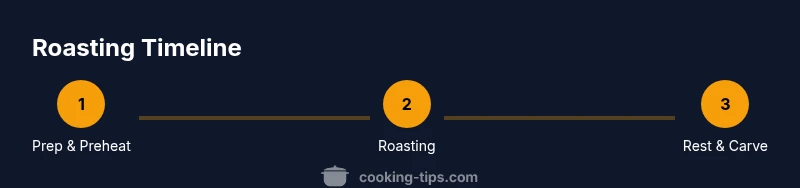
Having a plan helps you stay on track during a busy kitchen day. Here is a practical outline you can adapt for birds in the 12–18 pound range:
- Preheat the oven to 325–350°F (163–177°C).
- Prepare and season the turkey, place on a rack, and insert the thermometer into the breast.
- Roast until the breast reaches 160–162°F and the thigh 170–175°F, then remove and rest for 20–30 minutes.
- Carve and serve; refrigerate leftovers promptly.
Depending on your actual weight and whether you stuff the bird, you may need to adjust these times by 10–20 minutes per pound. The key is frequent thermometer checks and a realistic rest period. You can prepare side dishes to finish during the rest window, ensuring everything comes to the table hot and flavorful.
Common mistakes and quick fixes
Common missteps include opening the oven door too often, which lowers the temperature and slows cooking. Dry skin often results from cooking too cold or too long; brisk warming and a light oil or butter rub can help. Another frequent error is relying on color alone; the only reliable signal is the internal temperature. If the skin browns too quickly, tent the turkey with foil and lower the oven temperature slightly. Insufficient resting time leads to jarring juices on the cutting board; always rest before carving. If you’re unsure about doneness, use a meat thermometer and check multiple spots to confirm an even result.
Authority sources
For more precise guidelines and safety information, consult the following sources:
- https://www.fsis.usda.gov/food-safety/safe-food-handling-and-preparation/meat/poultry/turkey
- https://www.cdc.gov/foodsafety/index.html
- https://www.eatright.org/food/nat-facts/turkey-cooking-tips
Quick planning checklist
- Confirm turkey weight and oven temperature before start
- Gather all tools and materials in advance
- Decide on stuffing vs. unstuffed and adjust timing accordingly
- Prepare aromatics and seasoning for inside cavity
- Have a thermometer ready and plan rest time into the schedule
- Create a simple schedule and post reminders in the kitchen
- Plan side dishes to align with the rest window and serving time
- Rehearse a smooth carving plan for the final presentation
Tools & Materials
- Roasting pan with rack(Heavy-gauge metal with a rack to elevate the turkey)
- Instant-read meat thermometer(With an oven-safe probe for continuous monitoring)
- Aluminum foil(For tenting during resting and to prevent over-browning)
- Oven mitts or silicone gloves(Heat-resistant protection when handling hot equipment)
- Carving knife or electric knife(Assist with clean carving after rest)
- Kitchen towels(Dry hands and pat the turkey dry during prep)
Steps
Estimated time: Total time varies with bird size; typical range: 3-4 hours for 12–18 lb unstuffed fresh turkey.
- 1
Preheat oven and prep turkey
Set the oven to 325–350°F (163–177°C). Remove packaging, giblets, and neck from the cavity. Pat the turkey completely dry, rub with oil or softened butter, and season generously with salt and pepper. This step ensures even browning and helps the skin crisp.
Tip: A dry surface promotes browning; consider a light coating of oil or butter for color and moisture. - 2
Season and truss the turkey
Season inside the cavity with salt, pepper, and optional herbs. Truss the legs and tuck the wings to promote even cooking and prevent wing tips from burning. Placing the bird on a rack allows air to circulate for crisp skin.
Tip: Trussing helps the meat stay compact and cooks more evenly; don’t skip this for larger birds. - 3
Insert thermometer and position
Insert the thermometer into the thickest part of the breast, avoiding bone. Place the turkey on a rack in a sturdy roasting pan so air can circulate under and around the bird.
Tip: A remote thermometer can simplify monitoring without opening the oven repeatedly. - 4
Roast and monitor temperature
Roast the turkey while checking temperatures periodically. For unstuffed birds, expect roughly 12–15 minutes per pound at 325–350°F. Use thermometer readings as the primary guide to doneness.
Tip: Avoid opening the oven door often, which cools the oven and slows cooking. - 5
Remove, rest, and check final temps
When the breast reaches 160–162°F and the thigh 170–175°F, remove from oven and tent with foil. Rest 20–30 minutes to allow carryover cooking and juice redistribution. Carve after the rest.
Tip: Resting is essential; it yields juicier slices and makes carving easier. - 6
Carve and serve
Carve the turkey in slices across the grain, starting with the breast. Ensure leftovers are cooled quickly and stored in shallow containers. Reheat safely and enjoy.
Tip: Slice thinly for even portions and easier plating. - 7
Optional finishing steps
If you prefer crisper skin, return the carved portions to a hot oven for a minute or two or use a kitchen torch carefully to crisp edges. For stuffing, ensure it reaches 165°F in the center.
Tip: Stuffing can extend cooking time and require additional thermometer checks. - 8
Cleanup and storage
Dispose of any pan drippings carefully or use them to make a light gravy. Refrigerate leftovers within two hours in shallow containers for quicker cooling.
Tip: Label storage containers with date to keep your leftovers organized.
Quick Answers
What is the safe internal temperature for a fresh turkey?
The safe internal temperature for poultry is 165°F in the breast and 175–180°F in the thigh. Use a thermometer and check multiple spots for even doneness.
For safety, cook until the breast reaches 165 degrees and the thigh about 175 to 180 degrees, then rest before carving.
Should I stuff a fresh turkey?
Stuffing can extend cooking time and may not reach 165°F quickly enough. For best results with a fresh turkey, cook stuffing separately or ensure the center of the stuffing reaches 165°F.
Stuffing is optional; if you do stuff, check the center of the stuffing reaches 165 degrees.
Is resting really important after roasting?
Yes. Resting allows juices to redistribute, making slices juicier. Plan 20–30 minutes of resting time under foil before carving.
Resting is crucial to keep the meat moist; don’t skip it.
How do I know when to start roasting for a given weight?
Estimate 12–15 minutes per pound at 325–350°F for unstuffed birds, then use a thermometer to confirm doneness. Start time based on weight, then verify with temps.
Plan by weight and confirm with a thermometer.
Can I cook a fresh turkey at a different oven temperature?
Yes, but be prepared for longer cooking times or different browning. If you adjust from 325–350°F, monitor temps closely to reach 165°F in the breast and 175–180°F in the thigh.
Adjusting temps is possible; just monitor with a thermometer.
What if the turkey browns too quickly on top?
Tent the bird with foil to prevent over-browning and lower the oven temp slightly for the remainder of the cook.
Loosely tent with foil to prevent excess browning.
Watch Video
Top Takeaways
- Plan around weight-based timing, not a clock alone.
- Use thermometer readings for reliable doneness.
- Rest the turkey 20–30 minutes before carving.
- Unstuffed turkeys cook more evenly and quickly.
- Ensure final temps: breast 165°F, thigh 175–180°F.