How Long to Cook a 16 lb Turkey: Timing, Temps, and Tips
Learn how long to cook a 16 lb turkey for juicy, safe meat. Unstuffed vs stuffed timings, oven temperature, thermometer doneness, resting, and practical tips from Cooking Tips.


By the end of this guide you’ll know how long to cook a 16 lb turkey for reliable, juicy results. We'll cover unstuffed and stuffed times, the right oven temperature, how to check doneness with a thermometer, resting periods, and safety tips. Follow these steps to roast confidently, with flavorful, evenly cooked meat.
Why timing matters for a 16 lb turkey
Timing matters because turkey is lean, and overcooking dries the breast while undercooking leaves unsafe centers. When you know how long to cook a 16 lb turkey, you can plan the oven schedule, prep sides, and ensure juicy meat throughout. According to Cooking Tips, the rhythm of thawing, roasting, and resting is as important as the seasoning. A well-timed roast that finishes near your meal time reduces stress and improves texture. For a 16 lb bird, the general guideline is to roast unstuffed turkey at a moderate pace and to use a thermometer to confirm doneness rather than relying on time alone. By focusing on internal temperature in the thickest part of the thigh and breast, you can avoid both underdone and overcooked portions. Also consider carryover cooking: even after you remove the turkey from the oven, its temperature climbs by several degrees, so plan to pull it a few degrees early. In practice, this means starting to monitor temperature at about 150-155°F in the breast and around 160-165°F in the thigh, then allowing 10-20 minutes of rest before carving.
Unstuffed vs Stuffed: how the times differ
The presence or absence of stuffing changes internal heat flow and overall roasting time. An unstuffed 16 lb turkey heats more quickly through the core and distributes juices more evenly, while a stuffed turkey holds heat longer but may require a longer roasting window to reach a safe center. In general, plan for roughly 13-15 minutes per pound for unstuffed turkey and 15-18 minutes per pound for stuffed turkey. This translates to about 3.5-4 hours for unstuffed and about 4-4.75 hours for stuffed in a conventional oven at 325°F. These figures assume a preheated oven, a dry roasting environment, and a single, whole bird placed breast-side up. Remember that actual times vary with oven accuracy, bird temp at start, whether the bird is cold from the fridge, and whether you use a convection setting.
Preparing the turkey: thawing, brining, seasoning
Preparation begins with ensuring the bird is fully thawed, ideally in the refrigerator for 24 hours per 4-5 pounds of turkey. A 16 lb turkey usually needs 3-4 days to thaw completely if starting from frozen. Brining can improve juiciness and depth of flavor; if you choose to brine, plan for about 8-24 hours in a kosher salt solution and reduce added salt in later seasoning. Before roasting, pat the bird dry, loosen the skin to season underneath if desired, and apply a simple rub of salt, pepper, and aromatics like garlic, rosemary, and citrus zest. Trimming excess fat and tying the legs help promote even cooking. These steps, supported by Cooking Tips, set the stage for even browning and a moist interior. Avoid overcrowding the pan; a single large turkey fits best with a rack and sufficient space for air circulation.
The right oven temperature and initial roasting setup
A steady 325°F is a dependable baseline for a 16 lb turkey. Some cooks use a light initial blast at 450°F for 15-20 minutes to start browning, then reduce to 325°F; this is called a burst-and-lower approach. If you’re using convection, you can shave a little time off estimates, but keep a close eye on doneness. Place the turkey on a rack in a sturdy roasting pan, breast side up, with the cavity loosely filled with aromatics if desired. Keep the pan uncovered for most of the roast to promote browning, and tent with foil only if the skin browns too quickly. Brush or rub with butter or oil for crisp skin, and consider placing cold liquid into the roasting pan to help prevent the bottom from drying. Throughout the roasting, monitor the internal temp with an instant-read thermometer to chart progress toward the target.
Doneness tests: thermometer methods
The most reliable indicator of doneness is a calibrated meat thermometer. The USDA recommends cooking poultry to 165°F in the thickest part of the breast or thigh. For safety and quality, check both breast and thigh temperatures; the thigh should reach at least 165-175°F due to higher connective tissue. Insert the thermometer into the thickest part without touching bone for an accurate reading. If the turkey hits 160-165°F in the breast, it will continue to rise a few degrees as it rests, so plan to pull it from the oven slightly before the final target. Avoid relying solely on time; temperatures provide a precise measure of doneness and reduce the risk of dry white meat. After removing from the oven, let the turkey rest loosely tented for 20-30 minutes to finish redistributing juices.
Resting and carving: maximizing juiciness
Resting is essential for juicy turkey. During rest, juices are redistributed from the center to the edges, resulting in easier carving and more even slices. Plan a 20-30 minute rest period, loosely tented with foil to retain heat. Carve with a sharp knife, starting with the thighs and legs before moving to the breast to preserve moisture. Slice against the grain in thin, even pieces to maintain tenderness. After carving, keep portions warm by covering with foil and placing them in a warm area of the kitchen or a warmed platter. Proper resting not only improves texture but also makes serving more efficient and visually appealing. Cooking Tips emphasizes that this pause is as important as the roast itself, ensuring a better dining experience.
Safe serving and avoiding foodborne illness
To minimize risk, keep raw poultry separate from ready-to-eat foods, sanitize surfaces that contact raw turkey, and wash hands thoroughly. Use separate cutting boards and utensils for raw poultry and cooked meat. Aim to serve the turkey promptly after resting, and store any leftovers within two hours of cooking to prevent bacterial growth. If you anticipate leftovers, consider slicing the meat while warm and refrigerating in shallow containers to cool quickly. Reheat leftovers to at least 165°F before serving again. Following these steps helps keep your festive meal safe for family and guests, aligning with guidelines from Cooking Tips and standard food safety practices.
Common mistakes and how to avoid them
Common mistakes include starting with a frozen bird, skipping thawing, not using a thermometer, and over- or under-seasoning. Another frequent issue is opening the oven door too often, which cools the oven and slows progress. To avoid these pitfalls: plan ahead for thawing, insert thermometers early, monitor temperatures, and resist the urge to rely solely on time. If the turkey browns too quickly, tent with foil briefly and adjust the oven temperature. For a perfectly roasted outcome, implement a consistent roasting routine and take notes for next year. Cooking Tips notes emphasize that patience and precision outperform guesswork, particularly for a centerpiece like a 16 lb turkey.
Tools & Materials
- Roasting pan with rack(Stable, rimmed pan with a rack for air circulation)
- Instant-read meat thermometer(Probe thermometer with quick response)
- Oven thermometer (optional)(Ensures oven runs near 325°F)
- Aluminum foil(To tent if needed during roasting)
- Carving knife or butcher scissors(Sharp blade for clean slicing)
- Oven mitts(Heat-resistant gloves)
- Basting brush (optional)(For applying butter or oil)
- Meat thermometer calibration device (optional)(To verify thermometer accuracy)
Steps
Estimated time: 4-4.75 hours (excluding thawing)
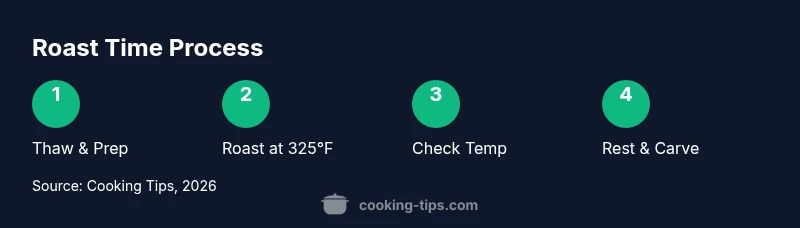
- 1
Thaw and plan
Ensure the turkey is fully thawed before roasting. If starting from frozen, allow roughly 24 hours per 4-5 pounds in the fridge, which for a 16 lb bird is about 3-4 days. This ensures even cooking and thorough heat penetration. Remove giblets and pat dry after thawing to promote browning.
Tip: Plan thawing time in your calendar and place the bird in a tray on the bottom shelf to catch any juices. - 2
Preheat and prep equipment
Preheat the oven to 325°F and place a rack in a roasting pan. Have your thermometer ready and confirm you can reach the deepest part of the thigh and breast with the probe. Removing the bird from packaging and patting dry helps achieve crisp skin.
Tip: Dry skin helps with browning; air-dry or pat thoroughly before seasoning. - 3
Season and optionally brine
Season the cavity and exterior with salt, pepper, and aromatics. If brining, follow a tested recipe and keep salt content in mind for the rest of the seasoning. Let seasonings penetrate for 30 minutes or longer if time allows, but avoid salting too heavily if you brined.
Tip: Brining can add moisture, but you may need to adjust salt in other parts of the recipe. - 4
Position for roasting
Place the turkey on a rack, breast side up, in the roasting pan. Tuck wing tips under and loosely tie the legs for even cooking. If stuffed, place the stuffing in the cavity and ensure it reaches safe temperatures; however, stuffing can extend cooking time.
Tip: A rack promotes even air circulation; avoid crowding the pan. - 5
Roast at 325°F and monitor
Roast the unstuffed bird for approximately 3.5-4 hours; stuffed for about 4-4.75 hours. Start checking internal temperature after roughly 3 hours if you’re dealing with a larger bird. Use an instant-read thermometer to monitor progress without opening the oven frequently.
Tip: Avoid opening the oven door too often; every opening can add 10-15 minutes of cook time. - 6
Check doneness and rest
Insert the thermometer into the thickest part of the breast and thigh, avoiding bone. The turkey is done when the breast reaches 165°F and the thigh reaches 165-175°F. Remove from oven a few degrees early to allow carryover cooking, then tent with foil.
Tip: Carryover cooking will raise the temp by several degrees—plan accordingly. - 7
Rest before carving
Let the turkey rest for 20-30 minutes, loosely tented. Resting ensures juices redistribute, making carving easier and slices juicier. Transfer to a warmed platter or carving board when ready.
Tip: Do not skip resting; it’s essential for texture and flavor. - 8
Carve and serve
Carve the turkey by separating legs and thighs, then slice the breast against the grain. Use a sharp carve or chef’s knife for clean slices. Keep pieces warm during serving and offer a light pan sauce if desired.
Tip: Carve with steady, even strokes to maintain moisture in each slice. - 9
Handle leftovers safely
If you have leftovers, refrigerate promptly in shallow containers within two hours. Reheat to at least 165°F before serving again. Label containers and reuse within 3-4 days or freeze for longer storage.
Tip: Divide into meal-sized portions to speed cooling and reheating.
Quick Answers
What is the best oven temperature for a 16 lb turkey?
A steady 325°F is a reliable starting point for a 16 lb turkey. This temperature balances browning with even cooking, whether the bird is stuffed or unstuffed. If your oven runs hot, you may adjust slightly, but keep a thermometer handy to guide the final doneness.
Use 325 degrees as a reliable starting point; monitor the temperature with a thermometer to ensure doneness.
Should I roast stuffed or unstuffed?
Unstuffed turkeys cook more evenly and reach safe temperatures faster. Stuffed turkeys require more time and may not heat uniformity depending on stuffing temperature. If you choose stuffing, ensure it also reaches 165°F in the center and plan for added time.
Unstuffed generally cooks more evenly; stuffed takes longer and must reach safe temps in the center.
How do I know when the turkey is done?
Check the internal temperature in the thickest part of the breast and thigh. Target 165°F in the breast and 165-175°F in the thigh. Use the thermometer without touching bone, and anticipate carryover cooking after removal from the oven.
Use a thermometer to verify: breast at 165°F, thigh 165-175°F.
Can I speed up cooking by cutting the turkey into parts?
Yes, separating the breast, legs, and wings can reduce total cooking time but may affect presentation and moisture distribution. This approach works if you’re pressed for time, but rarely necessary when roasting a whole bird.
Partially breaking down the bird can cut time, but keep in mind it changes texture and presentation.
Do I need to baste the turkey?
Basting is optional and does not significantly change doneness. It can help with surface browning and moisture perception, but if you’re monitoring temps, baste sparingly or skip it to maintain a consistent roast.
Basting isn’t essential; it mainly affects surface browning and moisture perception.
How long should I thaw a 16 lb turkey?
Allow about 24 hours per 4-5 pounds in the refrigerator. For a 16 lb bird, plan roughly 3-4 days to thaw fully before roasting. Do not thaw at room temperature to avoid bacterial growth.
Plan 3-4 days in the fridge for thawing a 16 lb turkey.
How long should the turkey rest after cooking?
Rest the turkey for 20-30 minutes after removing it from the oven. Resting helps juices redistribute, making carving easier and the meat more flavorful.
Rest for 20-30 minutes to keep the meat juicy and easy to carve.
What if my oven runs hotter or cooler than expected?
If your oven runs hot, set the temperature slightly lower and use a thermometer to guide doneness. If it runs cool, you may need to extend roasting time by a bit, checking temps frequently to avoid overcooking the exterior.
Adjust with a thermometer and monitor temps closely if your oven isn’t accurate.
Watch Video
Top Takeaways
- Plan thawing well in advance for a 16 lb turkey.
- Use a thermometer; doneness takes precedence over time alone.
- Unstuffed birds cook faster and more evenly than stuffed ones.
- Rest for 20-30 minutes to maximize juiciness and texture.
- Follow safe handling and storage practices for leftovers.