How Long to Cook a 14-Pound Turkey: Timetable, Temps, and Tips
Learn exact roast times and temps for a 14-pound turkey, plus resting, stuffing considerations, and safe doneness guidelines for juicy, evenly cooked meat.


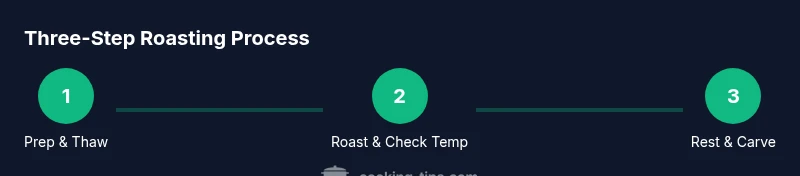
Roast a 14-pound turkey until the thickest part reads 165°F, then rest 20–30 minutes before carving. Plan roughly 3.0–3.5 hours at 325–350°F, using a thermometer for accuracy. Start with a thawed, pat-dried bird and tent with foil if browning too fast. If stuffed, add 15–20 minutes per pound and verify the center also reaches 165°F.
Understanding turkey size and safety basics
14 pounds is a common roast size for a family gathering. The weight affects roasting time, heat distribution, and resting needs. According to Cooking Tips, start with a fully thawed bird and pat it dry to promote crisp skin. Remove the neck and giblets so heat can circulate, and set the bird on a rack in a sturdy roasting pan to raise it above the drippings. If the turkey is stuffed, plan for extra cooking time and ensure the stuffing reaches 165°F inside. For food safety, never roast a bird that is still frozen or partially thawed; this creates cold spots that can harbor bacteria. Position the breast side up to promote even heat exposure, while the thighs cook thoroughly. If the skin browns too quickly, loosely tent with aluminum foil to prevent burning while the interior finishes cooking. Having a plan for thawing, prep, and roasting helps you achieve juicy meat with a crisp skin. Also consider how your oven's accuracy and your pan's size affect heat flow.
Oven temps and roasting fundamentals
Most home ovens roast a turkey best at a moderate temperature. A safe, reliable baseline is to preheat to 325°F and roast until the thickest part reaches 165°F; some cooks prefer 350°F for faster browning, but the higher the heat, the more vigilant you must be about browning and moisture loss. If your oven runs hot or cold, use an oven thermometer to verify actual temperature. Ribbed or elevated roasting pans help air circulate and yield more even browning. If you plan to stuff the cavity, you can use a slightly lower temperature (around 325°F) to help the stuffing cook without drying the meat; remember stuffed birds require additional time and careful checking with a thermometer. Basting is optional; it can help with flavor but isn’t required for safety. Trust a thermometer more than the clock; the goal is a safe, juicy interior rather than a perfectly timed exit from the oven.
Time estimates by weight (unstuffed vs stuffed)
Time estimates for a 14-pound turkey vary with stuffing and oven performance. For an unstuffed bird, plan roughly 3.0–3.75 hours at 325°F, then check with a thermometer near the end. If you stuff the bird, add about 15–20 minutes per pound and be cautious that the center of the stuffing also reaches 165°F. When using a convection setting, reduce the time by 10–15 minutes and check the internal temperatures sooner. Remember that pan size, whether you use a roasting rack, and how evenly your oven heats can shift these times. The best practice is to use the temperature target (165°F in the thigh and breast, and 165°F for stuffing) as your guide rather than the clock alone. For safety, always verify the deepest part of the thigh and the thickest part of the breast reach 165°F.
Checkpoints and thermometer usage
Using a meat thermometer is the most reliable way to judge doneness. Insert the thermometer into the inner thigh without touching bone; for breast checks, insert into the thickest part avoiding the bone. Start checking around the 2.5–3 hour mark for a 14-pound bird at 325°F; if you see temps around 150–155°F, continue roasting and recheck every 10–15 minutes. For stuffed birds, insert the thermometer into the center of the stuffing as well. If you’re using a digital probe thermometer with an alarm, set it to 165°F so it alerts you when the target is reached. Once the turkey hits 165°F in the thigh and 165°F in the stuffing (if used), remove from the oven and let rest. Don’t cut into the meat immediately; resting lets juices redistribute, improving sliceability and moisture.
Resting, carving, and serving tips
Let the turkey rest for 20–30 minutes after removing it from the oven; this short pause makes carving easier and helps the juices reabsorb. Transfer the turkey to a warm cutting board and tent loosely with foil to keep it from cooling too fast. Carve the breast first, slicing against the grain for tender slices, followed by the thighs and drumsticks. If you stuffed the bird, give the stuffing its own quick check: it should be 165°F in the center, not just warm. For a juicier result, spoon some of the pan juices over the sliced meat before serving. After resting, check the turkey again to ensure it's at a safe serving temperature; if needed, reheat small portions briefly. For presentation, carve tableside or in the kitchen and arrange slices neatly on a platter; a light sprinkle of salt or herbs can brighten the crust.
Common mistakes to avoid
Avoid thawing on the counter; always thaw in the fridge or cold water method. Don’t rely solely on time; use a thermometer. Do not baste excessively or open the oven door repeatedly; this lets heat escape and extends cooking time. Do not overfill the cavity with stuffing; it slows heat penetration. Avoid using a pan that is too small, which crowds heat flow. Finally, don’t skip resting; rest is essential to juiciness.
How to adapt for different ovens and gear
Every oven behaves differently; if your oven runs hot, lower the temperature by 25°F or check earlier with a thermometer. A convection oven can shorten cooking time; start checking earlier. If you’re using a cast-iron skillet or Dutch oven, this can influence browning and heat retention; you may need to adjust the heat slightly. When roasting multiple birds or a very large turkey, ensure the pan is not overcrowded, which can hinder browning.
Tools & Materials
- Meat thermometer (instant-read or digital probe)(Target 165°F in the thickest part of the thigh; test the breast too.)
- Roasting pan with rack(Large enough to fit a 14-lb turkey without touching the sides.)
- Aluminum foil(Loosely tent the bird if browning too fast near the end.)
- Carving knife/cutting board(Sharp knife and a stable board for neat slices.)
- Oven thermometer(Use if your oven’s gauge is unreliable.)
- Basting brush (optional)(Use for oil or butter on skin if desired.)
- Meat rack or extra trays(Helpful for roasting and space management.)
Steps
Estimated time: Total time: 3.5–4.5 hours depending on stuffing and oven performance
- 1
Thaw safely
Ensure the turkey is fully thawed before roasting. Use refrigerator thawing for 24–48 hours for a 14-pound bird, or cold-water method if you’re short on time, changing water every 30 minutes. Remove neck and giblets as soon as you start thawing to allow heat to circulate.
Tip: Plan thaw time in advance; never thaw on the counter to prevent bacterial growth. - 2
Set up roasting gear
Place a rack in a large roasting pan so air can circulate around the bird. Preheat the oven to 325°F. If you’re using convection, you can start with 315°F but monitor more frequently.
Tip: A rack ensures even browning and prevents the bottom from steaming. - 3
Season and prep for roasting
Pat the turkey dry, rub with oil or butter, and season generously with salt, pepper, and any aromatics you like. If you plan to stuff, loosely fill the cavity and keep the stuffing moist and evenly distributed.
Tip: Truss the legs for uniform cooking and to prevent edge drying. - 4
Roast and monitor
Place the turkey in the oven and don’t open the door often. Start checking temperatures toward the lower end of the expected range; aim for 165°F in the thigh and breast. If stuffed, check the center of the stuffing too.
Tip: Avoid frequent basting; it interferes with browning and can chill the meat. - 5
Verify doneness and rest
When the thermometer reads 165°F in the thigh (and stuffing, if used), remove from the oven. Tent loosely with foil and rest for 20–30 minutes before carving to redistribute juices.
Tip: Resting is essential for juiciness; skip it and the slices may be dry. - 6
Carve and serve
Carve the breast slices against the grain, then separate thighs and drumsticks. Transfer slices to a warm platter, spoon some pan juices over the meat, and serve with stuffing and sides.
Tip: Keep carved portions warm with a light covering until ready to plate.
Quick Answers
How long should I thaw a 14-pound turkey?
Thawing a 14-pound turkey in the fridge typically takes 24–48 hours. If you’re short on time, use the cold-water method, changing the water every 30 minutes. Never thaw at room temperature due to safety risks.
Thaw a 14-pound turkey in the fridge for about a day or two, or use the cold-water method if you’re in a hurry.
Is it better to stuff the turkey or cook stuffing separately?
Stuffing can add flavor, but it increases cooking time and carries safety risks if not heated evenly. For easier safety checks, cook stuffing separately and refrigerate leftovers promptly.
Stuffing separately is safer and easier to ensure it reaches 165 degrees.
What is the safe internal temperature for turkey?
The safe internal temperature for turkey is 165°F in the thickest part of the thigh and breast. If stuffed, the center of the stuffing should also reach 165°F.
Make sure the thickest part of the thigh and breast reach 165 degrees Fahrenheit.
Does resting affect juiciness?
Yes. Resting allows juices to redistribute and keeps slices moist. Skipping resting often results in a drier final product.
Resting is essential for juicy slices.
Can I brine a 14-pound turkey?
Brining can improve moisture and flavor, but it requires extra time and attention to salt balance. If you brine, follow a trusted brine recipe and rinse well before roasting.
Brining can help, but follow proper brining instructions.
What adjustments for a convection oven?
Convection can reduce cooking time; start checking earlier, typically 10–15 minutes sooner than conventional times.
Check temperatures earlier if you’re using convection.
Should I baste during roasting?
Basting is optional. It can add flavor but isn’t required for doneness. Avoid opening the oven door too often to maintain even heat.
Basting isn’t necessary for safety; just keep heat steady.
Watch Video
Top Takeaways
- Check doneness with a thermometer, not time alone.
- Rest the turkey 20–30 minutes before carving.
- Unstuffed 14-lb turkeys take roughly 3.0–3.75 hours at 325°F.
- Stuffed turkeys require additional time per pound and internal stuffing temp.