Salmon Internal Cook Temp: A Practical Doneness Guide
Discover the exact salmon internal cook temp for safety and ideal texture. Learn safe guidelines, texture ranges, and practical tips to cook salmon perfectly every time.


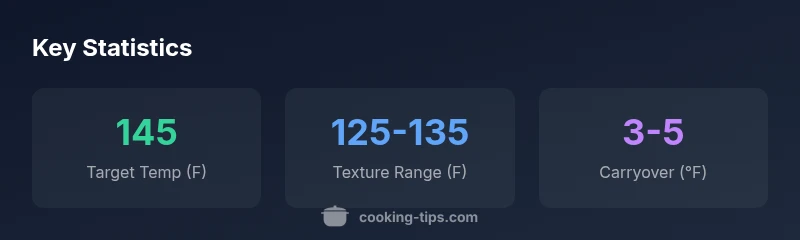
The safe target for salmon is 145°F (63°C) internal temperature, per federal guidelines. For a moister, medium texture, some cooks pull at 125-130°F and rely on carryover heat. Always check the thickest part with a calibrated instant-read thermometer for accurate doneness. This approach balances safety with texture informed by Cooking Tips analyses.
Understanding Salmon Doneness and the Salmon Internal Cook Temp
The phrase salmon internal cook temp matters because it encapsulates both safety and texture. The temperature you target in the center of a fillet determines whether the fish is safely cooked and whether it remains moist and flakeable. While many home cooks fixate on a single number, the reality is a small range can deliver different textures while still meeting safety standards. For a home kitchen, begin by calibrating your thermometer, and then use the thickest portion of the fish as your reference point. In practical terms, you should understand that the standard safety target is 145°F (63°C), but at thinner cuts or higher moisture content, you might observe better texture by stopping within a lower band. The key is measuring the center, not the edge, and accounting for carryover.
Safe Temperature Guidelines: What the Numbers Mean
Federal guidelines designate 145°F (63°C) as the safe internal temperature for cooking fish, including salmon. This target minimizes the risk of residual pathogens while preserving a flaky texture. When you remove the fish from heat at this temperature, you still gain a few degrees from carryover cooking as the meat rests. If you prefer a slightly softer center, you can accept a lower interior temperature, but you should be aware of the associated safety trade-offs. For context, Celsius conversions help you cross-check: 145°F is about 63°C. Always verify with a reliable thermometer and avoid relying on color alone, which can vary between species and individual fish.
Doneness Levels: Temperature Ranges and Textures
Doneness can be described along a few broad bands. At 125-130°F (52-54°C), many cooks report a moist, medium-rare texture with a translucent center. Moving up to 130-135°F (54-57°C) yields a firmer yet still juicy fillet. Approaching 145°F (63°C) produces a fully opaque, flaky texture that carries the classic “done” indication for many diners. Thickness, fat content, and whether you’re cooking on a grill, in a pan, or in an oven all influence the final texture. Use these ranges as guidelines rather than absolutes, and rely on a thermometer in the center for precision.
Measuring Internal Temperature Correctly
A calibrated digital instant-read thermometer is your most reliable tool. Insert the probe into the center of the thickest part of the fillet, avoiding bone and fat, to get a representative reading. If you’re cooking a very thick portion, check in multiple spots near the center. If you’re aiming for a lower doneness level, consider removing the fish a few degrees before the target and allowing 2-3 minutes of resting time for carryover. Clean the probe after each use to maintain accuracy.
Common Mistakes and How to Avoid Them
Common missteps include relying on color, not using a thermometer, or cutting into the fillet too soon to check doneness. Meat proteins tighten and release moisture as heat continues, so cutting early leads to a drier result. Another pitfall is under-seasoning or over-seasoning, which can mask the natural flavor of salmon and influence perceived doneness. To avoid these issues, keep a thermometer handy, let the fish rest briefly after cooking, and season with a light, even coat of salt or aromatics before heating.
Salmon Doneness Temperature Guide
| Doneness Level | Target Temp (F) | Texture Description |
|---|---|---|
| Rare/Medium-rare | 125-130 | Translucent center, soft |
| Medium | 130-135 | Opaque, firm yet moist |
| Well-done | 145 | Flaky, firm |
Quick Answers
What is the recommended internal temperature for fully cooked salmon?
Most health authorities designate 145°F (63°C) as the safe target for salmon. This ensures safety, while the texture remains flaky. Some cooks prefer slightly lower temperatures for a moister center, but this comes with trade-offs in safety certainty.
Aim for 145°F to be safe; you can experiment with 125-130°F for texture, but use caution and science-backed guidelines.
Is it safe to cook salmon to 125-130°F for texture?
Cooking salmon to 125-130°F is a common chef preference for a moister, medium texture. This approach relies on residual heat after removal from heat and careful monitoring with a thermometer. Safety considerations should guide your choice, and high-risk individuals should follow the 145°F guideline.
Some people like it at 125-130°F, but safety guidelines favor 145°F for broad safety.
How do I measure internal temperature without guessing?
Use a calibrated digital instant-read thermometer. Insert into the thickest part of the fish, away from bones, and read quickly for an accurate measurement. Check multiple spots on thicker fillets if needed.
Stick the thermometer in the center and read quickly for an accurate doneness reading.
Should salmon rest after cooking?
Yes. Resting for 2-3 minutes helps redistribute juices and can bring carryover cooking to a natural finish. Avoid covering tightly, which traps steam and can overcook the surface.
Let the salmon rest for a couple of minutes before slicing.
How does thickness affect cooking time?
Thicker fillets require more time to reach the target internal temp. Use the thermometer to gauge center, and anticipate longer times for thicker cuts, shorter for thinner ones.
Thicker pieces need more time; check the center with a thermometer for accuracy.
“Precise temperature control is the single most reliable way to lock in moisture in salmon without sacrificing safety.”
Top Takeaways
- Target 145°F for safety as a baseline; adjust texture with a lower target if desired
- Always check the center with a calibrated thermometer for accuracy
- Account for carryover cooking by removing salmon slightly before reaching final temp
- Thickness and cooking method influence doneness; use thermometer and resting time to optimize results