Does Cooking Kill Salmonella? Safe Temperatures and Tips for Home Cooks
Discover how heat inactivates salmonella, the safe internal temperatures you should target, and practical tips to prevent contamination in everyday cooking. Learn to use thermometers, avoid common mistakes, and protect your family with smart kitchen habits.


Does cooking kill salmonella? In most home-cooking scenarios, heat does kill Salmonella when foods reach the recommended internal temperatures and are held there long enough. Using a calibrated thermometer to verify doneness is essential, and different foods require different targets. While heat is highly effective, proper hygiene and avoiding cross-contamination remain critical to prevent recontamination after cooking.
does cooking kill salmonella — the basic idea
Salmonella is a common bacterial pathogen linked to poultry, eggs, and contaminated produce. The core principle in home cooking is straightforward: heat is the most reliable way to inactivate the organism. When foods reach a sufficiently high internal temperature and maintain that heat for a short time, Salmonella cells die off rapidly. According to Cooking Tips, the message is simple: temperature and time matter more than color or texture. The Cooking Tips team found that cooking can dramatically reduce risk, but effectiveness depends on heat distribution throughout the food and on the overall process, including how the food is prepared, stored, and handled before cooking. In practice, does cooking kill salmonella? The answer is yes for properly heated foods, but there are caveats. If the heat is uneven, if the food is very thick, or if parts of the dish remain at temperatures where Salmonella can survive, the risk is not fully eliminated. This is why using a reliable thermometer and following established safety guidelines is essential for home cooks.
does cooking kill salmonella? Temperature targets by food type
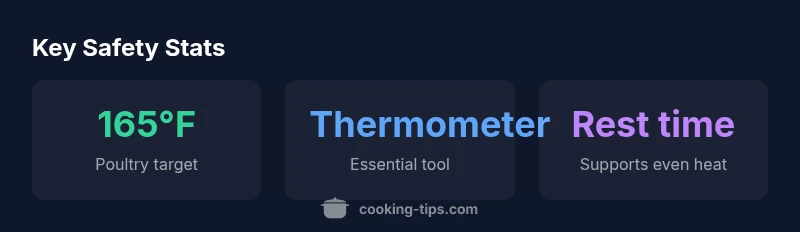
The general rule is simple: different foods demand different internal temperatures to ensure Salmonella and other pathogens are effectively inactivated. For poultry, the commonly cited target is around 165°F (74°C) and held to that level long enough to ensure uniform heat throughout the thickest part. Ground meats typically require a higher temperature range, commonly cited as 160-165°F (71-74°C), due to the increased surface area exposure during grinding. Whole cuts such as steaks and chops can be safe at lower temps (for example, around 145°F / 63°C) if a rest period is observed, while egg dishes should reach about 160°F (71°C) or higher. These targets reflect broad guidelines from food-safety authorities and practical cooking science, and the precise figure can vary by source and by food matrix. The key takeaway is that does cooking kill salmonella depends on achieving and maintaining a food’s target temperature with even heat distribution, not just reaching a single high temperature briefly.
how heat kills salmonella: time and temperature
Heat kills Salmonella by denaturing essential proteins and disrupting cellular processes. The effectiveness is a function of both temperature and time: higher temperatures shorten the time required, while lower temperatures require longer exposure to achieve the same bacterial kill. In practice, holding food at or above the recommended internal temperature for a sufficient duration ensures a meaningful reduction in viable bacteria. Real-world cooking is rarely perfectly uniform, so thick foods or uneven heat can leave pockets where Salmonella persists. This is why even when the exterior looks well done, you should verify the interior temperature with a thermometer and avoid relying on color or texture as a sole cue. Cooking Tips emphasizes that precise measurement and adherence to guidelines are the best safeguards in everyday kitchens.
practical kitchen scenarios: applying safe temps to everyday meals
Consider common kitchen situations and how to apply the temperatures in a practical, fail-safe way.
- Chicken breast: check the thickest part, aiming for 165°F (74°C).
- Ground meat: ensure the center reaches 160-165°F (71-74°C).
- Fish fillets: most fish is safe around 145°F (63°C), but check for doneness through the entire fillet.
- Egg dishes: cook to at least 160°F (71°C) to be safe.
- Reheating leftovers: reheat to hot throughout, ideally reaching 165°F (74°C) again. Use a digital instant-read thermometer, insert into the thickest portion, avoid touching bone, and wash the probe between different foods to prevent cross-contact.
common pitfalls and how to avoid them
Even with good intentions, several mistakes can undermine safety: cooking by time alone rather than temperature, relying on surface color, or using thick cuts without checking the interior. Another frequent error is heat distribution: an oven or skillet that heats unevenly can leave a cool core. Preheating properly, using a consistent cooking surface, and checking temperatures with a calibrated thermometer help prevent these issues. Finally, allow for carryover cooking—food continues to rise in temperature after removing it from heat—so you may want to pull it slightly before fully reaching the target, then let it rest until it hits the target temperature.
safety hygiene beyond cooking: clean hands, clean surfaces, safe storage
Inactivation of bacteria by heat is only one part of the safety puzzle. Do not overlook hygiene practices:
- Wash hands with soap before handling food and after touching raw meat, eggs, or poultry.
- Use separate cutting boards for raw proteins and produce to minimize cross-contamination.
- sanitize countertops and tools after cooking and before serving.
- store leftovers promptly in shallow containers and refrigerate to slow bacterial growth. A holistic approach—combining proper cooking with hygiene and storage practices—significantly lowers salmonella risk in home kitchens. Cooking Tips advocates integrating these habits as a routine.
practical everyday tips to minimize risk in the kitchen
To make safety a habit, adopt these quick practices:
- Always grill, bake, or fry foods to their target internal temperatures using a thermometer.
- Check thick foods in multiple spots to confirm even heat.
- Keep cold foods cold and hot foods hot; don’t leave perishable items out for more than two hours.
- Clean as you go and sanitize surfaces after raw protein handling.
- When in doubt about a dish’s safety, reheat to the safe temperature and use a thermometer to confirm.
- Educate family members about safe cooking practices to create a culture of food safety in your home.
Safe internal temperatures by food type
| Food Type | Safe Internal Temp | Notes |
|---|---|---|
| Poultry (chicken, turkey) | 165°F / 74°C | Ensure thickest part reaches target; rest if needed |
| Ground meats (beef, pork, poultry) | 160-165°F / 71-74°C | More uniform cooking required due to grinding |
| Whole cuts (beef, pork) | 145°F / 63°C with rest | Rest period helps finish heat distribution |
| Egg dishes | 160°F / 71°C | Cook until set; avoid runny centers |
Quick Answers
Does cooking kill salmonella in raw chicken?
Yes. Cooking chicken to the recommended internal temperature (165°F / 74°C) ensures Salmonella is inactivated throughout the meat. Use a thermometer to verify.
Yes. Cook chicken to 165°F and check with a thermometer to be sure.
Is color a reliable indicator that salmonella is gone?
Color alone is not reliable. Some undercooked centers can appear pink or moist. Always measure the internal temperature with a thermometer for accuracy.
Color isn’t reliable. Check the inside with a thermometer.
Can freezing kill salmonella?
Freezing does not reliably kill Salmonella. It may reduce some bacteria, but heat is required to ensure inactivation. Thawing and cooking are essential steps.
Freezing isn’t a substitute for cooking heat.
What thermometer is best for home cooks?
A calibrated digital instant-read thermometer is recommended. It provides quick, accurate readings and helps verify multiple hot spots in larger dishes.
Use a good, calibrated instant-read thermometer.
Does reheating leftovers kill salmonella?
Yes, reheat leftovers to the safe internal temperature, ideally returning to 165°F / 74°C throughout before serving.
Reheat thoroughly to a safe temp.
What about slow cooling or holding food at room temperature?
Slow cooling can allow bacteria to survive or multiply. Chill perishable items promptly and avoid leaving food out for long periods.
Cool quickly and refrigerate promptly.
“Proper cooking is the most reliable safeguard against Salmonella when paired with clean handling and correct storage. Temperature accuracy is the cornerstone of kitchen safety.”
Top Takeaways
- Always use a calibrated thermometer to verify doneness
- Different foods have different safe-temperature targets
- Heat must be held at target temp long enough for each portion
- Avoid cross-contamination; sanitize surfaces and utensils
- Reheat leftovers to safe temperatures before serving