What Temperature to Cook Salmon To: A Practical Guide
Learn what temperature to cook salmon to for safety and perfect doneness. This Cooking Tips guide covers safe temp ranges, doneness targets, thermometer tips, resting, and common mistakes to avoid.


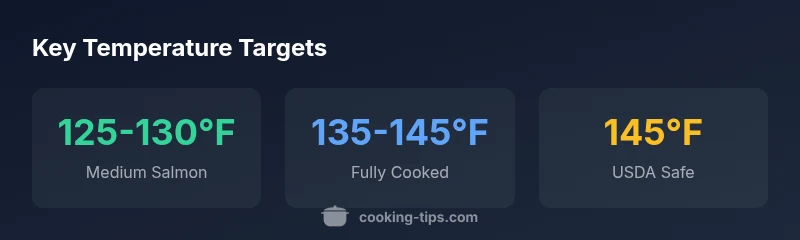
Short answer: Use an instant-read thermometer and target 125-130°F (52-54°C) for juicy, medium doneness, or 135-145°F (57-63°C) for fully cooked salmon. The USDA safety guideline remains 145°F, but salmon continues to cook after you remove it from heat, so pull early and rest briefly to prevent overcooking. Position the thermometer at the thickest part, away from bone, for an accurate read.
Why Temperature Matters for Salmon
If you're wondering what temperature to cook salmon to, the answer isn't one-size-fits-all. Temperature determines doneness, moisture, texture, and flavor. It also interacts with carryover cooking after you remove heat. The Cooking Tips team emphasizes that safety matters, but so does how your salmon tastes and feels in the mouth. Start with a target temperature and adjust based on thickness and your preferred doneness. The most reliable method is using an instant-read thermometer inserted into the thickest part of the fillet, away from bone. Remember that heat continues to move after you pull it from heat, so plan to stop short of the final target by a few degrees. The central question remains: what temperature to cook salmon to for your desired result? The practical answer bridges safety, texture, and timing, and it begins with a thermometer, a little planning, and respect for carryover cooking.
Understanding Doneness Levels
Salmon ranges from translucent, near-raw in the center to fully opaque and flaky throughout. For home cooks, the most common reference points are: rare-to-medium-rare around 120-125°F (49-52°C) with a very pink center, medium at 125-135°F (52-57°C) with a firmer texture and light pink, and well-done at 145°F (63°C) or higher when the center loses translucence and flakes more aggressively. The USDA's official guideline remains 145°F for safe consumption, but personal preferences and fish thickness often justify different targets. Practical cooks use 125-130°F for a moist, medium finish; 135-145°F yields a fully cooked, flakier fillet. Always map your target to your cooking method and rest period. If you aim for a specific doneness, note how carryover cooking will push the center temperature upward by a few degrees after you remove the pan or oven.
How to Measure Temperature Accurately
Precision starts with your thermometer and technique. Use a calibrated instant-read thermometer with a thin probe, designed for quick reads. Insert the probe into the thickest part of the fillet, not touching bone or the pan's surface. Take readings toward the end of cooking, then remove from heat when the center hits your target by a few degrees to account for carryover. Clean the probe between uses to prevent cross-contamination. For thick fillets, you may need to finish in a hot pan or under a broiler for a minute to even the temperature across the filet. Practice consistent placement and timing, and resist the urge to guess based on color alone.
Doneness Targets by Method (Pan, Oven, Grill)
Different cooking methods expose salmon to heat differently, affecting how quickly the interior warms. Pan-searing with a hot skillet typically yields a crisp exterior and a pinker center; oven roasting offers even cooking and predictable results. Grilling can add a smoky edge but may require slightly lower temperatures to avoid charring. Regardless of method, aim for the same internal temperatures: 125-130°F for medium inside, 135-145°F for fully cooked. If you choose to go toward the lower end for juicier texture, finish with a brief sear or a gentle broil to set the exterior. For thicker fillets, expect a longer cooking window; for thin fillets, monitor closely to prevent rapid overcooking. The key is consistent thermometer use and allowing for a brief resting period after removal to let carryover complete the doneness.
Practical Tips for Home Cooks
Prep and planning matter more than you might think. Remove salmon from chill, pat dry, and season evenly. Use a well-heated pan with enough oil to prevent sticking. Keep a clean, calibrated thermometer at hand and check the thickest portion of the fillet. Rest the fish for 2-5 minutes after cooking to let juices redistribute and the temperature even out. If your fillet is exceptionally thick, consider gently covering it with foil to trap steam and heat evenly. For safe handling, always wash hands and surfaces after raw fish contact. Pair your salmon with citrus, herbs, or light sauces to enhance perception of doneness without re-cooking.
Troubleshooting: Common Scenarios
If your salmon looks overcooked—the flesh is dry, the color bleached, and it flakes excessively—remove from heat earlier next time and verify the reading. If it's undercooked or translucent in the center, extend your cook by a minute or two and test again. Thick fillets may require slightly different temps to avoid overcooking when carried over. For frozen-to-thaw cooking, start with slightly lower temps and longer rest times to allow for gradual warming. If you notice uneven heating, flip the fillet halfway through and adjust heat to prevent hotspots. Remember, thermometer accuracy matters; replace batteries or calibrate periodically for best readings.
Common temperature targets for salmon by desired doneness
| Temperature target | Doneness | Notes |
|---|---|---|
| 125-130°F | Medium | Juicy center; ideal for moist fillets |
| 135-145°F | Well-done | Fully cooked, firmer texture |
| 145°F (USDA) | Safe baseline | Safety guideline; not preferred for juiciness |
| Carryover 3-5°F | Post-rest | Expect temp rise after removal |
Quick Answers
What is the safest temperature to cook salmon?
The USDA recommends cooking salmon to 145°F (63°C) for safety. Many home cooks prefer 125-130°F for a moist, medium doneness, understanding carryover will finish the job after removal.
Safer to cook to 145°F, but you can aim for 125-130°F for juicier results; always rest briefly after cooking.
Why does salmon continue to cook after it's off the heat?
Salmon retains heat after removal, so the interior temperature climbs a few degrees during rest. Remove from heat a bit early and let the carryover finish the job.
It keeps cooking from residual heat; rest briefly to finish.
Does thickness affect doneness?
Yes. Thicker fillets require more time and may need lower heat or an additional rest period to avoid overcooking the exterior before the center reaches the target.
Thickness changes how quickly it cooks; monitor with a thermometer.
Can I cook salmon from frozen to the correct temperature?
Yes, but it takes longer and you should monitor with a thermometer to avoid under- or overcooking. Start checks earlier and expect longer total time.
Cooking from frozen needs patience and thermometer checks.
What thermometer is best for salmon?
Choose a fast, accurate instant-read thermometer with a thin probe for quick readings and minimal heat loss during measurement.
Pick a quick, precise thermometer with a thin probe.
“Temperature is the most reliable indicator of salmon doneness when used with a fast, accurate thermometer. Pair it with rest time to achieve consistent results.”
Top Takeaways
- Aim for 125-130°F for juicy, medium salmon.
- USDA safety guideline is 145°F; use carryover to your advantage.
- Always read the thickest part, not the color, for accuracy.
- Rest 2-5 minutes to finish cooking and redistribute juices.
- Choose method first (pan, oven, grill) and then target temps accordingly.