What to Cook Salmon At: A Practical Home Guide to Doneness
A data-driven guide to cooking salmon at the right temperature and time for juicy, flaky results. Learn temps, methods, and tips for oven, pan-sear, poach, and more with practical examples for home cooks.


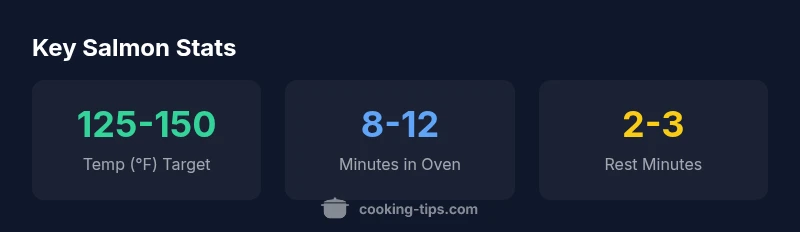
To cook salmon at the right doneness, rely on internal temperature and practical timing. For juicy medium-rare, target 125-130°F (52-54°C); for medium, 135°F (57°C); for well-done, 145-150°F (63-66°C). In practice, bake at 400°F (200°C) for 8-12 minutes or pan-sear 4-6 minutes per side. Shy away from overcooking to preserve moisture; rest briefly after cooking for 2-3 minutes.
Why What to Cook Salmon At Really Matters
Salmon is a forgiving fish when you respect temperature. The phrase what to cook salmon at matters because minor differences in thickness, fat content, and resting time can turn a succulent fillet into dry leftovers. According to Cooking Tips, home cooks often overcook salmon by chasing a perfect 10-minute bake instead of watching the internal temperature. The Cooking Tips team found that using a temperature-based approach improves consistent results across methods (oven, pan-sear, or poach). This is especially true when considering what to cook salmon at: the thickness, fat content, and resting time all influence outcome. The goal is to produce a moist, flaky center with a lightly opaque edge, avoiding rubbery texture.
Choosing the Right Salmon Cut and Quality
Salmon comes in several cuts, but home cooks typically choose fillets or center-cut loins. Fillets cook quickly and are forgiving on thickness, while loins stay uniform and cook more evenly. Skin-on fillets protect the flesh during cooking and add texture when flipped crisp-side down. For the best flavor, prefer skin-on, wild or responsibly farmed salmon, with a thickness around 1 inch (2.5 cm). When buying, look for firm flesh, a clean smell, and moist, not slimy, surfaces. If you must choose between farmed and wild, select based on flavor preference and budget; both can be delicious when handled correctly. Fresh is ideal, but high-quality frozen salmon can work well if thawed safely.
Methods Overview: Oven, Pan-Sear, Poach, and More
There are several reliable paths to cook salmon, each with distinct advantages.
- Oven baking: Even heat, hands-off. Best for thicker fillets and preserving moisture.
- Pan-searing: Quick, flavorful crust, whisper-crisp skin when skin-on. Requires attention to avoid burning.
- Poaching: Gentle, ultra-moist, ideal for delicate fillets and to make a light-tasting dish.
- Grilling: Adds smoky char; best for firm fillets and good heat management.
For weeknight meals, start with oven-baked or pan-seared salmon; experiment with poaching for lighter dishes or salads, and consider grilling for outdoor meals when weather permits.
Temperature and Doneness: The Science Behind Juiciness
Juiciness comes from the balance of heat, time, and carryover cooking. Target temperatures provide control across methods: 125-130°F for medium-rare, around 135°F for medium, and 145°F for well-done. Note that the fish continues to cook off the heat for a few minutes after removal from heat, which can push the internal temperature up by 5-10 degrees. Because salmon thickness varies, use a thermometer and check the center of the thickest part. Cooking Tips analysis, 2026, emphasizes checking early on thinner pieces and relying on temp rather than a fixed timer to prevent overcooking.
Seasoning, Sauce, and Flavor Pairings
Keep seasoning simple to let the salmon shine. A light coating of olive oil, kosher salt, and a squeeze of lemon is a classic base. Fresh herbs, garlic, and citrus zest brighten the dish without overpowering the fish. For glazes, consider a maple-soy, honey-dijon, or citrus-basil finish. Marinate briefly if using delicate glazes, but avoid soaking salmon for long periods, which can overwhelm the fish’s natural flavors. The key is to complement rather than mask the salmon’s natural richness.
Step-by-Step: What to Cook Salmon At Tonight
- Start with high-quality salmon, thawed safely if frozen. 2) Pat dry, then season with salt and a light oil rub. 3) Preheat oven to 400°F (200°C) or heat pan over medium-high. 4) If baking, place skin-side down on a lined sheet; if pan-searing, skin-side down first. 5) Bake 8-12 minutes or sear 4-6 minutes per side until center reaches desired temp. 6) Use a thermometer to verify doneness. 7) Rest 2-3 minutes before serving. 8) Serve with a bright squeeze of lemon or a simple herb finish.
Common Mistakes and How to Avoid Them
Common mistakes include overcooking, using overly thick pieces without adjusting time, not patting dry, and choosing flaky, low-moisture salmon. Use a thermometer to avoid guesswork, pat the fish dry to promote a good sear, and rest briefly to let juices redistribute. If your oven runs hot, reduce the temperature by 25°F (about 15°C) and extend the cooking time slightly for a better result.
How to Customize for Different Dinners: Quick Variations
For a weeknight dinner, try lemon-dill butter, garlic-herb crust, or a sesame-ginger glaze. For a lighter option, serve salmon over a bed of quinoa or greens with a citrus vinaigrette. Want more pizzazz? A maple-soy glaze pairs well with salmon and roasted vegetables, and a herb crust made from parsley, chives, and lemon zest adds color and aroma.
Sourcing and Safety: Fresh vs Frozen
Fresh salmon offers peak flavor when in season and available locally, but frozen-at-sea fillets can retain excellent quality if thawed under refrigeration or in a cold water bath. Thaw frozen fillets gradually to preserve texture, and pat dry before cooking. Always store salmon at safe temperatures and discard any fish that smells off or has a slimy surface.
Time and temperature ranges for common salmon cooking methods
| Method Type | Time Range (min) | Target Temp (°F) |
|---|---|---|
| Oven Baking | 8-12 | 125-135 |
| Pan-Searing | 4-6 per side | 130-140 |
| Poaching | 10-12 | 140-150 |
Quick Answers
What internal temperature should I aim for salmon?
Aim for 125-130°F for medium-rare, 135°F for medium, and 145°F for well-done. Use a thermometer at the center of the thickest part and remember carryover cooking.
Aim for 125-130°F for medium-rare; 135°F for medium. Use a thermometer at the center and rest briefly.
Can I cook salmon from frozen?
Yes, but adjust time and temperature. Thawing overnight improves texture; otherwise, increase bake time by a few minutes and monitor doneness closely.
You can cook from frozen, but plan longer and keep an eye on doneness.
Is pan-searing better than baking for flavor?
Pan-searing provides a crisp crust and faster cook time, while baking yields even doneness with less hands-on attention. Both can be excellent with proper timing.
Pan-searing gives a crust; baking gives even doneness; choose based on texture you want.
What seasoning works best with salmon?
Keep it simple with olive oil, kosher salt, and lemon. Add herbs or a glaze to finish, but avoid overpowering the fish’s delicate flavor.
Simple salt, lemon, and oil let salmon shine; add glaze if you like.
How can I tell if salmon is done without a thermometer?
Look for opaque flesh and light flakes that separate easily; the center should be just barely translucent. This method is less precise but works in a pinch.
Opaque, flaking easily; center nearly opaque indicates doneness.
How long should I rest cooked salmon?
Let it rest 2-3 minutes after cooking to allow juices to redistribute for a moist bite.
Rest 2-3 minutes before serving to keep it juicy.
“Great salmon rewards precise timing and minimal interference. Use a reliable internal temperature, avoid overcooking, and finish with a brief rest to lock in moisture.”
Top Takeaways
- Cook to temperature, not clock
- Choose method based on cut and texture
- Season simply to preserve moisture
- Rest salmon 2-3 minutes before serving
- The Cooking Tips team recommends mastering core methods first