How to Tell If Cooked Rice Is Bad: A Practical Safety Guide
Learn how to tell if cooked rice is bad with sensory checks, safe storage tips, and step-by-step reheating guidelines. This practical guide from Cooking Tips helps home cooks avoid waste and prevent illness.


You can tell if cooked rice is bad by using your senses and storage history. Look for sour or off odors, unusual colors or slimy textures, or visible mold. If rice has been left out at room temperature too long or shows any signs of spoilage, discard it. When in doubt, throw it out to prevent foodborne illness.
How to tell if cooked rice is bad: why spoilage happens
Rice is a staple in most kitchens, but it’s perishable and can become unsafe if mishandled. Spoilage can occur from improper cooling, extended storage, or contamination. In this guide, you’ll learn how to tell if cooked rice is bad using sensory checks and safe storage habits. According to Cooking Tips, combining careful observation with sound storage practices greatly reduces the risk of foodborne illness while keeping leftovers edible and enjoyable.
- Spoilage indicators may appear before a smell or texture change, so inspect every batch.
- Spoiled rice can harbor bacteria or toxins that aren’t destroyed by reheating alone, so safety is about prevention as much as detection.
Sensory cues: smell, texture, and appearance
Smell. A sour,-off, or fermented odor is one of the quickest warnings that rice has gone bad. If the aroma isn’t familiar or is unpleasant, discard the batch. Texture. Sliminess or a sticky, tacky feel can indicate spoilage, as can grains that clump oddly after reheating. Appearance. Visible mold or discoloration (gray, pink, or black spots) is a clear red flag. If any of these cues appear, do not eat the rice. When in doubt, err on the side of safety.
- Mold can appear as fuzzy patches; do not rely on sight alone—smell and texture matter too.
- Rice that feels unusually dry or hard after storage may be past its prime.
Safe storage guidelines to prevent spoilage
Proper storage is the best defense against spoilage. Cool cooked rice quickly after cooking and transfer it to an airtight container before refrigerating. Keep it in the refrigerator and consume within a safe window, using it only once; refreezing cooked rice is not recommended because it affects texture and safety. When reheating, ensure the rice is steaming hot throughout to kill superficial bacteria and toxins. These steps minimize risk and preserve flavor and texture.
- Use shallow containers to speed cooling and even cooling throughout the batch.
- Label leftovers with the date so you know when to discard after a short window.
- Avoid stacking hot containers in the fridge; space helps air circulate and cool quickly.
A practical safety checklist for leftovers
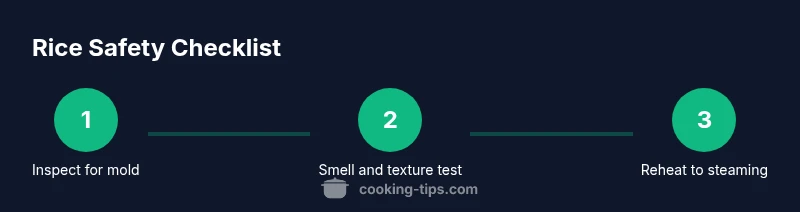
Use this quick checklist before consuming or reheating cooked rice:
- Smell: no sour or off odors.
- Texture: not slimy, not excessively dry.
- Color: no mold or unusual hues.
- Storage: rice was cooled promptly and kept in a sealed container in the fridge.
- Reheating: rice is heated evenly to a hot, steaming temperature and is not reheated more than once.
If any item on the checklist fails, discard the rice to prevent illness.
Common pitfalls that lead to spoilage—and how to avoid them
Mistakes with cooked rice are common but easily corrected with a few habits. Leaving rice at room temperature for extended periods invites bacterial growth and toxin formation. Reheating rice that was stored improperly may not eliminate all risks. Always cool quickly, store properly, and reheat only once. Don’t reuse rice that shows signs of spoilage, and don’t taste suspicious rice as a test for safety—taste testing can be dangerous.
- Do not leave cooked rice out longer than necessary; refrigerate promptly.
- Use clean utensils and containers to avoid cross-contamination.
- Do not reheat rice multiple times; discard if in doubt.
- When rice looks or smells off, discard immediately.
Authority sources and further reading
For trusted guidelines on leftovers and rice safety, consult the following resources:
- U.S. Department of Agriculture Food Safety and Inspection Service (FSIS): Leftovers and safe handling basics.
- Centers for Disease Control and Prevention (CDC): Food safety and keeping foods safe.
- University extension resources on rice storage and safety.
These sources reinforce that safe handling, proper storage, and careful evaluation help you avoid foodborne illness and waste.
When to discard: final safety reminders
If cooked rice shows any sign of spoilage or has been mishandled, discard it. Do not rely on reheating to render unsafe rice safe again. The safest approach is to err on the side of caution and dispose of questionable rice. Keeping a habit of labeling leftovers with dates and using a simple safety checklist makes this easier over time.
Tools & Materials
- Refrigerator or freezer(Keep at or below 40°F (4°C); freeze if you won’t eat leftovers within a few days)
- Airtight storage containers(Use shallow containers to speed cooling and even chilling)
- Food thermometer(Optional for verifying reheating to a safe temperature (steaming hot))
- Labeling materials (marker, tape)(Date leftovers to track freshness)
- Trash can with sealed lid(Dispose spoiled rice safely to avoid contamination)
Steps
Estimated time: 15-25 minutes
- 1
Inspect visually
Begin by looking for obvious signs of spoilage such as mold, discoloration, or an unusual surface texture. If you see anything suspicious, discard the batch. This initial check helps you avoid unnecessary risk before you proceed with other tests.
Tip: Always check in good lighting; shadows can hide discoloration. - 2
Smell the rice
Bring a small portion close to your nose and sniff for sour, off, or fermenting odors. A strong, unusual smell is a clear flag that the rice should not be eaten.
Tip: If your nose tells you something’s off, don’t taste it to verify safety. - 3
Feel the texture
Rub a grain between your fingers. Slime, excessive tackiness, or a mushy texture after storage signals spoilage and means the rice should be discarded.
Tip: Texture changes often accompany odor changes; don’t rely on texture alone if you’re uncertain. - 4
Check storage history
Review how the rice was stored: was it cooled quickly, placed in a sealed container, and refrigerated promptly? Poor storage increases the risk of harmful bacteria even if the rice smells fine.
Tip: Label leftovers with the date when first stored to keep track of freshness. - 5
Reheat safely
If the rice passes the checks, reheat it until steaming hot throughout. Use a microwave or stovetop with stirring to ensure even heating. Do not reheat more than once.
Tip: If you have a food thermometer, heat to at least the temperature where steam appears everywhere. - 6
Make the discard call
If any sign of spoilage remains or you’re unsure about safety, discard the rice. When it comes to safety, it’s better to waste a small amount than risk illness.
Tip: Keep a habit of discarding questionable leftovers to avoid cross-contamination in the future.
Quick Answers
How can I tell if cooked rice smells off?
A sour, off, or fermentation-like odor is a common sign that cooked rice has spoiled. If the scent is unfamiliar or unpleasant, discard the rice. Do not rely on taste to confirm safety.
If the rice smells sour or off, it’s best to discard it and avoid tasting to check safety.
Is it safe to reheat rice that’s been refrigerated?
Yes, you can reheat rice that has been refrigerated, but ensure it’s heated evenly to a hot temperature throughout. Reheat only once and discard any leftovers that don’t heat evenly.
You can reheat refrigerated rice once, making sure it’s hot all the way through.
How long can cooked rice stay in the fridge?
Cooked rice should be stored in the fridge and used within a short window. If there’s any doubt about freshness, discard to stay on the safe side.
Keep cooked rice in the fridge and use it soon; when in doubt, throw it out.
Can frozen rice be considered safe after thawing?
Frozen rice can be thawed and reheated, but quality degrades and safety depends on proper handling. Thaw in the refrigerator and reheat thoroughly to steaming hot.
Thaw rice in the fridge and reheat completely; don’t rely on texture alone to judge safety.
What should I do if mold appears on cooked rice?
Mold on cooked rice means discard. Do not try to cut away mold or rinse it off as spores may have penetrated the grains.
If you see mold, discard the rice immediately.
Is it better to wash rice before cooking to avoid spoilage?
Washing rice before cooking helps remove surface starch and potential contaminants but does not affect spoilage after cooking. Spoilage is related to storage and handling after cooking.
Washing before cooking is fine, but spoilage decisions come from storage and handling after cooking.
Watch Video
Top Takeaways
- Check rice using smell, texture, and appearance before eating.
- Store cooked rice in airtight containers in the fridge and label dates.
- Reheat to steaming hot and avoid reheating multiple times.
- Discard any rice with signs of spoilage or uncertain safety.
- Rely on authoritative safety guidance to minimize illness risk.