Can You Tell If Cooked Chicken Is Bad? A Practical Guide
Learn practical tests for cooked chicken safety using smell, color, texture, and storage tips. This urgent troubleshooting guide helps home cooks assess leftovers quickly and avoid foodborne illness.


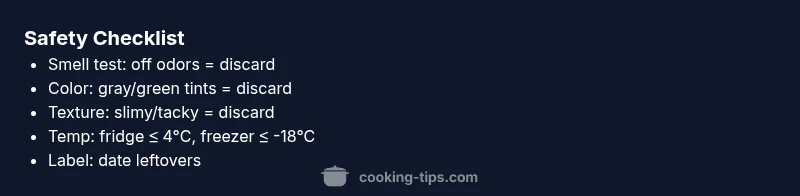
Yes. To tell if cooked chicken is bad, use a quick, three-step check: smell, appearance, and texture. If it smells sour, off, or sulfuric, if it looks gray or slimy, or if it feels tacky, discard immediately. When in doubt, throw it out to stay safe.
Visual cues: can you tell if cooked chicken is bad
If you’re wondering can you tell if cooked chicken is bad, start with what your eyes see. Freshly cooked chicken should have a pale white to light brown color and a moist, glistening surface. After storage, look for dullness or discoloration around the edges. More importantly, check for an unusual sticky or tacky feel on the surface. According to Cooking Tips, the quickest way to gauge safety is to assess the overall appearance in context with storage time and smell. While some minor color changes can occur, extensive darkening or greying is a warning sign. Keep in mind that color alone is not definitive, but it pairs with other cues to indicate spoilage. This is especially true when leftovers sit in the fridge for more than a day or two or have been reheated more than once. The aim is to catch spoilage before it becomes a health risk. If something looks off, rely on your senses and err on the side of caution.
Smell and aroma: how to differentiate safe from spoiled
Smell is often the most telling clue that cooked chicken has gone bad. A fresh portion should have little to no odor beyond the faint scent of seasoned meat. If the chicken emits a sour, rotten, sulfur-like, or unusually strong odor, it’s a strong spoilage indicator. Even a slight off-odor warrants caution. Do not rely on taste to check safety, as tasting spoiled chicken can cause illness. When in doubt, discard. The presence of garlic, lemon, or spice masks nothing; the odor underneath may still signal microbial growth. This quick sniff test, used in conjunction with appearance, is a reliable early warning system. Cooking Tips analysis shows sensory cues are the first line of defense in everyday kitchen safety in 2026.
Appearance and texture: color changes and surface feel
Discoloration can accompany spoilage. Look for grayish or greenish tints, especially near the edges or under the skin. A slimy, tacky, or slippery surface is a classic spoilage sign that worsens with time. The texture should be firm but not rubbery; when cooked chicken becomes overly sticky, that’s a red flag. A safe texture is smooth and moist without being gluey. If the meat crumbles or has an odd grain, that may indicate improper cooking or storage. Use these cues together: if the chicken looks off and feels wrong to the touch, don’t eat it. If you’re reheating leftovers, ensure that you reheat until the internal temperature reaches 165°F (74°C), but only do so if you’re confident it’s still safe to consume. The goal is to minimize risk while avoiding waste.
Storage duration and temperature guidelines: fridge vs freezer
How long cooked chicken stays safe is closely tied to temperature control. In the fridge, store cooked chicken in shallow, airtight containers within two hours of cooking; consume within 3-4 days. If you’re using the freezer, wrap well and freeze promptly; cooked chicken can retain best quality for 2-6 months, though it remains safe beyond that timeframe if kept frozen continuously. Always label leftovers with the date and reheat only once. Refrigerator temperatures should be at or below 40°F (4°C); freezer temperatures at 0°F (-18°C) or lower. If your fridge runs warm or the door is left open, the clock starts ticking on safety. The basic rule is: when in doubt about storage, discard. This minimizes the risk of foodborne illness and keeps your kitchen predictable.
Safe handling and cross-contamination prevention
Prevention matters just as much as detection. Use separate cutting boards for raw and cooked chicken; wash hands, utensils, and surfaces thoroughly with hot, soapy water after handling. Avoid leaving cooked chicken at room temperature for more than two hours; in hot weather or if the room is above 90°F (32°C), cut that to one hour. When you’re packing leftovers, store them in small portions to cool quickly and prevent cooling hot spots. Reheating is only a safe option if you’re confident the chicken was stored properly and you haven’t exceeded the safe storage window. If you’re unsure, discard instead of risking illness.
How to respond when in doubt: disposal and next steps
If any cue suggests spoilage, take action immediately. Place the suspected chicken in a sealed bag and dispose of it with household waste; don’t pour it down the sink to avoid clogs and cross-contamination. Clean and sanitize all surfaces and utensils that touched the chicken. Run the dishwasher or wash with hot, soapy water and a sanitizer afterward. Review your fridge’s temperature setting and ensure it stays at or below 4°C (40°F). Keep a reminder on your calendar to rotate leftovers and check dates regularly. If you truly aren’t sure, err on the side of safety and discard. Prevention measures, like planned meal prep and proper cooling, reduce waste and keep you and your family safe.
Practical daily habits to keep cooked chicken safe in your kitchen
Build a simple routine that minimizes spoilage risk. Cool cooked chicken quickly after cooking, refrigerate within two hours, label with the date, and use within 3-4 days. When reheating, heat to 165°F (74°C) all the way through, and never reheat more than once. Invest in shallow containers for faster cooling and track leftovers with a fridge checklist. Regularly check your fridge’s thermometer and audit your storage practices. Consistency matters; small daily habits compound into reliable food safety.
Special cases: takeout, deli, and mixed dishes
Takeout or deli chicken can be tricky because it has traveled through different temperatures and handling environments. When in doubt about a takeout chicken piece, apply the same sensory checks: smell, color, texture. For mixed recipes (like chicken salad), watch for separation of liquids, sour aroma, and off-taste. If mayo-based salads are held at room temperature for more than two hours, discard. For leftovers that combine different ingredients with chicken, ensure every component is fresh and hasn't been left at room temperature for too long. The safe handling of prepared poultry is a common pitfall; when uncertain, treat it as unsafe and discard.
Steps
Estimated time: 15-25 minutes
- 1
Check storage duration
Review when the cooked chicken was prepared and how long it has sat in the fridge or freezer. If it’s been more than 3-4 days in the fridge, assume it’s unsafe and discard. If frozen, check the date on the package and freezer label.
Tip: Label leftovers with date as soon as they’re stored to avoid guessing later. - 2
Inspect color and texture
Look for gray or greenish hints and a slimy or tacky surface. Touch the meat gently; if it feels off or sticky, discard. Do not rely on taste to decide safety.
Tip: Use gloves or a clean utensil when handling suspicious meat to avoid skin contact. - 3
Smell check
Smell the chicken directly and check for sour, rotten, or sulfur-like odors. If any off-odor is present, dispose of the portion and sanitize surfaces.
Tip: Odor is a strong spoilage cue; pair with other signs for a confident call. - 4
Verify storage temperature
Confirm the fridge is at 40°F (4°C) or below and the freezer at 0°F (-18°C) or lower. If temperatures drift, discard overdue leftovers and adjust settings.
Tip: Keep a fridge thermometer visible for easy checks. - 5
Decide on disposal or safe reheating
If signs point to spoilage, discard. If you’re confident about storage and time, reheat to 165°F (74°C) and eat promptly; avoid reheating multiple times.
Tip: When in doubt, discard to prevent illness. - 6
Clean up and prevent recurrence
Sanitize surfaces, utensils, and storage containers. Rinse and dry, then reorganize leftovers with dates and portioning to prevent future spoilage.
Tip: Implement a weekly fridge audit to catch issues early.
Diagnosis: Cooked chicken shows signs of spoilage after storage in fridge
Possible Causes
- highRefrigeration temperature was above safe levels (food kept at >40°F/4°C)
- highChicken stored too long in fridge (beyond 3-4 days)
- mediumCross-contamination or improper handling during cooking/packing
Fixes
- easyDiscard any chicken that shows signs of spoilage (off-odor, sliminess, discoloration)
- easyReview and adjust fridge temperature to 0-4°C (32-40°F) and label leftovers with date
- mediumIf you insist on testing, only reheat fresh leftovers within safe time window and ensure internal temp reaches 74°C/165°F; otherwise discard
Quick Answers
Can cooked chicken smell bad?
Yes. A sour or off odor is a strong spoilage indicator. If you detect an unusual smell, discard the portion. Do not rely on taste to decide safety.
Yes—if it smells off, discard the chicken.
How long does cooked chicken last in the fridge?
Typically three to four days when stored properly in a refrigerator at or below 40°F (4°C). If it’s past that window, discard.
Usually three to four days in the fridge.
Can you freeze cooked chicken to extend its shelf life?
Yes. Freeze within two hours of cooking; for best quality, use within 2-6 months. It remains safe beyond that if kept frozen.
Freezing extends shelf life when done promptly.
Is it safe to taste cooked chicken to test freshness?
Never taste cooked chicken to test freshness. Spoilage can occur with unseen microbes, and tasting can make you sick.
Don’t taste—it's unsafe.
What should I do with leftovers I suspect are bad?
Discard the suspect portions and sanitize surfaces. If any component is questionable, it’s safer to discard the whole dish.
Discard and sanitize; when unsure, throw away.
Can stored chicken develop toxins after cooking?
Some toxins aren’t destroyed by reheating, so spoilage should be avoided altogether. If in doubt, discard rather than risk illness.
Spoiled food can have toxins; reheating won’t fix it.
Watch Video
Top Takeaways
- Trust sensory cues and storage time to judge safety
- Keep fridge at or below 4°C (40°F) and freeze promptly
- Discard if there’s any doubt about spoilage
- Careful handling prevents cross-contamination