How to Tell If Cooked Bacon Is Bad: A Practical Guide
Learn reliable signs that cooked bacon has spoiled, including smell, color, texture, and storage cues. This practical guide from Cooking Tips helps home cooks decide safely, minimize waste, and store leftovers correctly.


After cooking bacon, refrigerate promptly and use within a few days. If it smells sour, has a slimy texture, or shows gray-green discoloration, discard it. Visual and odor cues are the quickest safety checks, but trust your senses and when in doubt, throw it out. This quick guide helps home cooks judge safety confidently.
Why this matters for safety
According to Cooking Tips, understanding how to tell if cooked bacon is bad helps reduce waste while protecting your family from foodborne illness. The Cooking Tips team found that many households miss early odor cues or fail to properly store leftovers, leading to preventable spoilage. By learning the exact signs—odor, appearance, and texture—you can make fast, safe decisions. This section lays the groundwork for practical checks you can perform in minutes, without special equipment. Remember: safe handling starts with clean surfaces, separate cutting boards for cooked bacon, and prompt refrigeration after cooking.
Smell as the first alarm
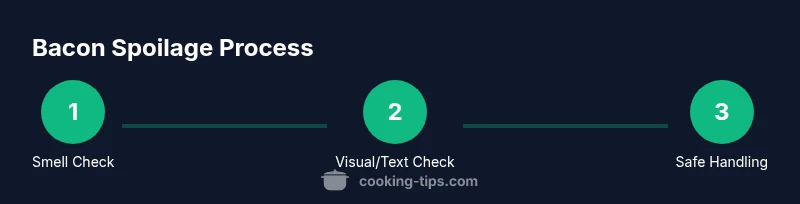
Smell is often the most reliable warning sign. Fresh cooked bacon has a pleasant, smoky aroma; spoiled bacon usually carries a sour, rancid, or off odor. If the bacon smells metallic, rotten, or unusually sharp, it’s safest to discard it. Odor can be subtle at first, so compare with a fresh cook test batch if you’re unsure. Use a clean nose, and avoid tasting unless you’re certain the product is safe to eat. Even a faint off-scent is a strong cue to discard.
Visual cues: color, texture, and surface
Color can shift from rosy to dull gray or brown with time, but any greenish tints are a clear warning sign. Slimy, sticky, or tacky surfaces indicate microbial growth and signify spoilage. If there’s a fuzzy mold film, throw the bacon away immediately. A dry, crumbly surface is less alarming than a slick, sticky residue. Always inspect the surface in good lighting and discard if you notice any inconsistent color or texture.
The role of taste (safety first) and reheating considerations
Taste testing is not recommended when bacon looks or smells off. If you must test, only do so after you have clearly assessed odor and appearance, and if you’re confident it’s safe to proceed. If you reheat bacon, ensure it reaches a hot, even temperature to minimize safety risks, but never rely on taste as the primary indicator of spoilage. When in doubt, discard to avoid illness.
Storage timelines for cooked bacon (fridge vs. freezer)
Cooked bacon stored in the refrigerator should be consumed within a short window, ideally within a few days, and kept in an airtight container to limit moisture and odor transfer. For longer storage, freezing cooked bacon is a safer alternative that preserves quality for months when wrapped tightly. Always label leftovers with a date so you don’t lose track of shelf life. Proper storage limits the growth of spoilage bacteria and maintains flavor integrity.
Safe handling and cross-contamination prevention
Always wash hands before and after handling cooked bacon, and sanitize utensils and cutting surfaces. Keep cooked bacon separate from raw meats to avoid cross-contamination. When packing leftovers, use airtight containers or wrap tightly in foil or plastic wrap, and store in the coldest part of the fridge. If you’ve shared utensils or plates with raw meat, sanitize them before reuse to minimize risk.
How to test safely at home without waste
If you’re unsure about safety, perform a quick, non-destructive check first: rely on smell and appearance, then re-evaluate after a short chill. For a definitive check, you can reheat a small portion to a high temperature and observe for off odors or unusual textures, but discard immediately if anything seems off. These steps minimize waste while keeping you safe, aligning with practical home-cook practices from Cooking Tips.
Myths vs facts about cooked bacon spoilage
Myths such as “bacon is always safe if it looks fine” or “color alone determines safety” can be risky. Reality: odor, texture, and surface condition are more reliable than color alone. Safe handling also means refrigerating promptly and keeping leftovers sealed. Challenging common myths helps you make informed decisions without guessing.
Quick-reference at-a-glance checklist
- Smell: sour or off aroma? Discard.
- Appearance: gray, green, or slimy surface? Discard.
- Texture: sticky or tacky surface? Discard.
- Storage: refrigerated within 2 hours of cooking; label dates.
- When in doubt: discard. Do not taste as a safety test.
This concise checklist supports rapid decision-making during busy weeknights.
Authoritative sources and further reading
For more comprehensive safety guidance, consult:
- U.S. Department of Agriculture (USDA) FSIS: Refrigeration and Food Safety: https://www.fsis.usda.gov/food-safety/safe-food-handling-and-cooking/food-safety-basics/refrigeration-and-food-safety
- Centers for Disease Control and Prevention (CDC): Food Safety: https://www.cdc.gov/foodsafety/index.html
- Foodsafety.gov: General food safety information: https://www.foodsafety.gov/
These sources reinforce the guidance provided here and offer official safety standards.
Tools & Materials
- Cutting board (color-safe for cooked meat)(Use a clean board dedicated to ready-to-eat foods)
- Food-safe knife(For inspecting texture and trimming any questionable surfaces)
- Plate and paper towels(To hold and blot bacon during inspection)
- Airtight storage container or heavy-duty wrap(Keeps odors and moisture from affecting other foods)
- Refrigerator thermometer(Helps ensure fridge is at or below 40°F (4°C))
- Instant-read thermometer (optional)(Useful if you reheat a portion to check safety)
Steps
Estimated time: Total time: about 20-35 minutes
- 1
Assess storage status
Check when the bacon was cooked and how it has been stored since. If leftovers have sat at room temperature longer than two hours, discard. If refrigerated promptly, proceed to the next checks.
Tip: When in doubt, err on the side of safety and discard. - 2
Inspect the smell
Open the container and sniff the bacon. Sour, rancid, or off odors indicate spoilage. Fresh bacon should smell pleasant and smoky, not sharp or sour.
Tip: Do not rely on looks alone; odor is often the earliest warning sign. - 3
Check color and surface
Look for gray, greenish, or dull color, and a slimy or tacky surface. Any mold or unusual sheen warrants discard.
Tip: A sticky surface is a stronger signal of spoilage than mere color change. - 4
Examine texture in hand
Gently press the bacon; if it feels unusually soft, slimy, or rubbery, it’s unsafe to eat. Dry, crisp edges can be normal if fully cooked previously, but not if the center is wet.
Tip: Avoid rubbing or tasting to test texture; rely on the visual/olfactory cues first. - 5
Consider storage timelines
Refrigerated bacon should be used within a few days for safety and quality; freezing extends storage life but may affect texture.
Tip: Label containers with the date to track freshness easily. - 6
Decide on safety before reheating
If any signs exist, discard rather than attempting to reheat and eat. If you proceed, reheat to a high, even temperature only after confirming no spoilage.
Tip: Never rely on taste to determine safety after spoilage signs appear. - 7
Dispose and sanitize
Wrap spoiled bacon securely and place in a sealed trash bag. Clean and sanitize the cutting board, knife, and surfaces to prevent cross-contamination.
Tip: Wash hands thoroughly after handling spoiled meat. - 8
When in doubt, discard
If you’re unsure about any cue, discard the bacon. It’s safer to waste a small amount than risk illness.
Tip: Develop a routine you trust so you don’t second-guess safety.
Quick Answers
What are the top signs cooked bacon has gone bad?
The main indicators are sour or off odors, slimy or tacky texture, gray or greenish discoloration, and visible mold. If any cue appears, discard to be safe.
Watch for sour smell, slimy texture, and unusual color; discard if any sign shows up.
How long can cooked bacon safely stay in the fridge?
Cooked bacon kept in the refrigerator should be used within a few days for safety and quality; always rely on odor and texture checks before consuming.
In practice, use within a few days and check for spoilage cues before eating.
Can I taste cooked bacon to test if it’s spoiled?
No. Tasting spoiled bacon can cause illness. Instead rely on smell, color, and texture cues, and discard if anything seems off.
Don’t taste to test safety; discard if it smells or looks off.
Is freezing cooked bacon a good option for longer storage?
Yes, freezing extends storage life. Wrap tightly and label, then use within a few months for best quality.
Freezing keeps bacon safe longer; wrap well and date the package.
What should I do with bacon left out at room temperature?
Discard leftovers that have sat out for more than two hours to avoid rapid bacterial growth.
If it’s sat out for more than two hours, discard it.
How should I store cooked bacon after opening it?
Store in an airtight container or wrap tightly and refrigerate promptly. Keep raw and cooked foods separate to prevent cross-contamination.
Seal tightly and refrigerate quickly, keeping cooked and raw foods separate.
Watch Video
Top Takeaways
- Check smell first; odor is the strongest early signal.
- Discard if you see slime, unusual color, or mold.
- Store leftovers promptly in airtight containers.
- When in doubt, discard to stay safe.