Does Cooked Bacon Need Refrigeration? A Practical Guide
Does cooked bacon need refrigeration? Discover safe storage windows, fridge vs freezer timelines, reheating tips, and common mistakes with clear guidance from Cooking Tips.


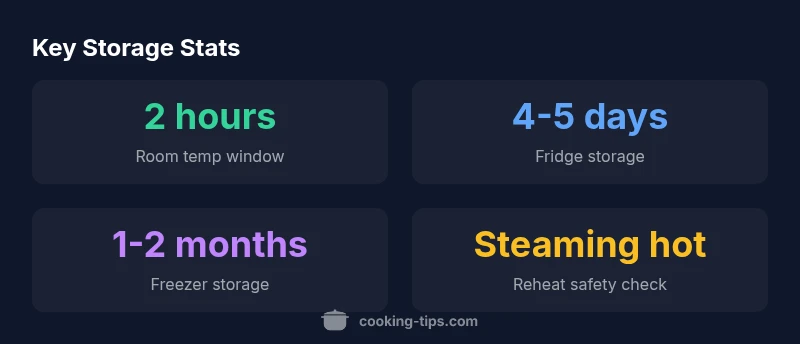
Yes. Cooked bacon should be refrigerated to keep it safe and tasty. Refrigerate within two hours of cooking (one hour if temperatures are very warm, above 90°F). In the fridge, it stays good for about 4-5 days; in the freezer, 1-2 months. Reheat until steaming hot before eating. These guidelines come from Cooking Tips Analysis, 2026.
Safe handling basics
Cooked bacon is perishable once cooked. Start with quick cooling and transfer to clean containers. Use utensils and clean your hands to avoid contamination. The moment you finish cooking, plan for refrigeration to minimize bacterial growth, especially in warm kitchens. According to Cooking Tips analysis, safe handling starts as soon as bacon leaves the pan, not after it cools on the counter. By following clean-handling practices, you protect both safety and flavor, and you reduce waste by planning portions that fit in your fridge or freezer. This foundational step sets the stage for safe storage, reheating, and enjoying bacon without risk. For home cooks, keeping a simple routine—cool, seal, label, and refrigerate—goes a long way toward consistent results in breakfast, salads, and quick skillet meals.
When to refrigerate cooked bacon
The general rule is to refrigerate cooked bacon within two hours. If the ambient temperature is above 90°F (32°C), refrigerate within one hour. Refrigeration slows the growth of spoilage bacteria, extending the safe window for consumption. In typical home settings, you can safely eat leftovers within 4-5 days when kept cold, assuming the bacon was cooled promptly and stored in a sealed container. For longer storage, freezing is superior and preserves both safety and flavor when done correctly. Cooking Tips team notes that freezing may slightly alter texture but preserves safety well, making it a practical option for weekend cooks who want to batch-provision breakfasts and add-ins for weeknights.
Fridge storage: packaging and organization
Store cooked bacon in airtight containers, resealable bags with air pressed out, or wrapped tightly in foil inside a freezer or fridge bag. Label with the date to rotate stock and monitor freshness. Reducing air exposure helps maintain texture and moisture balance. The packaging choice can influence how quickly bacon dries out in the fridge, especially after thawing or multiple door openings. A simple system—slice portions and seal them individually—lets you grab what you need without exposing the rest to air or temperature fluctuations. This approach minimizes waste and keeps flavor strong across multiple meals.
Freezer storage and labeling
For longer storage, freezing is a reliable option. Wrap bacon slices in parchment or wax paper and place in a freezer-safe bag, removing as much air as possible. Frozen cooked bacon retains safety for 1-2 months; after that, flavor and texture may begin to wane. Thaw in the refrigerator overnight before reheating to ensure even warmth and to avoid bacterial growth that occurs when thawing at room temperature. Do not thaw on the counter. When reheating, aim for steaming hot until fully warmed through to maximize safety and taste.
Reheating methods and safety checks
Reheating bacon should restore warmth and crispness while ensuring food safety. Microwave: place slices on a microwave-safe plate, cover lightly, and heat in short bursts (20-30 seconds per slice) until steaming. Skillet: reheat over medium heat, turning occasionally until evenly warmed and crispy it as desired. Oven: bake at a low to moderate heat until heated through. Always verify that the bacon reaches steaming hot throughout before serving. If leftovers smelt off, look mushy, or show unusual color, discard to avoid foodborne illness. Do not reheat more than once.
Common misconceptions and mistakes
A common misconception is that bacon doesn’t need refrigeration if it’s crispy. In reality, texture can mask spoilage; surface moisture and airborne contaminants can still allow bacterial growth. Mistakes to avoid: leaving cooked bacon at room temperature overnight, mixing raw and cooked bacon, and thawing at room temperature. Such practices increase the risk of contamination and compromise safety. Proper separation and timing are essential. Following a routine—refrigerate promptly, seal tightly, and reheat to steaming heat—helps maintain safety and flavor across meals.
Practical prep for meal planning
Batch-cooking bacon can save time on busy mornings or weeknights. Cook a larger batch, portion into individual servings, and refrigerate or freeze as needed. Use slices in breakfast sandwiches, salads, pasta, or topping for roasted vegetables. Label portions with dates to ensure you pull the oldest first, reducing waste. A simple planning habit—cook once, store smartly, and reheat thoughtfully—lets you enjoy bacon without the daily cooking overhead while keeping safety as a priority.
Quality considerations: texture and flavor over time
Freshly cooked bacon is typically crisp and flavorful, but storage changes moisture content and texture. In the fridge, bacon can become a bit softer or chewier as moisture migrates; frozen bacon can darken and lose some crispness after thawing. Reheating carefully helps recover some crispness, but the goal is to balance safety with desired texture. If quality suffers noticeably—excessive grease separation, off odors, or noticeable color changes—discard. Keeping portions small and tightly sealed minimizes texture loss and preserves taste across days or weeks.
Storage durations for cooked bacon
| Storage Method | Typical Window | Notes |
|---|---|---|
| Refrigerator (airtight container) | 4-5 days | Best balance of safety and quality |
| Freezer | 1-2 months | Quality may decline after ~1 month; label and date |
| Room temperature | 2 hours or less | Discard if unrefrigerated for too long |
Quick Answers
Does cooked bacon need to be refrigerated?
Yes. Cooked bacon should be refrigerated promptly after cooking and stored in airtight packaging to preserve safety and quality. Follow the 2-hour rule (or 1 hour if very warm).
Yes, refrigerate promptly after cooking and store properly sealed.
How long can cooked bacon sit at room temperature?
Typically up to 2 hours, or 1 hour if the environment is very warm. Bacteria can multiply quickly at warmer temperatures.
Usually no more than two hours at room temperature.
Can you freeze cooked bacon?
Yes. Freeze cooked bacon for 1-2 months. For best texture, wrap well and remove air. Thaw in the fridge overnight before reheating.
Yes, you can freeze it for a couple of months.
Is it safe to microwave reheated bacon?
Yes. Reheat until steaming hot, using short intervals to prevent overcooking. Microwave is convenient for quick meals.
Yes, reheat until steaming hot in short bursts.
Can you refreeze bacon after thawing?
Do not refreeze after thawing; reheat what you use and freeze fresh portions if needed. This minimizes bacterial risk.
No, don’t refreeze after thawing.
How can I tell if bacon has gone bad after refrigeration?
Look for off smells, slimy texture, or discoloration. If any of these appear, discard. When in doubt, throw it out.
If it smells off or looks weird, it’s safer to discard.
“Prompt refrigeration is essential to preserving safety and flavor after cooking bacon. Proper cooling and storage reduce the risk of foodborne illness.”
Top Takeaways
- Refrigerate cooked bacon promptly after cooking.
- Use airtight packaging to preserve texture and flavor.
- Fridge lasts 4-5 days; freezer extends to 1-2 months.
- Reheat to steaming hot before serving.
- Avoid cross-contamination by separating cooked and raw foods.