Can You Cook and Freeze Bacon? A Practical Guide
Learn how to safely cook bacon and freeze leftovers, with methods, safety tips, freezing steps, reheating guidance, and storage best practices for reliable meals.


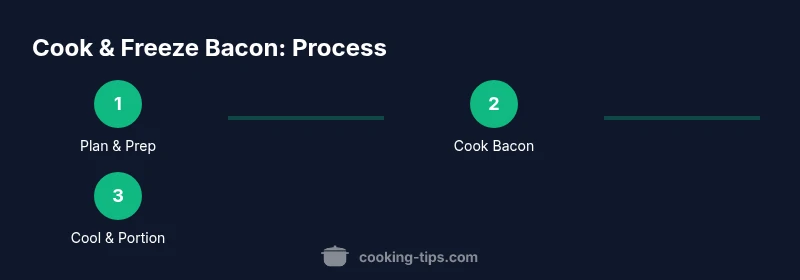
Yes. You can cook bacon and freeze it for later use. For best results, cook to your preferred crispness, cool it rapidly, and portion into airtight packs. Freeze flat to save space and ensure even thawing. When reheating, re-crisp quickly in a skillet or oven for closest texture. Safety: avoid thawing at room temperature.
Introduction: Why cook and freeze bacon?
According to Cooking Tips, freezing cooked bacon is a smart way to save time and reduce waste for busy households. The Cooking Tips team found that when you cook bacon, let it cool quickly, and package it properly, you can preserve much of its flavor and texture for later meals. This approach fits into practical meal planning, especially for breakfasts on busy mornings or quick weeknight dinners. TheCooking Tips team also notes that this method supports meal prep consistency, minimizes spoilage risk, and helps you stretch groceries without sacrificing taste. In this guide, you’ll learn how to choose the right cooking method, how to cool and wrap, and how to reheat without turning bacon into a brittle, chewy disappointment. With the right steps, you’ll be able to pull ready-to-use bacon from the freezer in minutes, not hours.
Section 2: Safety and quality considerations
Safety comes first when cooking and freezing meat products. Always handle bacon with clean hands and utensils to avoid cross-contamination. After cooking, cool the bacon promptly to below 40°F (4°C) within two hours to prevent bacterial growth, then package it in airtight portions. Use freezer-grade bags or containers to minimize air exposure and freezer burn. Label each package with the date so you can track freshness. While freezing slows bacterial growth, it does not kill all microbes, so reheating to a safe internal temperature is important. When in doubt, rely on general food safety guidelines from reputable sources, and keep your freezer at the recommended temperature to maintain quality. Cooking Tips recommends keeping otherwise fresh ingredients on hand to maximize the convenience of frozen bacon in meals across the week.
Section 3: Best cooking methods before freezing
Choosing how you cook bacon before freezing will influence texture after thawing. Pan-frying in a skillet gives you great control over crispness, but it can render a bit more fat than baking. Oven-baking provides even cooking and less splatter, which makes it excellent for larger batches. An air fryer can yield very crispy results with less fat and shorter cook times. Whichever method you pick, aim for bacon that is cooked to your preferred texture, not overdone, because overcooked bacon tends to become crumbly when frozen and reheated. After cooking, transfer the slices to a cooling rack to drain excess fat so the final product remains crisp rather than soggy. If you plan to freeze multiple batches, consider cooking in batches and conserving oven space by staggering the timing. This approach helps maintain consistent quality across portions and reduces post-freeze texture variability.
Section 4: Cooling, slicing, and packaging for freezing
Cooling is a critical step to preserve texture and flavor. Spread cooked bacon on a clean tray or rack to cool quickly, ideally in a cool room or refrigerator for a short period before wrapping. Once cooled, portion the bacon into meal-sized bundles using parchment between slices to prevent sticking. Packaging matters: use airtight freezer bags, vacuum sealers, or rigid containers designed for freezing. Remove as much air as possible from bags to minimize freezer burn, and lay flat in the freezer so the stacks thaw evenly and quickly. Label each package with the date and the type of bacon (if you’re using different varieties) to keep your freezer organized. This step also makes it easier to grab exactly what you need for a quick breakfast or a recipe when you’re short on time.
Section 5: Freezing and storage guidelines
Flat-pack freezing is the key to fast thawing and space efficiency. Place your wrapped portions in a single layer or stacked flat to maximize space and ensure uniform exposure to freezing temperatures. Avoid overloading the freezer, which can slow down cold-freeze times and lead to uneven texture. Keeping the temperature consistently low minimizes freezer burn and preserves the bacon’s flavor profile. If you have a vacuum sealer, this is an ideal time to seal in moisture and protect against air exposure. For long-term storage, rotate your freezer stock by placing the newest packs at the back and the oldest at the front, using oldest-first in meals. Regularly check freezer seals and note any signs of air leakage or freezer burn so you can adjust your packaging method in future batches.
Section 6: Thawing and reheating guidelines
Thawing is safest in the refrigerator overnight, but you can also defrost in the microwave on a low setting for quick thawing if you’re pressed for time. Once thawed, reheat bacon to a safe internal temperature and use it promptly. Reheating methods matter: a quick re-crisp in a hot skillet or a minute or two in a 375°F (190°C) oven tends to restore texture better than microwaving alone. If you’re reheating multiple portions, consider warming only what you’ll eat to prevent overcooking. For dish use, add thawed bacon straight into eggs, fried rice, or pasta in the final minutes of cooking to preserve crispness.
Section 7: Tips, tricks, and common pitfalls
Pro tip: freeze portions flat and separated by parchment so you can grab exact quantities without thawing extra slices. Warning: avoid stacking hot bacon directly on top of other frozen slices; this can cause condensation and sogginess. Note: always label with the date so you know how long it has been stored. Bonus idea: slice bacon into crumbles after freezing for convenient toppings. By planning ahead and following these steps, you’ll have ready-to-use bacon that reheats quickly without sacrificing texture or flavor.
Tools & Materials
- bacon slices(Choose the amount you typically use in 1-2 meals)
- baking sheet(For oven-cooking or as a flat surface to cool)
- parchment paper or foil(Prevents sticking and simplifies portioning)
- cooling rack (optional)(Promotes air circulation for crispness)
- freezer bags or airtight containers(Use freezer-grade packaging)
- labels and marker(Date and quantity for organization)
- vacuum sealer (optional)(Best for minimizing air exposure)
- knife or kitchen scissors(Trim fat or separate slices if needed)
Steps
Estimated time: 1 hour 15 minutes to 1 hour 45 minutes
- 1
Gather and plan
Collect all bacon, tools, and packaging. Decide portion sizes to match typical meals and prepare a workspace with parchment, bags, and a cooling area. Planning ahead minimizes handling time after cooking and helps maintain safety.
Tip: Layout portions by meal size so you simply grab and go. - 2
Choose your cooking method
Select the method that fits your batch size and kitchen setup. Oven-baking is great for large batches with even results; pan-frying offers greater control for texture. If you have an air fryer, it can yield extra crisp edges with less fat.
Tip: For uniform texture, cook in a single layer without overlapping slices. - 3
Cook bacon to your preferred crispness
Cook until your desired level of crispness. Remove from heat promptly to avoid overcooking; excess fat can hinder freezing texture. Drain on a rack or paper towels to remove surface grease.
Tip: Aim for slightly under-crisp since reheating will crisp further. - 4
Cool quickly and safely
Spread bacon on a rack or parchment-lined tray to cool rapidly. Quick cooling helps lock in texture and prevents fat from becoming rancid in the container. Do not leave warm meat on the counter for long periods.
Tip: If you’re short on time, place the tray in the fridge for a short, safe cool-down. - 5
Portion and separate slices
Portion cooked bacon into meal-sized stacks, using parchment between slices to prevent sticking. Freezer-friendly portions save you time and calories wasted on reheating more than you need.
Tip: Consider pre-slicing into lardons if you frequently add bacon to dishes. - 6
Wrap and bag tightly
Wrap each portion tightly in plastic wrap or use freezer bags. Remove as much air as possible to minimize freezer burn. Label each package with the date and contents.
Tip: Use a vacuum sealer for optimal air removal. - 7
Layer and store in the freezer
Place wrapped portions in a flat layer in the freezer or in a dedicated freezer container. This layout helps with rapid thawing and efficient space use. Keep the freezer door closed as much as possible to maintain a steady cold temperature.
Tip: If stacking, place a sheet of cardboard between layers to avoid squashing the portions. - 8
Reheat and serve
When ready to use, thaw in the fridge overnight or reheat directly from frozen in a hot skillet or oven. Reheat until hot and edges are crisp. Use promptly to preserve quality and safety.
Tip: Avoid overheating in the microwave; it can make texture rubbery.
Quick Answers
Can cooked bacon be frozen?
Yes. Cooked bacon can be frozen if cooled promptly and stored in airtight packaging. Properly prepared, it retains flavor and texture for later use.
Yes, cooked bacon can be frozen if cooled and stored properly.
What is the best way to reheat frozen bacon?
Reheat in a hot skillet for a quick re-crisp, or in a preheated oven until hot and edges are crisp. Avoid long microwave reheating, which can make bacon soggy.
Reheat in a skillet or oven for the best texture.
How should I store cooked bacon in the freezer?
Store in airtight portions, ideally flat, and remove as much air as possible. Label with the date. Use freezer-grade bags or vacuum-sealed containers to minimize freezer burn.
Store airtight, flat portions with dates labeled.
Can I freeze raw bacon and cook it later?
Yes, raw bacon can be frozen, but freezing cooked bacon is often more convenient for quick meals. If freezing raw, wrap tightly and use within a reasonable time for best texture after cooking.
Yes, raw bacon can be frozen, but cooked bacon is usually more convenient.
How long can cooked bacon stay frozen?
Cooked bacon retains best quality for an extended period when frozen properly, but for optimal texture, aim to use within a few months. Always check for freezer burn and aroma before use.
For best texture, use within a few months and check for signs of spoilage.
Top Takeaways
- Cook bacon to your preferred texture before freezing.
- Cool quickly and portion into airtight, flat packs.
- Label with date and use within a reasonable window.
- Reheat in skillet or oven for best texture, not microwave alone.
- Plan ahead to save time and reduce waste.