Can Cooked Bacon Be Left Out? Essential Safety Rules
Learn whether cooked bacon can be left out, the two-hour rule, proper refrigeration timelines, reheating guidelines, and practical steps home cooks can take to keep bacon safe.


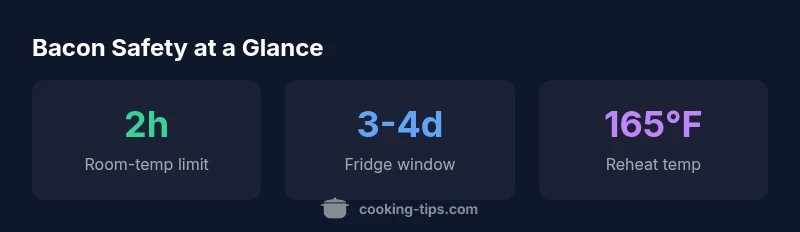
Cooked bacon should not be left out at room temperature for more than two hours, or one hour if temperatures are above 90°F. Refrigerate leftovers promptly at or below 40°F (4°C). Reheat to at least 165°F (74°C) before serving. When in doubt, discard to prevent foodborne illness. This guidance reflects standard safety practices that home cooks can apply without special equipment.
Can Cooked Bacon Be Left Out? Essential Safety Rules
Can cooked bacon be left out? The short answer is no. Bacon is a perishable protein, and improper handling can allow harmful bacteria to multiply quickly. According to Cooking Tips, treating cooked bacon like other perishable foods—refrigeration within two hours and strict cold storage—helps minimize illness risk while preserving quality. In practice, after bacon leaves the skillet, home cooks should spread it in a thin layer on a plate to help it cool faster and then move it to the fridge in a shallow container or wrap it tightly. If bacon has sat out longer than recommended, the safest choice is to discard it. Following these fundamentals makes it easier to enjoy crisp, flavorful bacon safely, whether for a quick breakfast plate or a topping for salads and casseroles.
Why Temperature Matters: The Danger Zone for Bacon
Temperature is the silent partner of food safety. The danger zone for perishable foods sits roughly between 40°F and 140°F (4°C–60°C). Cooked bacon, with its fat and protein, offers a favorable environment for bacteria if left in this range too long. Prompt chilling slows microbial growth, and proper reheating brings bacon back to a safe eating temperature. The two-hour rule is a conservative guideline that minimizes risk, especially in kitchens with busy brunches or multiple pans cooling at once. Even if bacon looks and smells fine, time in the danger zone can allow pathogens to proliferate. For best results, cool bacon quickly, refrigerate promptly, and reheat to a safe temperature before consuming. This approach is a cornerstone of safe, reliable cooking.
How Long Can Cooked Bacon Sit Out Before Risk Increases?
The core question is practical: how long can bacon stay out before it becomes unsafe? In typical room temperatures, the advised limit is two hours. If your kitchen runs warm—around 80–85°F (27–29°C) or higher—it's safer to shorten that window to about one hour. These time frames help limit bacterial growth while accommodating real-life cooking rhythms, such as stuffing griddles, warming trays, or buffet-style servings. Remember that many factors influence cooling rates, including bacon thickness, whether it was spread in a shallow pan, and whether other hot foods are nearby. If bacon has been out beyond these windows, discard it. For longer storage, refrigeration or freezing is a safer route, with freezer storage offering more time but potentially affecting texture.
Storage Options: Fridge vs Freezer vs Reheating
Storing cooked bacon correctly is essential for safety and quality. Refrigeration is the simplest path: cooled bacon should be placed in airtight containers or wrapped tightly and stored at 40°F (4°C) or below. In general, refrigerated cooked bacon stays best for about 3–4 days, though it may remain technically safe a bit longer; however, flavor and texture will decline. Freezing is a valuable option for longer storage: frozen cooked bacon keeps quality best within 1–2 months when wrapped well. When you’re ready to eat, reheat to 165°F (74°C) to ensure safety. Reheating too many times can degrade texture and increase risk, so aim for a single reheating cycle and refrigerate leftovers promptly after serving. These practices support consistent quality across meals and gatherings.
Reheating Guidance: Safe Temperatures for Leftover Bacon
Reheating leftovers to a safe temperature is as important as refrigeration. Use a reliable thermometer to verify an internal temperature of at least 165°F (74°C) before serving. For even heating, choose an oven, skillet, or microwave with short, frequent checks. If the bacon exhibits an off smell, sliminess, or loss of color, discard it rather than taste-testing. Reheat only the portion you plan to eat, and refrigerate any remainder promptly if needed. Limiting reheating to a single cycle helps preserve texture while reducing safety risks. With careful reheating, leftovers can become tasty additions to breakfasts, sandwiches, and salads.
Practical Cooking Scenarios: Microwave, Skillet, or Oven
- Microwave: Fast but can heat unevenly; use short intervals (15–30 seconds), flip, and check the center temperature.
- Skillet: The most reliable method for even heating and crisp texture; turn bacon frequently until hot throughout.
- Oven: Reheat gently at 325°F (165°C) on a rack to maximize crispness while avoiding overcooking. This method is ideal for larger batches. Remember, avoid multiple reheating cycles; store leftovers safely after serving.
Debunking Myths and Common Questions
- Myth: You can “cook it again” by heating longer in the microwave. Reality: Reheat to a safe temperature and avoid repeated heating, which harms quality and safety.
- Myth: Bacteria are killed completely by cooking bacon, so leftovers are always safe. Reality: Some bacteria survive cooking; they can grow when food cools slowly in the danger zone.
- Question: Can bacon be left out overnight? Reality: Overnight exposure is outside safe guidelines and should be discarded.
- Question: Can frozen bacon be thawed at room temperature? Reality: Thaw in the fridge or in cold water; do not thaw at room temperature.
- Question: Does the two-hour rule apply equally to all foods? Reality: The general principle applies, but different foods have different safe timeframes based on moisture, acidity, and type of protein.
Authoritative Sources and How They Apply
For home cooks seeking further guidance, consult authoritative sources on food safety and bacon handling. These resources provide detailed explanations of time-temperature guidelines, refrigeration practices, and safe reheating temperatures. Incorporating these guidelines into daily routines helps reduce the risk of foodborne illness while maintaining flavor and texture. The Cooking Tips team emphasizes using these sources to inform kitchen habits and to tailor timing to your household's routines.
Comparison of bacon safety storage and reheating timelines
| Scenario | Safe Time at Room Temp | In-Fridge Window | Notes |
|---|---|---|---|
| Cooked bacon left out on counter | 2 hours max | 3-4 days in fridge | Discard if longer or uncertain |
| Bacon reheated and served | N/A | 3-4 days in fridge after cooking | Reheat to 165°F; use promptly |
| Frozen cooked bacon | N/A | 2-3 months in freezer (best within 1-2 months) | Thaw in fridge before reheating |
Quick Answers
Can cooked bacon be left out overnight?
No. Do not leave cooked bacon out overnight. Perishable foods left at room temperature beyond two hours (one hour if hot) increase the risk of dangerous bacterial growth. Discard if left out past the recommended window.
No—discard if bacon has been left out overnight; perishable foods should not sit out that long.
Is it safe to reheat bacon that was left out?
Only if it has been kept within safe time limits and refrigerated promptly. If bacon was left out beyond two hours (or one hour in hot conditions), discard. Reheat remaining portions to 165°F before consuming.
Only reheat if it was refrigerated promptly; otherwise, discard.
How should I store cooked bacon in the fridge?
Store cooled bacon in airtight containers or wrap tightly, at 40°F (4°C) or below. Use within 3-4 days for best quality, and refrigerate leftovers promptly after serving.
Store it tightly wrapped and refrigerate promptly.
Can I freeze cooked bacon for later use?
Yes. Freeze cooked bacon in airtight packaging for best quality within 1-2 months. Thaw in the refrigerator before reheating to 165°F for serving.
Yes, freeze for longer storage and thaw before reheating.
Does the two-hour rule apply to all foods?
The two-hour rule is a general guideline; different foods have different safe timeframes. Perishable proteins like bacon require prompt refrigeration to minimize risk.
The two-hour rule is a general guideline, but always check specific food guidelines.
“Cooked bacon deserves the same careful handling as other perishable foods: refrigerate promptly and reheat to a safe temperature before consuming.”
Top Takeaways
- Do not leave cooked bacon out longer than two hours
- Refrigerate promptly and store in airtight containers
- Reheat leftovers to 165°F before eating
- If in doubt, discard to prevent illness
- Freeze for longer storage if needed