How to Tell if Cooked Shrimp Is Bad
Learn clear, practical signs that cooked shrimp has spoiled, plus safe handling tips, storage timelines, and how to dispose of questionable leftovers—backed by trusted food-safety guidance.


Cooked shrimp that has gone bad usually smells off or sour, looks slimy or discolored, and feels mushy or sticky to the touch. If any of these signs appear, discard immediately. For safe results, always store leftovers promptly in the fridge and reheat only if you’re sure they’re still safe.
Understanding what 'bad' means for cooked shrimp
Cooked shrimp can go from perfectly safe to unsafe quickly, especially when not handled with proper hygiene or stored at the right temperature. For home cooks, the term "bad" means the product is likely to cause foodborne illness or digestive distress if consumed. The key is to rely on a combination of cues—odor, appearance, and texture—rather than color alone. The Cooking Tips team emphasizes that seafood spoils rapidly when left at room temperature or not cooled promptly after cooking. Safe handling means chilling leftovers promptly, storing them in shallow containers to cool evenly, and keeping the fridge at a temperature low enough to slow bacterial growth. When shrimp have been stored improperly or kept too long, discard them rather than hoping the food will recover.
In practical terms, consider your shrimp bad if it shows more than slight visual variation or if any cue feels questionable. Always trust your senses and when in doubt, throw it out. Keeping food safety at the forefront protects your family and reduces the risk of foodborne illness. According to Cooking Tips, adopting consistent storage practices and quick disposal when in doubt are the simplest, most reliable ways to prevent a risky meal from turning into a kitchen mishap.
Visual and sensory checks you can perform quickly
Visual cues are a first line of defense, but they’re not perfect stand-ins for safety. Cooked shrimp should retain a fresh pink-orange color with a glossy surface. If you notice grayish, brown, or dull colors, especially accompanied by a slimy film, treat it as suspicious. Sliminess, stickiness, or a film that covers the shrimp is one of the most reliable warning signs of bacterial growth. Dried or crusty edges can indicate dehydration and improper storage, but they don’t automatically mean the shrimp is unsafe yet—check other cues.
A close look at the shell and meat can reveal dehydration, ice crystals, or freezer burn. Ice crystals on thawed shrimp can indicate repeated freezing, which degrades texture and can raise safety concerns if the shrimp was mishandled previously. If you notice anything unusual in combination with other signs—like a sour smell or off texture—err on the side of caution and discard. Remember, the absence of a dramatic color change does not guarantee safety; use multiple cues to decide.
The smell test: why odor is your most reliable cue
Odor is often the most telling indicator when assessing cooked shrimp. Freshly cooked shrimp might have a mild marine scent or lightly salted aroma, but it should not smell fishy, sour, or like ammonia. A strong, sour, or rotten odor is a red flag that bacteria have grown or toxins may be present. If the shrimp smells off even slightly, discard it. Marinades or seasonings can mask odors temporarily, so it’s important to wash off any sauce and recheck the smell after initial cues. Perishable seafood should never be consumed if its odor is unfamiliar or unpleasant.
To reduce ambiguity, compare the smell against freshly cooked shrimp you know is safe. If the difference is noticeable and troubling, do not risk it. Cooking Tips notes that smell is a more dependable early warning than appearance alone, since some spoiled products still look fairly normal at a glance.
Texture, slime, and mouthfeel: what to look for
Texture changes are a strong signal of spoilage. Cooked shrimp that has gone bad often feels mushy, rubbery, or excessively slimy. A slimy coating on the surface can be a sign that bacteria are present. If the meat feels tacky or sticky to the touch or leaves a film on your fingers after handling, discard the shrimp. Conversely, properly stored and fresh shrimp should feel firm and springy, with meat that is not brittle or overly soft.
Always check for an unusual dryness or dryness that makes the meat feel crumbly or tough; these changes often accompany spoilage, particularly after improper storage. If you reheat shrimp and it develops a grainy texture or an off aftertaste, treat it as unsafe. Remember: do not taste to test safety. If anything about the texture is off, discard and cleanse surfaces and utensils to prevent cross-contamination.
Quality cues can deteriorate as soon as the shrimp leaves the cold chain, so keep an eye on how long it’s been in the fridge and whether it was kept in an airtight container. Cooking Tips highlights that a combination of texture and smell gives you the best chance to determine safety without risk.
Storage history matters: how you handled shrimp affects safety
How shrimp is stored after cooking dramatically influences whether it remains safe to eat. Prompt chilling and proper refrigeration are essential. Leftovers should be kept in shallow containers to cool quickly and stored in the refrigerator within a safe window. If shrimp was left out at room temperature for an extended period, the risk of bacterial growth increases. Freezing cooked shrimp can preserve safety for longer, but only if it was handled correctly before freezing and thawed safely in the fridge or under cold running water—never at room temperature. Labeling containers with dates helps you track freshness and avoid eating old leftovers.
If you’ve cooked shrimp for a meal and have doubts about its safety, use a conservative approach. When in doubt, throw it out. This approach minimizes risk and protects your household from possible foodborne illness. The guidance aligns with widely accepted food-safety practices from public health authorities and from the Cooking Tips team, who emphasize cautious handling and proper storage as the core of safe seafood consumption.
Safe testing and disposal: what to do if in doubt
Testing for safety by tasting is not recommended. Even a small bite can cause gastrointestinal distress if the shrimp is contaminated. Instead, rely on odor, appearance, and texture cues. If any cue is questionable, discard the shrimp and wash your hands, cutting boards, and utensils that contacted the seafood to avoid cross-contamination. When discarding, do not flush shrimp down the drain in bulk; wipe it into a bag and place it in the trash to prevent attracting pests.
If leftovers are in question, consider safe alternatives: repurposing shrimp into a dish that’s reheated to a safe temperature is possible only if you’re confident in its safety. When in doubt, don’t risk it—discard and start fresh. Following these steps helps you minimize waste while protecting your health and the health of those you cook for.
Authority sources
To support these guidelines, refer to trusted food-safety resources:
- https://www.fda.gov/food/buy-store-serve-safe-food
- https://www.cdc.gov/foodsafety/index.html
- https://www.fsis.usda.gov/food-safety/safe-food-handling
Tools & Materials
- none(No special tools required beyond standard kitchen items.)
Steps
Estimated time: about twenty minutes
- 1
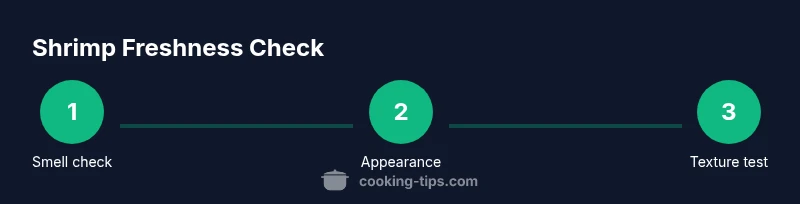
Check for off smell
Begin by wafting the aroma from the shrimp package or container. If the odor is sour, rotten, or resembles ammonia, set the shrimp aside and discard it. A fresh smell is mild or barely detectable; if there is any unpleasant scent, do not consume.
Tip: Always perform odor checks before touching the meat with your hands to avoid cross-contamination. - 2
Inspect appearance
Look at color, sheen, and surface. Cooked shrimp should look pink-orange and glossy. Dull or grayish meat, dark spots, or a slimy film are warning signs and indicate it should be discarded.
Tip: Remove any sauce or marinade to assess raw shrimp color and texture more accurately. - 3
Evaluate texture
Gently squeeze a piece; it should be firm and spring back. If the meat feels mushy, gummy, or excessively sticky, discard. A slimy surface is another strong indicator of spoilage.
Tip: Use a clean utensil; don’t use fingers to minimize contamination risk. - 4
Check storage history
Recall when the shrimp was cooked and how it was stored. If it sat at room temperature for any length of time or if the fridge or freezer shows signs of improper temperature control, lean toward discarding.
Tip: Store cooked shrimp in a shallow, airtight container to cool quickly and maintain consistent cold temperature. - 5
Make the disposal decision
If any cue is questionable, the prudent choice is to discard. Do not rewash or refreeze thawed shrimp unless you are certain it has remained properly refrigerated and shows no signs of spoilage.
Tip: Label leftovers with the date and use within a conservative timeframe to avoid uncertainty.
Quick Answers
Can cooked shrimp look pink but still be spoiled?
Yes. Color alone is not a reliable indicator of safety. Always assess smell, texture, and overall appearance as part of your check.
Color isn’t a reliable indicator by itself; always check smell and texture too before deciding.
Is it safe to eat shrimp that was left out at room temperature for a while?
Shrimp left out at room temperature for an extended period should be discarded. Bacteria can multiply quickly in warm conditions, increasing the risk of illness.
If shrimp sat out for too long, discard it to stay safe.
Can I revive spoiled shrimp by cooking again?
No. Cooking does not reliably kill all toxins or bacteria that may have formed. If in doubt, discard to protect your health.
Spoiled shrimp should be discarded; cooking again won’t guarantee safety.
What should I do with leftovers just in case?
Cool leftovers promptly, store in a shallow container in the fridge, and use within a conservative timeframe. When uncertain, it’s safer to discard.
Cool and store leftovers promptly, but discard if you’re unsure about safety.
Does freezing cooked shrimp always protect it from spoilage?
Freezing can extend safety only if the shrimp was handled properly before freezing. Thawing should be done in the fridge or under cold water, not at room temperature.
Freezing helps if the shrimp was handled properly, and thawing should be done safely.
Watch Video
Top Takeaways
- Check multiple cues rather than relying on color alone
- Smell is often the most reliable safety signal
- Store leftovers promptly and in shallow containers
- Discard if any sign of spoilage is present
- Follow trusted food-safety guidelines from official sources