How to Tell If Cooking Oil Is Bad: A Practical Guide
Learn how to tell if cooking oil is bad with simple sensory checks, storage tips, and safe disposal guidance. Practical steps help you avoid rancid flavors and keep meals delicious.


Bad cooking oil usually shows clear, avoidable signs. Look for off smells, sour or rancid odors, unusual color, cloudiness, or a soapy feel. If the oil has passed its label date or stored in improper conditions, discard it and open a fresh bottle. When in doubt, err on the side of safety.
Understanding how oil spoils
Oil spoils mainly due to oxidation, hydrolysis, and contamination. Light, heat, and air accelerate these processes, causing rancid flavors and off odors. Different oils vary in how quickly they degrade: delicate oils like extra-virgin olive, flaxseed, and some nut oils spoil faster than more stable refined oils. To protect freshness, store bottles tightly sealed in a cool, dark place and avoid leaving the bottle open between uses. According to Cooking Tips, the best practice is to minimize air exposure—pour a small amount into a storage bottle with a tight cap and return the larger container to a dark place. This simple habit can extend usable life and reduce waste.
Cooking Tips analysis shows that improper storage, repeated dipping, and placing oil near heat sources dramatically reduce freshness over time. Labeling each bottle with the opening date helps you judge when it’s time to replace it, without guessing. When you’re unsure, remember that oil labeled as extra-virgin or pressed from seeds often requires quicker rotation than refined varieties.
Common signs of spoilage
Watch for a sensory change that signals trouble. The oil may smell sour, metallic, or rancid; if the odor is strong and unlike the fresh oil, discard. Taste can also betray spoilage: a bitter, soapy, or off flavor indicates rancidity. Visually inspect for unusual cloudiness, sediment, or a darker color than the bottle would suggest. If oil appears thicker than usual or foams when shaken, that’s another red flag. Finally, check the label date; even unopened bottles have a shelf life, and many cooks underestimate how long oil sits in the pantry. If any of these signs are present, do not use the oil for cooking or dressing.
As a reminder, always consider your senses as the initial test: if it smells odd, don’t sniff again—resume risk assessment by discarding. Cooking Tips analysis shows that even small amounts of heated oil that is rancid can generate harmful compounds, so safety matters more than flavor in these moments.
Safe at-home tests you can perform
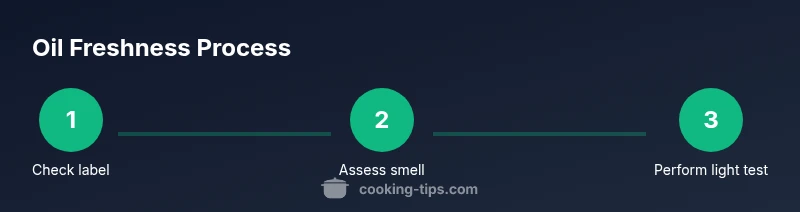
Begin with a simple smell and visual check, then proceed to a tiny heat test if the oil passes those. Steps:
- Look at color, clarity, and sediment under bright light.
- Smell the oil close to your nose; note any sour, metallic, or rotten odors.
- If the oil passes these checks, heat a small amount in a clean skillet over medium heat, watching for smoke or unusual odors that are stronger than normal cooking aromas.
- Optional taste test: take a very tiny lick (not swallow) to assess flavor; spit out and rinse your mouth if there’s any bitterness or soapy taste.
Record your observations and compare to the bottle’s opening date and expected freshness. If you notice any red flags, discard the oil.
Oil types and shelf-life expectations
Different oils have different oxidation rates. Lightly processed oils like extra-virgin olive oil and flaxseed oil are more prone to spoilage than highly refined varieties. When stored properly away from light and heat, many oils retain quality longer, but you should rotate your stock and use the oldest bottle first. If you notice any change in aroma or flavor during cooking, it’s a sign to stop using that bottle and start fresh. Remember that marketing terms like -Extra-virgin and unrefined oils may taste different and require more mindful storage than refined oils.
To minimize risk, prefer smaller bottles and reseal tightly after each use, keeping the oil in a cool, dark place. This aligns with best practices many cooks follow to maintain flavor integrity and reduce waste.
Storage best practices to maximize freshness
Store oil in a cool, dark place away from direct sunlight and heat sources like the stove. Always seal the cap tightly after use, and avoid leaving the bottle open for long periods. For oils prone to oxidation, such as flaxseed oil or walnut oil, consider refrigeration after opening to slow rancidity. Use opaque or tinted containers when possible, and label bottles with opening dates to help rotate stock. If you cook frequently, consider transferring a portion to a smaller, well-sealed bottle to minimize air exposure in the main container.
When in doubt, check the label for the manufacturer’s storage recommendations and use-by date. These guidelines help home cooks practice proactive freshness management rather than reactive discard.
What to do with oil you suspect is bad
Do not pour rancid oil down the drain or reuse it in cooking. Instead, seal it in a non-leaking container and discard with household trash, following local disposal guidelines. If you have a composting system, never pour oil into it. Some communities offer recycling options for used cooking oil; check local recycling programs. Wipe down the bottle to remove any residue before recycling the container if it’s recyclable. Keeping your disposal careful protects plumbing and the environment.
Quick-start freshness checklist
- Check the label for opening date and recommended storage.
- Inspect smell: off odors indicate spoilage.
- Assess appearance: cloudiness or unusual sediment warrants caution.
- If in doubt, discard and replace with fresh oil.
- Store oil in a cool, dark place and seal after each use.
- When using delicate oils, consider refrigeration after opening to extend freshness.
Tools & Materials
- Cooking oil (type and brand)(Choose a bottle you can inspect for label and opening date)
- Clean spoon or tasting cup(For any optional taste test, use a small sample)
- Bright lighting(To inspect color and sediment clearly)
- Small nonstick skillet or pan(Used for a tiny heat test if you perform it)
- Paper towels or cloth(For wiping spills and drying bottle rims)
- Sealable bottle or disposal bag(For safe disposal of suspected oil)
- Labeling materials (pen, tape)(Record opening date and observations)
- Trash can lined with bag(For safe disposal of bad oil)
Steps
Estimated time: 15-20 minutes
- 1
Open and inspect the bottle
Uncap the bottle and inspect the label for opening date, type, and storage guidance. Check for any visible sediment or unusual coloration before you pour a small amount for testing.
Tip: Keep the bottle upright and avoid tilting to minimize air exposure during pour. - 2
Smell the oil in a clean cup
Swirl the oil gently in a clean cup and bring it close to your nose. Note whether the aroma is fresh and fruity, or sharp, sour, or metallic, which are signs of spoilage.
Tip: If the smell is off, do not continue to the taste or heat tests. - 3
Look for visual signs
Hold the cup up to a bright light and look for cloudiness, haze, or sediment that doesn’t appear in a freshly opened bottle. A darkened or oily film can indicate oxidation or contamination.
Tip: Cloudiness alone in some oils isn’t always bad, but combined with other signs it matters. - 4
Conduct a tiny heat test (optional)
Place a small amount of oil in a preheated pan over medium heat and observe. A normal aroma and light shimmer are acceptable; abrupt smoke and a strong off-odor mean discard.
Tip: Only perform this if the oil passes smell and appearance checks. - 5
Taste test with caution (optional)
If the oil passes smell, appearance, and heat tests, you may do a very tiny taste test. Do not swallow; spit it out and rinse your mouth if anything tastes bitter or soapy.
Tip: If you’re unsure at any point, skip tasting and discard. - 6
Decide and label
If any test signals spoilage, discard the bottle and clean the storage area. If it’s still questionable, label the bottle with the date and use it soon or replace it.
Tip: Better to waste a little oil than risk unsafe cooking.
Quick Answers
How can I tell if extra-virgin olive oil has gone bad?
Look for a rancid or sour odor, off flavor, and color change from amber to very dark. If any sign is present, discard and replace with fresh oil. Always check the label for opening dates and storage guidance.
If it smells off or tastes wrong, discard the oil and use a fresh bottle.
Can you cook with oil that smells bad?
No. Bad oil can produce harmful compounds and off flavors. Discard the bottle and use fresh oil for cooking.
If it smells off, don’t cook with it.
Does oil go bad if it’s unopened?
Unopened bottles last longer, but they can still degrade over time, especially if exposed to heat or light. Store in a cool, dark place and rotate stock after opening.
Even unopened bottles can go bad if not stored properly.
Should I refrigerate all cooking oils?
Most oils benefit from being stored in a cool, dark place. Refrigeration isn’t necessary for most oils, but very delicate oils like flaxseed may benefit from refrigeration to slow spoilage.
Keep most oils out of the fridge unless the label says otherwise.
How should I dispose of bad oil?
Do not pour oil down the drain. Seal it in a non-leaking container and discard with trash, following local guidelines. Some areas offer oil recycling programs.
Seal and discard in trash; check local recycling options.
What factors affect shelf-life besides opening?
Exposure to light, heat, air, moisture, and the bottle quality. Oil type and storage container also influence how long oil stays fresh.
Light, heat, and air shorten shelf-life; use proper storage.
Watch Video
Top Takeaways
- Check label dates and storage recommendations before use.
- Rancid oil often smells sour or metallic and tastes off.
- Visual cues like cloudiness or sediment signal potential spoilage.
- When in doubt, discard rather than risking flavor or safety.