Does Cooked Rice Go Bad? A Practical Guide to Safe Storage and Spoilage
Explore does cooked rice go bad, how to store it safely, signs of spoilage, and best reheating practices. A practical guide from Cooking Tips. In daily cooking.


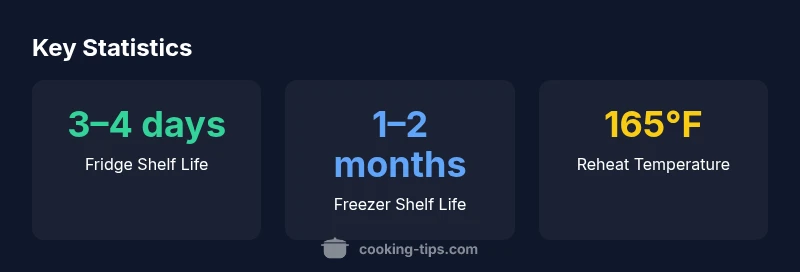
Yes—cooked rice can go bad if it’s left out too long or stored improperly. Bacteria grow quickly in the danger zone, so it’s safest to cool and refrigerate promptly after cooking. When handled correctly, cooked rice stays safe for about 3–4 days in the fridge or 1–2 months in the freezer.
does cooked rice go bad: quick reality check
According to Cooking Tips, understanding how cooked rice behaves after cooking helps home cooks avoid common safety pitfalls. Rice is a perishable staple, and its safety hinges on how quickly it’s cooled, how it’s stored, and how thoroughly it’s reheated. The moment rice leaves the pot, the clock starts ticking toward potential spoilage if it isn’t handled properly. This section lays out the core factors that separate safe leftovers from risky ones, with practical steps you can implement in any kitchen.
Storage timelines and safe handling
When planning storage, think in terms of time and temperature. The safe zone for most cooked foods is below 40°F (4°C). Rice should be cooled and transferred to the fridge within a couple of hours of cooking. In the fridge, keep rice in a shallow, airtight container to promote rapid cooling and even temperature. For longer storage, freezing in portions helps preserve texture and reduce reuse waste. Remember: the goal is to minimize time spent in the temperature danger zone and to label leftovers with dates so you can rotate stock before it loses quality. This approach aligns with general food-safety principles that Cooking Tips analyzes for 2026.
Signs of spoilage and how to inspect
Spoiled cooked rice often shows several telltale signs. A sour or off smell is the most immediate red flag, followed by a slimy texture or any unusual color. If mold appears, discard the entire batch. When rice has been left at room temperature for too long, it may begin to ferment or develop a sour odor even if it looks fine. Always err on the side of caution and discard rice if you’re unsure about its freshness. These practical checks help everyday cooks avoid foodborne illness.
Safe reheating and portion control
Reheating rice is not just about heat—it’s about even heating and proper timing. Reheat rice to a piping hot temperature (at least 165°F/74°C) and use it as a guide rather than a rule of thumb. Stirring during reheating helps distribute heat and prevent cold spots where bacteria can survive. Portion rice into smaller amounts rather than reheating a big mass all at once, which helps achieve uniform temperature quickly. After reheating, consume leftovers promptly and do not re-reheat multiple times.
Quick-reference storage guide for common scenarios
This quick-reference guide provides a practical snapshot for typical kitchen scenarios. It’s designed for busy households to minimize waste and keep food safety front and center. - Freshly cooked rice: cool and refrigerate within 2 hours. - Refrigerated leftovers: use within 3-4 days. - Frozen portions: best quality within 1-2 months. - Reheating: reheat to steaming hot and assess texture and aroma before serving.
Storage timelines for cooked rice
| Condition | Storage Method | Typical Timeframe | Best Practice |
|---|---|---|---|
| Room Temperature | Discard after 2 hours | 2 hours | Keep rice out of the danger zone (40–140°F) |
| Refrigerator | Store in shallow container | 3-4 days | Refrigerate within 2 hours of cooking |
| Freezer | Airtight packaging | 1-2 months | Label date; use within time window |
| Reheating | Heat to steaming hot | Minutes | Stir and check temperature to 165°F |
Quick Answers
How long can cooked rice safely be stored in the fridge?
In general, refrigerate cooked rice for 3-4 days. Refrigeration slows bacterial growth but doesn’t stop it completely. For best quality, use within this window.
Cooked rice lasts about 3-4 days in the fridge if kept cold and stored in an airtight container.
Is it safe to reheat rice more than once?
No. Reheat only once and discard any leftovers that have been cooled slowly or kept too long. Repeated cooling and reheating raises the risk of bacterial growth.
Avoid reheating rice more than once to reduce food-safety risks.
What are the signs that cooked rice has spoiled?
Spoiled rice often smells sour or off, looks slimy, or has changed color. If in doubt, discard to avoid foodborne illness.
If rice smells off or looks slimy, it’s safer to throw it away.
Can I freeze leftover rice, and how to do it properly?
Yes. Freeze in small portions in airtight containers or bags. Thaw in the fridge before use or reheat directly from frozen, ensuring it reaches a safe temperature.
Yes, you can freeze rice—just portion, seal, and reheat until hot.
What is the safe cooling method for rice after cooking?
Spread rice on a shallow tray or line a tray with parchment to cool quickly. Once cooled, transfer to the fridge in a shallow container to speed up chilling.
Cool rice quickly on a shallow tray, then refrigerate.
“Food safety isn’t a guess—cool rice quickly, store properly, and reheat to steaming hot. Small habits prevent big risks.”
Top Takeaways
- Store rice promptly in the fridge to reduce spoilage risk
- Use ice-cold storage in shallow containers for faster cooling
- Reheat to steaming hot (165°F/74°C) and avoid multiple reheats
- Discard rice if it smells off, looks slimy, or shows color/texture changes