Can You Cook and Freeze Rice? A Practical Guide
Learn how to cook rice for freezing, cool it safely, portion it, freeze efficiently, and reheat without losing texture. A complete, easy-to-follow guide from Cooking Tips with tips on storage, safety, and creative uses.


Yes—can you cook and freeze rice? The short answer is yes, you can. This quick method involves cooking rice to just under doneness, cooling it rapidly, and freezing in single-serving portions. When reheating, fluff with a fork and add a splash of water if needed. Following proper cooling and storage keeps texture and safety intact.
Can You Cook and Freeze Rice? What Home Cooks Should Know
If you've ever wondered can you cook and freeze rice, the answer is yes. This approach lets you stock up on ready-to-use grains for quick weeknight meals. The Cooking Tips team has tested a simple routine that preserves texture and safety when rice is cooled and frozen correctly. In this guide, you’ll learn how to pick rice, prepare it for freezing, how to cool, freeze, store, and reheat. By understanding the process, you can batch-cook once and reheat several times with minimal waste.
- We’ll cover rice varieties, preparation, proper cooling, storage options, and reheating techniques.
- We’ll emphasize food safety, including cooling rice rapidly and keeping it sealed to prevent freezer burn.
- Finally, we’ll share practical tips to adapt the method to different households and equipment.
Choosing Rice for Freezing: What Works Best
Not all rice freezes equally well. Long-grain varieties like basmati and jasmine tend to separate nicely when reheated, while some sticky varieties may cling together more. The key is to select rice with a fluffy texture when cooked and to avoid very wet, gummy results. Cooking Tips analysis shows that sticking to standard cooking times and ensuring the rice is not overcooked helps preserve texture after freezing. If you’re feeding a family with different preferences, consider batching using two rice types and testing one frozen batch at a time.
- Prefer varieties known for light, separate grains after cooking.
- Test a small frozen batch before committing to a large quantity.
- Adjust cooking time modestly to obtain a texture that reheats well.
Preparation: Rinsing, Water Ratio, and Par-Cooking
Rinsing rice removes surface starch, which can cause clumping after freezing. Use a light rinse until the rinse water is mostly clear, then drain well. For freezing-friendly texture, cook the rice to about 90% doneness so it finishes in the reheating step without becoming mushy. Par-cooking is optional but can help, especially when you’re freezing multiple portions. Follow package guidance for water amounts, but plan to drain excess moisture before freezing so the grains don’t steam together in the freezer.
- Rinse until water runs clear to reduce surface starch.
- Aim for a texture that’s tender but not fully soft to avoid mush during reheating.
- Consider a brief par-cook for very large batches if you’re pressed for time.
Cooling Rice Safely Before Freezing
Cooling quickly is essential to prevent bacterial growth and to maintain texture. Spread the freshly cooked rice in a thin layer on a baking sheet or tray to maximize surface area and speed cooling. Do not leave rice out at room temperature for more than two hours; refrigerate promptly once it’s cooled to warm or cooler. Cooking Tips guidance stresses rapid cooling as a critical step for safe freezing and better reheating results.
- Use a cooling rack or tray to speed up cooling.
- Move rice to the fridge within the two-hour window to minimize risk.
- Avoid stacking hot pans directly on cold surfaces; spread rice evenly for faster cooling.
Portioning for Freezing: Flat Freezing and Storage Options
Portioning rice into single-serving or family-size portions makes reheating fast and predictable. Use flat, freezer-safe bags or small airtight containers so each portion freezes in a compact layer. Flatten bags as you seal to maximize surface area and speed thawing. Label each portion with date and variety (if you’re using more than one type) to track freshness. The goal is to make it easy to grab just what you need without thawing excess.
- Divide into meal-sized portions before freezing.
- Use flat bags or shallow containers to promote quick freezing.
- Label clearly to monitor freshness and variety.
Freezing Methods: Flat Tray, Zip Bags, and Rigid Containers
For best results, freeze rice in a way that minimizes fast freezer burn and maximizes reheating quality. A quick method is to portion into zip-top bags, lay them flat on a tray to freeze individually, then stack once solid. Alternatively, small rigid containers work well for meals that require intact shapes. If you stack bags, ensure they’re completely frozen before stacking to prevent squashing the grains and to keep portions separate for easier removal. Cooking Tips notes that flat freezing gives the best texture upon reheating.
Labeling and Storage Time: How Long Rice Keeps Quality
Label each bag or container with the cooking date and rice type. While freezing keeps rice safe indefinitely if it remains frozen, quality starts to decline over time. For best flavor and texture, try to use frozen rice within a few months, and always rely on sight and smell as your guide. If you notice off odors, unusual colors, or a slimy texture after thawing, discard the portion. Following these guidelines helps maintain consistent quality across batches.
- Date and identify the rice type on every package.
- Aim for a few months for best texture, longer storage may still be safe.
- Do not rely on storage time alone; use sensory checks before reheating.
Reheating Frozen Rice: Best Methods to Rekindle Texture
There are several reliable reheating methods. In the microwave, add a splash of water or stock to the frozen portion and cover to trap steam, then heat in short intervals, mixing occasionally. On the stovetop, reheat in a pan with a little water, stirring gently to separate grains. An oven or toaster oven can reheat larger portions evenly if you prefer a drier finish. The goal is to rehydrate grains and restore a fluffy texture rather than a soggy, clumpy result. Cooking Tips suggests fluffing with a fork after reheating for best texture.
- Microwave: splash of water, cover, short intervals.
- Stovetop: reheat with water, stir gently, avoid overcooking.
- Oven: suitable for larger portions, keep an eye on moisture levels.
Troubleshooting Common Issues
If your frozen rice comes out dry, it likely lost moisture during freezing or reheating. Add a small amount of water or broth and steam briefly to refresh the grains. If rice clumps together, it may have been overcooked before freezing or crowded during freezing. In that case, break apart the clumps with a fork and rehydrate with steam. Freezer burn manifests as dry edges and frost; avoid by sealing tightly and freezing in a single layer when possible. With practice, you’ll minimize these issues over time.
- Add moisture and steam to fix dryness.
- Break apart clumps gently with a fork.
- Prevent freezer burn by airtight sealing and flat freezing.
Creative Uses for Frozen Rice
Frozen rice isn’t just for plain bowls. Use it to bulk up stir-fries, grain bowls, fried rice, soups, or stuffed vegetables for quick meals. Thaw partially for skillet recipes like fried rice, or reheat directly in soups for a heartier texture. Keeping a few versatile frozen portions on hand can simplify meal planning and reduce waste. Cooking Tips encourages experimenting with seasonings and textures to keep leftovers appealing.
Safety Considerations and Quality Checks
Always refrigerate cooked rice promptly after cooking and never leave it at room temperature for more than two hours. When in doubt, reheat to steaming hot (hot enough to kill potential surface bacteria) and ensure the internal temperature reaches a safe level. If rice smells off, shows signs of spoilage, or has visible mold, discard it. Proactive labeling and small portions reduce risk and help maintain consistent quality across batches.
Quick Reference: Step-by-Step Process
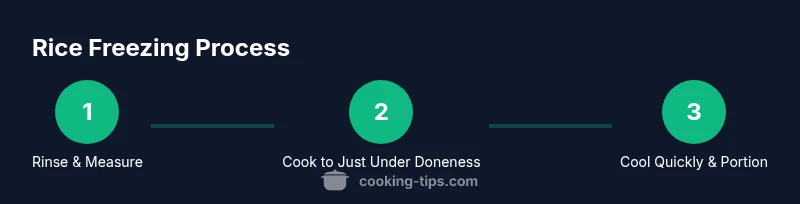
- Choose a rice variety known to reheat well. 2) Rinse and measure portions. 3) Cook to just under doneness. 4) Cool quickly on a tray, then refrigerate promptly. 5) Porton into single-serving sizes and seal airtight. 6) Freeze flat or in small containers. 7) Reheat with moisture, fluff with a fork, and serve.
Conclusion and Next Steps
By following these steps, you can safely cook and freeze rice while maintaining texture and flavor. Use small portions, label clearly, and reheating with a touch of moisture will yield results close to freshly cooked rice. The Cooking Tips team emphasizes practicing with a couple of test portions to dial in your preferred texture and reheating method.
Tools & Materials
- Rice (variety of choice)(Select varieties that reheat well (e.g., long-grain types) depending on your preference)
- Pot or rice cooker(For even cooking with consistent results)
- Colander/strainer(To rinse rice until water runs clear)
- Baking sheet or cooling rack(To spread hot rice for rapid cooling)
- Freezer-safe bags or small containers(Portion rice into single-serving sizes)
- Sharp marker and tape or labels(Date and rice type on each bag/container)
- Flat-tray or shallow containers(For flat freezing and faster thawing)
- Labeling system(Keep inventory organized)
Steps
Estimated time: 1 hour 15 minutes
- 1
Rinse and measure
Rinse the rice under cool running water until the rinse runs mostly clear to remove surface starch. Drain well and measure portions suitable for your typical meals. This step helps prevent sticky clumps after freezing and reheating.
Tip: Use a standard measuring cup and portion sizes that match your future meals for easier reheating. - 2
Cook to just under doneness
Cook the rice according to package directions, stopping just short of full tenderness. The grains should separate rather than become mushy when reheated. Avoid overcooking, which can lead to a mushy texture after freezing.
Tip: Keep the grains fluffy by using a gentle simmer and avoiding excessive stirring during cooking. - 3
Cool quickly on a tray
Spread the hot rice in a thin layer on a cooling tray or baking sheet to cool rapidly. Quick cooling minimizes bacterial growth and helps reset grain structure for later reheating. Do not leave the rice at room temperature for more than two hours.
Tip: Fan a light mist of air over the rice or use a fan to speed cooling if your kitchen is warm. - 4
Portion and seal for freezing
Portion cooled rice into single-serving bags or small containers. Remove as much air as possible and seal tightly to prevent freezer burn. If using bags, lay them flat to freeze so they stack neatly later.
Tip: Label each portion with date and variety; this makes rotation easy and waste minimal. - 5
Freeze flat or in shallow containers
Place bags flat on a tray to freeze until solid, then stack or store upright. Flat freezing ensures even texture and faster thawing. Rigid containers are good for meals that require intact portions.
Tip: Avoid stacking heavy items on top of frozen bags while they're still soft to prevent indentations. - 6
Reheating from frozen
Reheat directly from frozen using the microwave with a splash of water or broth, or on the stovetop with a little liquid to rehydrate. Stir occasionally and fluff with a fork to restore separation of grains. Aim for steaming hot texture.
Tip: Add moisture in small amounts to avoid soggy rice; stir and re-cover during reheating. - 7
Check texture and storage
Check that the rice is tender and fully reheated before serving. If texture is off, you can reheat a bit longer with a splash of liquid. Use frozen rice within a reasonable window to ensure optimal quality and flavor.
Tip: If rice smells off or shows signs of spoilage, discard immediately.
Quick Answers
Can you freeze cooked rice?
Yes. Cooked rice can be frozen safely when cooled promptly and stored in airtight portions. Label with date and variety to track freshness, and reheat with moisture for best texture.
Yes, you can freeze cooked rice. Just cool it quickly, portion it, and reheat with a bit of moisture.
How long does frozen rice last?
Frozen rice retains best quality for a few months, but safety can be maintained longer if kept consistently frozen. Use sensory checks before reheating to assess quality.
It stays best for a few months; always check for off smells before reheating.
Can you reheat frozen rice directly?
Yes, you can reheat directly from frozen using microwave or stovetop methods. Add a splash of water or stock to rehydrate and prevent dryness, and fluff the grains as you heat.
Yes, reheat directly from frozen with a little moisture, and fluff the grains as you go.
Should I rinse rice before freezing?
Rinsing removes surface starch, helping grains stay separate after freezing and reheating. It also reduces gumminess that can occur with certain varieties.
Rinse to remove surface starch for better texture after reheating.
Is freezing rice safe?
Freezing cooked rice is safe when done promptly and stored in airtight portions. Avoid leaving rice at room temperature for too long before freezing to maintain safety.
Yes, it's safe if you cool and store it properly.
What texture issues can occur after freezing?
Rice can become dry or mushy if overcooked before freezing or reheated with insufficient moisture. Proper cooling and gentle reheating help maintain fluffy texture.
Texture issues usually come from overcooking before freezing or reheating without moisture.
Watch Video
Top Takeaways
- Choose rice varieties that reheat well for best results.
- Cool rice quickly and portion into small, airtight units.
- Freeze flat when possible to speed thawing and maintain texture.
- Reheat with moisture and fluff with a fork to restore texture.
- Label and date frozen rice to minimize waste.