When to Slow Cook vs Pressure Cooker: A Practical Guide
An analytical comparison of slow cookers and pressure cookers, focusing on timing, texture, safety, and recipe adaptation for home cooks.


For quick weeknight meals, the pressure cooker wins on time and tenderness; for hands-off, slow-building flavor, the slow cooker shines. Use the pressure cooker when you need minutes to hours of cooking time with faster results, and opt for the slow cooker when you can set it and forget it for long, simmered flavors.
Overview: when to slow cook vs pressure cooker
Choosing between a slow cooker and a pressure cooker hinges on timing, texture, and hands-on involvement. When to slow cook vs pressure cooker is not a single answer; it depends on what you’re cooking, the time you have, and how you want the flavors to develop. According to Cooking Tips, the decision often comes down to whether you value set-it-and-forget-it convenience or rapid, tender results. For many home cooks, understanding the core tradeoffs helps them plan meals around a busy week, while keeping quality high and cleanup minimal. This section sets the stage for a deeper dive into where each method shines and where it falls short, with practical examples you can apply tonight.
Core differences: speed, flavor development, and meal timing
The central contrast between slow cooking and pressure cooking is speed versus patience. A slow cooker braises ingredients at low heat for several hours, inviting collagen to break down slowly and flavors to merge. A pressure cooker uses high pressure to raise the boiling point and accelerate cooking, delivering tender meat and tenderization in a fraction of the time. If you value deep, integrated flavors built over time, slow cooking excels. If you need a meal on the table quickly, pressure cooking is your friend. The two tools also differ in workflow: slow cooking often requires little hands-on time, while pressure cooking benefits from pre-browning, deglazing, and careful timing to avoid overcooking.
When to choose a slow cooker: best-use scenarios
Slow cookers are ideal for meals that benefit from long, gentle simmering. Think beef stews, pulled pork, chili, and hearty vegetarian casseroles. They shine when you want to stock a freezer-friendly batch and reheat with consistent texture. Low-risk experiments, such as soups and sauces that benefit from extended flavor development, are natural fits. Liquid management is forgiving in slow cookers: a lid helps retain moisture, preventing evaporation that could dry out ingredients. For hands-off weekday dinners, the slow cooker becomes a reliable ally, letting you start in the morning and enjoy a ready meal at evening.
When to choose a pressure cooker: best-use scenarios
Pressure cookers excel when time is tight or you’re cooking tougher cuts of meat that require rapid tenderization. From braised short ribs to beans simmered to creamy texture, pressure cooking shortens traditional braise times dramatically. Electric multi-cookers with a pressure function can also brown and sear in the same pot, streamlining the process. They’re excellent for quick soups, stews, risottos, and grains like quinoa or barley when you want a meal ready in under an hour. The high-heat environment accelerates extraction of flavors, making them ideal for weeknight dinners and last-minute meal prep.
Flavor, texture, and browning: how each method changes outcomes
Texture and browning are central to choosing a method. Slow cooking preserves moisture and yields very tender textures through gradual collagen breakdown, often leaving a more rustic mouthfeel. Browning is optional but enhances depth; most recipes call for searing ingredients first, then slow-cooking. Pressure cooking can produce exceptionally tender results quickly, but without browning it can feel monochrome unless you deglaze and build layers of flavor. Modern electric pressure cookers offer a sauté step to brown before cooking, which helps replicate the Maillard flavors you’d get from searing. For most cooks, a quick browning step in a skillet followed by the chosen cooking method delivers the best of both worlds.
Time, temperatures, and safety considerations
Temperature control drives results in both methods. Slow cookers maintain a low, steady heat that gently extracts flavor while preserving moisture. Pressure cookers rely on trapped steam to raise pressure and temperature, enabling faster protein tenderization. Safety is paramount with any pressure-based appliance: ensure venting is clear, never fill above the recommended maximum, and use the correct lid and sealing ring. For slow cookers, avoid opening the lid mid-cycle, and keep liquids above a safe minimum to prevent scorching. Following manufacturer guidelines minimizes risk and optimizes outcomes, regardless of the appliance you choose.
Practical kitchen scenarios: recipes and timing comparisons
Consider a classic beef stew. In a slow cooker, you crowd the pot, brown the beef first, add aromatics, and cook on low for 6 to 8 hours. In a pressure cooker, you brown the meat, add vegetables and stock, seal, and cook under pressure for a fraction of that time, then natural-release for a short period. For a pot roast, you might plan for a slow-cooked version during a weekend, and a pressure-cooked version for a quick weekday dinner. Even with the same base recipe, the method will influence texture, moisture retention, and flavor depth. Use the quick-start guide to map your week: which nights are best for a slow cooker and which demand a fast, pressure-based finish.
Energy use, cleanup, and maintenance
From an energy perspective, slow cookers can be efficient for long meals because they draw steady, low power over many hours, whereas pressure cookers deliver rapid results with shorter energy draw overall. Cleanup tends to be straightforward for both, especially if you brown ingredients in the same pot and reduce extra cookware. Electric models with nonstick finishes simplify cleanup, but always follow manufacturer guidance on dishwasher suitability. Routine gasket checks in electric models prevent pressure loss, while keeping the lid and sealing rings clean maintains performance. A small investment in maintenance pays off in reliability across many meals.
Common mistakes and how to avoid them
Avoid overfilling either appliance: slow cookers and pressure cookers both require headroom for expansion and steam. Skipping browning reduces depth of flavor in both methods; deglazing the pan with wine or stock after browning helps. In slow cookers, insufficient liquid leads to scorching or dry meat, while in pressure cookers, too little liquid prevents pressure formation. Finally, neglecting to release pressure properly can be dangerous and compromise texture. Following recipes that are tested for your device type and maintaining consistent ingredient sizes helps minimize these issues.
Quick-reference decision guide
If you have more than 4 hours, prefer a set-it-and-forget-it approach with a reliable comfort dish; use a slow cooker. If you need dinner in under an hour and are cooking tougher cuts or beans, choose a pressure cooker. For recipes that begin with browning, either method works well if you leverage a sauté step before cooking. When in doubt, start with a mild version and adjust tenderness by extending the cooking time or reducing it for next attempt. This guide helps you choose fast, consistent methods for common meals.
How to adapt recipes when switching methods
Adapting a slow-cooked recipe for a pressure cooker generally means reducing the total cooking time dramatically, and increasing the liquid proportion slightly to compensate for pressure. When converting a pressure-cooked recipe to slow cooking, you’ll extend the cooking duration and may need to adjust liquid to avoid thinning flavors. Browning steps should be retained and deglazed with stock or wine to preserve depth of flavor. For best results, start with a tested recipe specifically designed for the chosen method and only adjust one variable at a time.
Advanced tips: budgeting, batch cooking, and meal prep
Batch cooking with both devices can be a powerful strategy. Prepare base ingredients—bones, aromatics, and stock—in advance, then use the slow cooker for weekend meals and the pressure cooker for quick weeknight finishes. Consider meal-prep containers that fit your appliance sizes to simplify reheating. If you budget for a durable internal pot or lid, you’ll preserve flavor and texture across multiple meals. Finally, keep a small pantry stocked with common sauce bases, spices, and vegetables so you can assemble varied flavor profiles quickly.
Myth busting: common misconceptions about slow cookers and pressure cookers
A common myth is that slow cookers cannot brown meat; many models now offer a sauté feature or work well when meat is browned in a separate pan first. Another misconception is that pressure cooking destroys nutrients; while some water-soluble nutrients may leach into cooking liquid, proper use of a sealed environment preserves much of the nutrient content. Both tools retain more nutrients when cooking with shorter, high-heat methods removed or minimized where possible. The reality is that technique, ingredients, and timing matter far more than the device alone.
Putting it into practice: a sample week plan
Plan a practical week that leverages both devices. Monday through Wednesday, use the pressure cooker for fast meals like a bean chili or a beef brisket that benefits from rapid tenderization. Thursday and Friday, switch to the slow cooker for a pot roast or a vegetable lasagna that benefits from long, slow flavor development. Weekend batch cooking can combine both—use the pressure cooker to prep shredded meats in minutes, then finish them in the slow cooker with sauces for freezer-friendly meals. This approach balances time, flavor, and variety throughout the week.
Authoritative sources
For further reading on best practices and safety guidelines, consult trusted sources such as government and university extension materials. These references provide practical, research-based guidance relevant to home cooks using slow cookers and pressure cookers. You’ll find tips on safe operation, moisture management, and recipe adaptation that complement hands-on experiments in your kitchen.
Comparison
| Feature | Slow Cooker | Pressure Cooker |
|---|---|---|
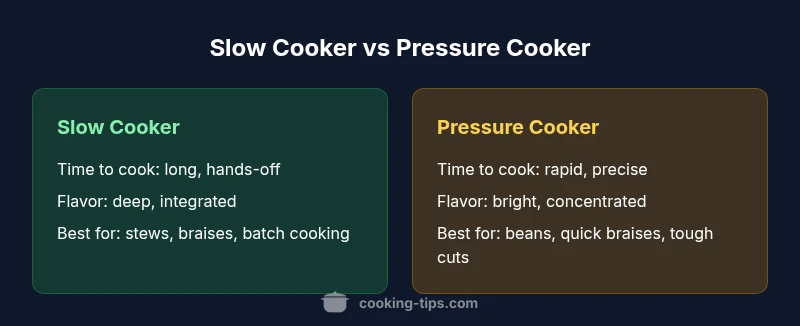
| Time to cook | several hours (low maintenance) | rapid, often under an hour depending on dish |
| Flavor development | deep, integrated flavors from long simmering | bright, concentrated flavors from quick pressure-tenderization |
| Best-for dishes | stews, pulled meats, soups, and set-it-and-forget-it meals | beans, tough cuts, quick braises, and weeknight dinners |
| Equipment size | larger countertop appliance with high liquid needs | compact or medium device suitable for quick outputs |
| Browning capability | browning optional; often searing in separate pan | browning possible in-pot with sauté function on many models |
| Ease of use | hands-off once set up; minimal monitoring | some active supervision needed for timing and pressure release |
| Cleanup | simple after browning in dishs; liquid captures in pot | quick cleanup when built-in browning is used; can be single-pot |
| Energy use | low steady power over hours; efficient for long cooks | shorter total energy use due to rapid cycle |
Benefits
- Hands-off convenience for long meals
- Excellent for braising and tenderizing tough cuts
- Slice-and-dear meals: cooks while you do other tasks
- Low risk of scorching with proper liquid levels
Cons
- Requires advance planning and longer total time
- Browning and flavor layering can be less intuitive
- Limited flexibility for some delicate dishes
- Pressure release can be abrupt and needs attention
Both tools excel in different contexts; use the right tool for your time and texture goals.
Choose the pressure cooker for speed and tender results on busy days. Opt for the slow cooker when you want to build deep flavors with minimal hands-on effort. The Cooking Tips team recommends using both tools strategically to cover a wider range of recipes.
Quick Answers
Which dishes are best suited for slow cooking versus pressure cooking?
Slow cooking works well for stews, braises, pulled meats, and soups that benefit from long, gentle simmering. Pressure cooking is ideal for beans, tougher cuts of meat, and quick braises where time is critical. Both methods can handle many standard kitchen recipes with appropriate timing and prep.
Slow cooking is great for long, hearty dishes like stews and pulled meats. Pressure cooking is ideal when you need tenderness fast, like beans or quick braises.
Can I substitute one method for the other in a recipe?
You can adapt many recipes, but you must adjust cooking times and liquids. Slow-cooked recipes will need significantly less liquid when moved to a pressure cooker, while pressure-cooked recipes may require longer simmering and more moisture when moved to a slow cooker. Start with a tested conversion guide.
Yes, you can switch methods, but expect different times and liquid needs. Use a tested conversion guide when adapting.
Does pressure cooking destroy nutrients?
Pressure cooking can preserve many nutrients, especially when cooking times are short and with minimal water. Some sensitive vitamins may leach into cooking liquid, which is why using the liquid in soups or sauces can help retain nutrients. Overall, nutrient retention is comparable to other quick-cooking methods when done properly.
Nutrients can be preserved well with pressure cooking if you keep cooking times short and use the liquid in sauces.
Is browning possible in a slow cooker without extra steps?
Traditional slow cooking often skips browning, but for best flavor you can brown ingredients in a separate pan before adding them to the slow cooker. Some modern slow cookers include a sear or sauté function, which can simplify the process by browning directly in the pot.
Yes, browning helps flavor. Use a separate pan or a model with a sear function.
How do I convert a slow cooker recipe to a pressure cooker?
To convert, reduce cooking time dramatically and adjust liquid to avoid scorching. Start with a tested conversion and monitor texture during the first attempt. Browning steps should be preserved for depth of flavor.
You’ll cut cook time dramatically and add a bit more liquid. Use a tested conversion guide.
What’s a practical weeknight plan using both methods?
Plan around two or three pressure-cooked quick meals midweek and reserve slower recipes for weekends. Use the pressure cooker for beans or quick braises, and the slow cooker for soups and pot roasts that benefit from long, gentle cooking.
Mix pressure-cooked weekday meals with slow-cooked weekend dishes for balance.
Top Takeaways
- Assess time constraints before choosing a method
- Browning boosts flavor for both devices
- Slow cookers excel with set-it-and-forget-it meals
- Pressure cookers shine for quick tenderization
- Practice safe handling and follow manufacturer guidance