Pressure Cooking vs Slow Cooking: Is It the Same? A Thorough Comparison
An objective, in-depth comparison of pressure cookers and slow cookers, covering how they work, when to use each, recipe adaptations, and practical tips for home cooks seeking speed, tenderness, and flavor.


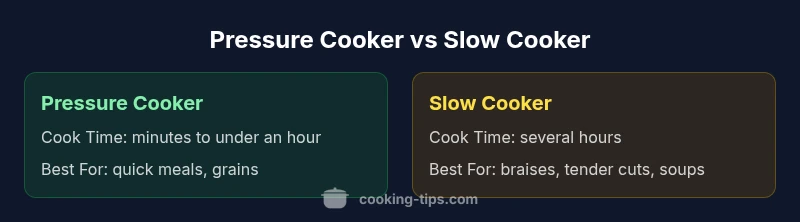
If you search is pressure cook the same as slow cooker, the answer is no—these tools are not interchangeable. A pressure cooker uses trapped steam and high pressure to cook foods quickly, typically in minutes. A slow cooker applies low heat over several hours, yielding very different textures and flavors. In practice, choose the method that matches your timing and texture goals.
Is Pressure Cooking the Same as Slow Cooking? A Quick Clarification
The short answer is no. The two appliances are designed for different purposes, even though both can turn tough ingredients into tender meals. The phrasing of the question is common among home cooks, and understanding the distinction helps prevent kitchen mistakes. In many kitchens, both devices coexist, each serving a unique role depending on the recipe, available time, and desired texture. For home cooks aiming to understand the core difference, the key lies in time versus temperature and how heat is delivered to the food. is pressure cook the same as slow cooker is a question that often invites a nuanced answer: it’s not the same mechanism, and it rarely yields identical results when swapped. This article uses Cooking Tips as a framework to explain how each method works, when to use them, and how to adapt recipes accordingly.
How Pressure Cooking Works: Mechanism, Heat, and Pressure
Pressure cooking relies on sealing a pot and building steam pressure inside a closed environment. The high pressure raises the boiling point of water, allowing foods to cook at temperatures above 212°F (100°C). The result is rapid softening of connective tissue and quicker tenderization of proteins. Key components include the gasket seal, venting system, and safe lid locking features. Proper liquid levels are essential to avoid scorching, and browning can be accomplished prior to sealing to boost flavor. With electric models, programmable controls let you set time and pressure level for consistency. The outcome is a compact, fast meal with preserved colors and moisture when used correctly. For a thorough approach, start with searing ingredients, then pressure cook to finish the process, and allow a natural release when appropriate.
How Slow Cooking Works: Low Heat, Long Time, and Tenderization
Slow cookers depend on steady, low heat over many hours. The heat gently surrounds food, causing collagen to break down gradually and flavors to mingle over time. This method excels at braises, stews, and tough cuts that benefit from long simmering. Unlike pressure cooking, there is no high pressure build up, and the cooker is designed for unattended operation. Because ingredients spend more time at a lower temperature, sauces thicken slowly, and textures develop with a comfort-food depth. Your success hinges on choosing the right setting, minimizing liquid evaporation with a proper lid seal, and avoiding overfilling the pot. Slow cooking shines when you plan ahead and want rich, layered flavors with minimal active cooking time.
Dishes Suited to Pressure Cooking: Quick Weeknight Staples
Pressure cookers are ideal when you need dinner on the table fast. Think one-pot meals such as stews, chili, shredded chicken tacos, and grains like rice or quinoa that benefit from a short, intense cooking window. You can brown aromatics first to lock in flavor, then seal and cook at high pressure for a fraction of the time compared with traditional methods. This approach is especially helpful for weeknights when time is tight but you still want a comforting meal. Because the method is fast, it invites experimentation with bold seasonings and quick marinades, while still guarding moisture and tenderness.
Dishes Suited to Slow Cooking: Comfort Food and Braises
Slow cookers excel at long braises, pot roasts, soups, and chili that benefit from gradual flavor development. Tough cuts like chuck, brisket, or pork shoulder become tender as connective tissue dissolves over many hours. The result is a deeply developed, cohesive dish with a homey aroma. This method is also wonderful for soups and stews that taste even better the next day. Three practical gains are minimal active time, consistent texture, and the ability to leave ingredients to cook while you’re away. If you value convenience and rich, gradual flavor, the slow cooker is your go-to.
Texture, Tenderness, and Flavor: Practical Impacts
Texture and flavor diverge between methods. Pressure cooking yields a uniformly tender interior with well-preserved colors when you mass-produce quick meals. It can produce a melt-in-your-mouth texture in a short window, provided you manage liquid levels and avoid overcooking delicate ingredients. Slow cooking delivers an unctuous tenderness, with flavors that intensify as ingredients meld over time. Browning and searing before slow cooking can significantly enhance the final depth of flavor, while pressure cooking benefits from a final simmer or browning step to build sauce complexity. In essence, pressure cooking emphasizes speed and control, while slow cooking emphasizes depth and comfort.
Time Management: Planning Around Each Appliance
Time management is the practical backbone of choosing between these methods. Pressure cooking compresses hours into minutes, making it ideal for weeknight meals or when you’re short on time. Slow cooking spreads work over the day, often requiring little hands-on time and enabling you to start meals in the morning. If you need a no-fuss process that finishes around dinner time, a pressure cooker helps you stay on schedule. For weekend cooking or when you want layered flavors without rushing, a slow cooker is preferable. Planning ahead with a rough timeline helps you balance taste, texture, and convenience.
Ingredient Prep and Browning: The Importance of Searing
Browning ingredients before applying heat improves depth of flavor in both methods, but it plays out differently. In a pressure cooker, you can sear quickly, then seal to trap flavors and finish under pressure. This speeds up flavor development while preserving moisture. In a slow cooker, browning on the stovetop before transferring to the pot creates a robust base for the sauce and helps build fond that enriches the final dish. The takeaway is: mandating a proper browning step, followed by the appropriate cooking method, yields richer, more complex results.
Practical Step-by-Step: Quick Conversion Workflow
When converting a recipe between methods, follow a practical workflow. Start with browning or sautéing, then adjust liquids to account for evaporation differences. For pressure cooking, reduce total time and liquids proportionally and use a natural release when tender texture is the goal. For slow cooking, increase cooking times to accommodate lower heat, reduce stray moisture, and plan for minimal water loss. Document scaling guidelines for future use and note any seasoning adjustments, since saltiness can intensify with longer cook times. With careful planning, you can adapt many recipes to either method while maintaining balance and flavor.
Safety and Maintenance Considerations
Safety is paramount with both devices. Always ensure a proper seal, never exceed maximum fill levels, and follow the manufacturer’s instructions for venting and lid handling. Regularly replace gaskets and inspect seals for wear, especially on older units. Clean the lid, gasket, and steam vent to prevent clogs. For slow cookers, avoid leaving the appliance unattended for long periods, and keep the lid closed to retain moisture. With pressure cookers, perform quick releases as instructed to control pressure safely. Regular maintenance reduces the risk of accidents and improves cooking results.
Choosing Between Them: Real-World Decision Framework
To decide between a pressure cooker and a slow cooker, assess your weekly schedule, preferred textures, and the type of meals you cook most. If you often need meals ready within an hour or two, a pressure cooker is a smart investment. If your priority is deep, layered flavors and minimal hands-on time, a slow cooker fits best. For many households, owning both opens up maximum flexibility. Consider your kitchen space, energy usage, and the types of recipes you routinely prepare to guide your purchase and usage plan.
Quick Reference: Conversion Checklist and Tips
Create a simple checklist to guide recipe conversions. 1) Identify the dish type and dominant cooking technique. 2) Note the required texture (tender, fall-apart, or al dente). 3) Adjust liquid quantities to account for evaporation and lid efficiency. 4) Decide whether to brown first or skip to simmer. 5) Document time estimates and release methods. 6) Test and adjust for future iterations. A small notebook or digital note keeps your conversions consistent and repeatable.
Comparison
| Feature | Pressure Cooker | Slow Cooker |
|---|---|---|
| Cooking Time | Minutes to under an hour for many dishes | Several hours (often 4-10+ depending on setting) |
| Flavor Development | Fast flavor development with searing, then rapid pressure | Deep flavor merge over long simmering and braising |
| Texture and Tenderness | Tenderness achieved quickly; can be very even | Tender, melt-in-the-mouth texture over time |
| Convenience/Prep | Fast start-to-table; timer options available | Set-and-forget; minimal active supervision |
| Energy Use | Higher peak power but shorter duration | Lower continuous power; longer overall time |
| Best For | Weeknight meals, quick stews, grains, and diary-free options | Braised dishes, pot roasts, soups with longer flavor development |
| Safety/Complexity | Modern safety features; careful lid handling | Simple operation with fewer moving parts but heat retention over time |
Benefits
- Significant time savings for many recipes
- Set-and-forget convenience with slow cooking
- Versatile cooking options with newer multicookers
- Energy efficiency for lengthy meals and day-long cooking
Cons
- Some recipes don’t translate well between methods
- Browning and fond development may be limited in slow cookers
- Pressure cookers require careful liquid management and safety practices
Choose the tool that matches your time constraints and texture goals.
Pressure cooking excels when speed matters and you want dependable tenderness quickly. Slow cooking shines for maximum depth of flavor with minimal hands-on time. Use both if your schedule and recipes demand flexibility.
Quick Answers
Is the difference in texture between pressure cooked and slow cooked foods significant for everyday meals?
Yes. Pressure cooking tends to yield uniformly tender textures quickly, while slow cooking creates deeper, more integrated flavors and a softer bite in many cuts. The choice depends on the dish and desired mouthfeel.
Yes, texture differs. Pressure cooking is faster and generally more uniform, while slow cooking develops richer flavors and a softer bite over time.
Can I substitute a pressure cooker for a slow cooker in a recipe that requires long simmering?
Substituting is possible but not always straightforward. You’ll usually reduce liquids and adjust times, and you may need to add browning steps or finish with a brief simmer to adapt flavors.
Substitution is possible but tricky; you’ll adjust liquids and times and may need extra browning steps.
Are there safety concerns I should know about with pressure cookers?
Modern electric pressure cookers feature multiple safety mechanisms. Follow manufacturer instructions, never force the lid, and avoid filling beyond the recommended level. Check valves and gaskets regularly.
Modern pressure cookers are safe when used as directed; always follow the manual and inspect seals and valves.
What kinds of dishes benefit most from slow cooking?
Dishes that benefit from long braising, tough cuts, soups, and chili. Slow cooking yields tender meat and layered flavors with minimal active cooking time.
Great for braises, stews, and tougher cuts that need long, gentle cooking.
Can I brown ingredients in a slow cooker to improve flavor?
Yes. Browning on the stovetop before transferring to the slow cooker adds caramelized flavor and depth to sauces and stews that would otherwise be flatter.
Absolutely—browning enhances flavor before slow cooking.
Which method saves energy overall for typical family meals?
Both can be energy-efficient depending on the dish. Pressure cooking uses a short, intense heat period, while slow cooking uses steady heat over many hours. Compare based on your weekly menus.
Energy use varies; pressure is quick but intense, slow cooking uses a gentle, longer heat.
Top Takeaways
- Choose pressure cooking for speed and consistency.
- Opt for slow cooking for depth of flavor and hands-off meals.
- Browning before cooking dramatically improves results.
- Adapt liquids and times when converting recipes between methods.
- Consider owning both for maximum kitchen flexibility.