Is Pressure Cooking the Same as Steaming? A Practical Comparison for Home Cooks
Explore the key differences between pressure cooking and steaming, including method, results, energy use, and safety, with practical guidance to help home cooks choose the right technique.


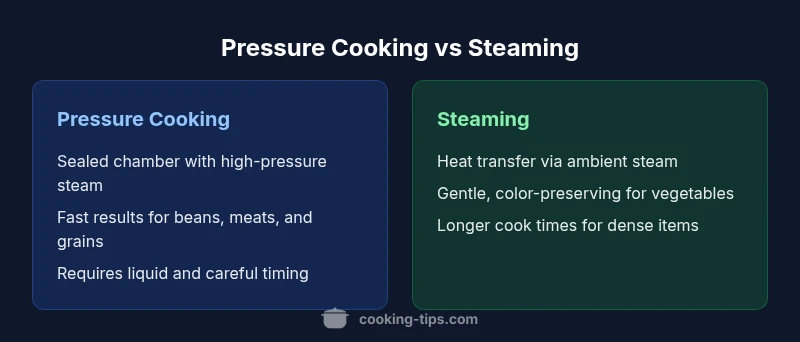
Is pressure cooking the same as steaming? Not exactly. Pressure cooking relies on sealed pots and high-pressure steam to raise the boiling point and cook foods rapidly, while steaming exposes food to flowing steam with little or no liquid, often in an open or minimally enclosed setup. In short, the two methods achieve heat transfer differently and suit different foods and outcomes.
Is Pressure Cooking the Same as Steaming?
Many home cooks ask a simple but important question: is pressure cook the same as steam? The short answer is no, though both rely on steam to transfer heat. Pressure cooking uses a sealed vessel to trap steam, building high pressure that raises the effective boiling point and speeds up cooking. Steaming, by contrast, exposes foods to vapor from boiling water, usually without pressure. This distinction matters for texture, timing, and what you can cook efficiently. For beginners, recognizing this difference clarifies why a recipe may call for one method over the other and helps set realistic expectations about results and timing.
Beyond the kitchen, this distinction also affects energy use, equipment needs, and safety practices. The Cooking Tips team emphasizes that choosing the right method starts with what you’re cooking, the desired texture, and how much time you have. As you read on, you’ll see practical guidelines and examples that illustrate when steam shines and when pressure wins.
How Each Method Works in Practice
Each technique follows a different heat-transfer path, which in turn changes cooking dynamics. Pressure cooking relies on a sealed chamber where steam pressure increases, which pushes heat into the food more aggressively and at higher temperatures. This can reduce cooking times dramatically for beans, tough cuts of meat, and grain dishes. Steaming, on the other hand, uses an arrangement where steam surrounds the food but does not necessarily enclose it under pressure. Foods are cooked by heat carried in the vapor, often preserving more delicate textures and colors.
In everyday kitchen practice, you’ll see pressure cookers with safety valves and gaskets, plus fills that require liquid. Steam setups can be as simple as a pot with a rack and a tight lid, or a dedicated steamer basket over boiling water. The key is controlling moisture and airflow to achieve consistent results. If you’re comparing two similar dishes, you’ll notice the pressure method cuts down time significantly, while steaming tends to preserve surface tenderness for vegetables and delicate proteins.
Liquid, Pressure, and Heat: The Core Mechanics
The core physics behind these methods matters. Pressure cooking relies on high-pressure steam, which raises the liquid's boiling point and accelerates heat transfer. This means items that benefit from rapid hydration—like dried beans or tough cuts—cook more quickly and can stay tender without long simmering. Steaming uses a veil of moist air; no seal, no high pressure, just steady heat transfer through vapor. It’s ideal when you want to avoid direct contact with boiling water and preserve color and texture.
Liquid presence is a critical difference. Pressure cooking typically requires a minimum amount of liquid to generate enough steam and to prevent scorching. Steaming often requires less liquid, since the water pool is separate from the food. However, the exact amounts depend on your device and the recipe. Understanding these parameters helps you avoid common issues like undercooking, overcooking, or soggy results.
Food Types and Use Cases: When to Reach for Each Method
Different foods respond differently to pressure cooking and steaming. Pressure cooking excels with dried beans, lentils, large poultry, bone-in meats, and grains like rice or quinoa that need rapid hydration. It’s also a winner when you want to finish a meal in a short window or when you’re cooking large batches. Steaming shines for vegetables that benefit from gentle, even heat, for delicate fish, and for tender-crisp textures that might be lost in a sealed, high-pressure environment. It’s also favored when you want to preserve bright color and nutrients that can oxidize or leach when boiled.
For side dishes or meals that require browning or searing, you’ll still want to sauté or roast first and then finish in a pressure cooker or steamer, depending on the recipe. The choice between these methods often comes down to texture goals: dense, hearty textures favor pressure cooking; light, vibrant, and crisp textures favor steaming. If you’re experimenting, start with a single ingredient and compare results to calibrate your preference.
Texture, Flavor, and Nutrient Considerations
Texture and flavor shift with each method. Pressure cooking reduces cooking time and can yield soft, uniformly tender results, which is great for stews, braises, and legumes. However, the rapid gentleness of steam can better preserve surface texture and color in vegetables, and it can maintain delicate flavors in subtle protein dishes. Nutrient retention is a common topic in home cooking. While both methods can preserve nutrients well when used appropriately, steaming often offers a modest advantage for water-soluble vitamins because foods spend less time in contact with boiling water. Pressure cooking, with shorter overall times, can also limit nutrient loss, especially for starches and proteins that would otherwise be exposed to longer heat.
Practical takeaway: choose pressure cooking when you need speed and uniform tenderness; choose steaming when you want more texture variation and color retention. If in doubt, steam a portion to compare with a pressure-cooked counterpart and adjust your technique accordingly.
Safety, Maintenance, and Common Mistakes
Safety is paramount with any steam-based cooking, especially pressure cooking. Modern electric and stovetop pressure cookers include safety valves and automatic release features, but you still need to follow manufacturer guidelines, ensure the gasket is intact, and avoid overfilling the pot. Steaming equipment is generally simpler but requires attention to boiling water levels and not overloading the steaming basket, which can impede steam circulation. Common mistakes include using too little liquid in pressure cooking, overfilling the pot, or opening a cooker before depressurization. In steaming, common errors are insufficient steam generation, overcrowding the basket, and peeking too early, which can cause uneven cooking.
Routine maintenance—descaling for mineral buildup, replacing worn gaskets, and cleaning residue from steam holes—helps maintain safety and performance. If you use either method frequently, keep a simple log of recipes, timings, and outcomes to build your own reference library over time.
Practical Techniques for Home Cooks: Getting Consistent Results
Starting with a clear plan is the easiest way to achieve consistent results. For pressure cooking: pre-soak if needed, add the recommended liquid, and use a trivet or rack to keep foods raised from the bottom. Trap heat and ensure a proper seal, then follow the recipe’s timing guidance and perform a quick natural release if appropriate. For steaming: set up a stable water level that never touches the food, place the basket or rack securely, and cover the pot for a steady simmer. Check water level halfway through for longer sessions. When cooking both methods, small adjustments based on your cookware and altitude can move results from good to excellent.
Practical tips include: grouping ingredients with similar cooking times, preheating water before introducing food when appropriate, and using a thermometer to monitor doneness. These practices reduce guesswork and help you reproduce desirable results consistently.
Quick Rules of Thumb for Everyday Cooking
- Use pressure cooking for beans, tough cuts, grains, and quick weeknight meals when time matters.
- Steam vegetables and delicate proteins when you want bright color and light texture.
- If your goal is browning or sauce reduction, start with sautéing and finish with the appropriate cooking method.
- Always follow recipe guidelines for liquid minimums and safety releases; these are not interchangeable across devices.
- Practice makes perfect: record your times and outcomes to build a personal reference sheet that saves time in future cooking sessions.
Comparison
| Feature | Pressure Cooking | Steaming |
|---|---|---|
| Definition | A method using a sealed chamber to trap steam under high pressure for rapid heating | Cooking with steam produced by boiling water, usually without pressure and often in an open or semi-enclosed setup |
| Liquid Requirement | Requires minimum liquid to build pressure and avoid scorching | Requires little to no liquid beyond what is needed to generate steam |
| Typical Time Savings | Significant reduction for beans, meats, and dense foods | Moderate to low time savings; best for vegetables and delicate items |
| Textural Outcome | Tender, uniformly cooked, can be fall-apart depending on time | Bright, crisp-tender textures when done right |
| Nutrient Retention | Fast cooking can preserve nutrients but depends on time and pressure | Gentle moisture exposure can preserve water-soluble nutrients in some cases |
| Energy Use | Often energy-efficient due to shorter cook times | Generally energy-efficient for small portions, but longer for large batches |
| Best For | Beans, tough cuts, grains, braises | Vegetables, delicate proteins, reheating with minimal texture loss |
| Safety/Setup | Requires careful sealing, venting, and depressurization | Lower risk of pressure-related hazards; ensure water doesn’t touch food in some setups |
Benefits
- Significant time savings for hard-to-cook ingredients
- Versatile for bulk meals and batch prep
- Steaming preserves color and delicate textures
- Both methods enhance flavor extraction when used with proper seasoning
Cons
- Risk of overcooking delicate foods under pressure
- Requires equipment and maintenance (gaskets, seals)
- Steaming can take longer for dense foods
- Inaccurate timing can lead to texture loss if not monitored
Choose pressure cooking for speed with tough ingredients; steam for gentle, texture-preserving results.
Pressure cooking excels where time is critical and ingredients are dense or tough. Steaming shines when you want vibrant color and delicate textures. Use the decision framework to match the method to the dish and your priorities.
Quick Answers
Is pressure cooking faster than steaming?
Yes, pressure cooking typically reduces overall cook time for many dense ingredients due to the higher heat transfer from pressurized steam. Steaming can take longer but preserves texture and color more gently for delicate foods.
Yes, pressure cooking is faster for dense ingredients; steaming takes longer but can protect texture and color.
Can you steam foods inside a pressure cooker?
Many pressure cookers offer a steaming function or can be used with a trivet to hold food above water. This lets you steam without letting food touch the direct liquid.
Yes, you can steam in many pressure cookers by using a rack or trivet.
Does pressure cooking preserve nutrients as well as steaming?
Both methods can preserve nutrients when used properly. Steam often preserves water-soluble vitamins due to shorter contact with water, while pressure cooking’s short total time can also limit nutrient loss. It depends on the ingredient and cooking time.
Both can preserve nutrients; steaming often protects water-soluble vitamins, while pressure cooking saves time and can also limit exposure.
What foods are best for pressure cooking vs steaming?
Pressure cooking works well for beans, tougher cuts, grains, and stews. Steaming is ideal for vegetables, fish, and foods you want to keep light and crisp. Use combinations for meals to optimize texture and flavor.
Beans and tough meats for pressure cooking; vegetables and delicate proteins for steaming.
Is it safe to use a pressure cooker for steaming?
Yes, as long as you follow safety guidelines, ensure proper sealing, and don’t overfill. Keep steam vents clear and use appropriate accessories like steamer baskets.
Safe when you follow the manual—keep the vent clear and don’t overfill.
Do I need liquid for steam in a pressure cooker?
Most pressure cookers require some liquid to generate steam and pressurize. Check your model’s minimum liquid requirements and use a rack or trivet to keep food above the liquid when needed.
Yes, you generally need liquid to generate steam and pressure.
Top Takeaways
- Prioritize speed for beans, braises, and dense proteins
- Opt for steaming to preserve color and texture in vegetables and delicate foods
- Always follow liquid minimums and safety guidance for your device
- Document outcomes to fine-tune timing and technique
- Balance both methods across a rotating meal plan for efficiency