What Happens If You Cook Frozen Chicken: A Practical Guide
Discover what happens when you cook frozen chicken, how to do it safely, and the best methods to reach 165°F without thawing. Expert tips for oven, stovetop, and air fryer cooking.


Cooking frozen chicken is safe when you cook it thoroughly from start to finish without thawing first. Expect longer times and use a meat thermometer to reach 165°F (74°C) in the center. Choose oven, skillet, or air fryer methods and avoid undercooking. Keep surfaces clean and handle raw poultry safely.
What happens when you cook frozen chicken
According to Cooking Tips, cooking frozen chicken changes the geometry of ice crystals inside muscle fibers; as heat rises, ice crystals melt, water releases, and proteins denature more gradually. This can lead to uneven texture if the outer portions heat quickly while inner portions remain undercooked. The result is a drier exterior but a safely cooked interior when we manage the heat and reach 165°F in the thickest part. Compare this to thawed chicken which cooks more uniformly, but thawing introduces time windows for bacteria growth if not refrigerated properly. In practice, you will want to control the cooking temperature and use moisture-retaining methods like covered baking, brining, or adding cooking liquids. Even without thawing first, you can achieve a juicy finish by choosing the right method and monitoring the core temperature.
Safety and handling: basics you should know
Cooked-from-frozen chicken still faces the same food-safety rules as thawed poultry. Keep raw chicken separate from ready-to-eat foods, wash hands and surfaces after touching it, and avoid leaving it at room temperature for more than two hours. When cooking from frozen, the outer layers may heat faster than the center, so a reliable thermometer is essential. The ultimate test is an internal temperature of 165°F (74°C) in the thickest region. If you are cooking with skin-on pieces, ensure the skin is released from the pan to prevent steaming instead of roasting. Always refrigerate leftovers within two hours of cooking.
Internal temperature and doneness: why thermometer use matters
Relying on looks alone is risky with frozen poultry. A precise thermometer shows you whether the center has reached 165°F (74°C), the standard safe temperature for poultry. When cooking from frozen, you should check the temperature in the thickest part—often the breast or the inner thigh—and test near bones if applicable. If the reading lingers below target, continue cooking using your chosen method and re-test every few minutes. Proper rest after reaching target also helps redistribute juices and improve slicing.
Oven-based methods: dry heat with moisture benefits
An oven allows even heating for frozen chicken with fewer hot spots than a pan. Preheat to 375-425°F (190-218°C) depending on cut and thickness. Arrange pieces on a rack over a sheet pan to promote air circulation, or bake in a covered dish with a shallow amount of broth to retain moisture. Expect longer cooking times than thawed meat—roughly 30-40 minutes for breasts that are small, longer for larger pieces. Always verify 165°F in the center. Rest then slice to serve.
Searing first, then finishing in the oven: a hybrid approach
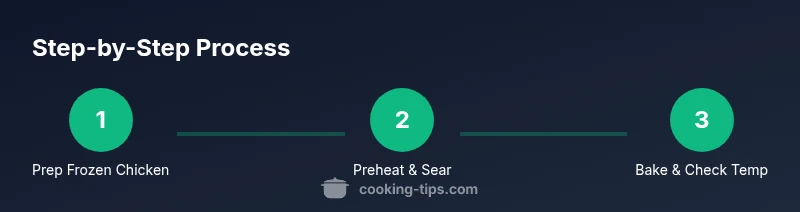
Searing frozen chicken in a hot skillet creates a flavorful crust and reduces overall cooking time compared with plain roasting. Use a heavy skillet (cast iron works well) and a small amount of oil. Sear each piece for 1-2 minutes per side until browned, then transfer to a preheated oven to finish to 165°F. This two-step method helps lock in juices while ensuring the interior reaches safe temperature. If your pieces are very thick, consider finishing in the oven for 10-15 minutes more and checking temperature frequently.
Alternative: air fryer and faster options
Air fryers can deliver crispy exteriors with less overall time when cooking from frozen. Preheat the air fryer (often 350-400°F, 175-200°C) and place pieces in a single layer, avoiding overcrowding. Flip halfway through to promote even browning and check for 165°F at the center. Smaller boneless pieces will cook faster (roughly 12-20 minutes depending on thickness). The air fryer is a convenient option for weeknights, though results vary by model.
Slow cooker and instant pot: when to avoid or adjust expectations
While convenient, slow cookers are not ideal for frozen chicken if you want safe, tender results. Frozen meat can sit in the 'danger zone' for too long, increasing the risk of bacterial growth. If you must use a slow cooker, thaw first, or plan to cook on high for an extended period and verify safety with a thermometer after cooking. Instant pots can work with frozen pieces, but you’ll still want to confirm 165°F and consider adding broth to improve moisture.
Practical timing by cut size and thickness
Thick breasts or bone-in pieces will take longer than boneless, skinless fillets. Small, boneless pieces may finish in 20-30 minutes when baked, while larger bone-in portions can require 40-60 minutes. Always use a thermometer rather than relying on time estimates alone. The key is to avoid undercooking in the center while not overcooking the exterior. If you’re short on time, consider pounding thicker pieces to an even thickness before cooking or cutting into evenly sized portions.
Finishing touches, serving ideas, and storage
Let the cooked chicken rest for 5 minutes before slicing to distribute juices. Use a light glaze or sauce to add moisture and flavor, and pair with vegetables or grains for a balanced meal. Store leftovers in a shallow container in the fridge and consume within 3-4 days. For freezing again, freeze promptly to prevent quality loss, and label with date. When reheating, reheat to 165°F and test with a thermometer to ensure safety.
Tools & Materials
- Meat thermometer (instant-read)(To verify 165°F (74°C) in the thickest part)
- Oven(Preheat to a recommended range (375-425°F))
- Baking sheet and rack or covered dish(Promotes even heat and moisture retention)
- Cast-iron or heavy skillet(For searing before oven finish)
- Tongs and knife(Safe handling and portioning)
- Cutting board (food-safe)(Prep raw poultry away from ready-to-eat foods)
- Aluminum foil or lid(Optional moisture retention)
Steps
Estimated time: 60-75 minutes
- 1
Preheat and prep
Preheat your chosen oven or air fryer to the target temperature (375-425°F / 190-218°C). Line a sheet pan with a rack or a shallow dish with a bit of broth, then pat pieces dry to remove excess surface ice. This helps start even heating and reduces steaming.
Tip: A dry surface helps browning; pat thoroughly and space pieces apart on the rack. - 2
Arrange and season
Place frozen chicken pieces on the rack or dish in a single layer. Season lightly with salt, pepper, or a dry rub if desired. Avoid thick layering; air needs to circulate for even cooking.
Tip: Season lightly since freezing may mute some season flavors; you can add more after cooking if desired. - 3
Start cooking and monitor
Put the pan in the oven or start the air fryer. Begin checking internal temperature after the minimum expected time for your cut. Use the thermometer to verify 165°F at the thickest part.
Tip: Check early on larger pieces to avoid overcooking the exterior while waiting for the center. - 4
Finish to safe temperature
If using a sear, finish by broiling for 2-4 minutes or transferring to the oven to complete. Ensure the core reaches 165°F, testing near bones if present.
Tip: Keep an eye on browning; over-browning can dry the surface before the center is done. - 5
Rest before serving
Remove from heat and let the chicken rest for 5-10 minutes. Resting helps juices redistribute for juicier slices and easier carving.
Tip: Tent loosely with foil to retain heat without steaming the crust. - 6
Serve and store
Slice and serve with a fresh side. Refrigerate any leftovers promptly in shallow containers to chill quickly and preserve texture.
Tip: Label leftovers with date and reheat to 165°F if later consumed.
Quick Answers
Can I cook a frozen whole chicken in the oven?
Yes, but it requires a long cook time and careful temperature checks. Whole birds may cook unevenly, so plan for slower progress and verify 165°F at the thickest part before serving.
Yes, you can, but expect longer cooking times and check doneness with a thermometer.
Is it safe to cook frozen chicken without thawing?
Cooking from frozen is safe if the center reaches 165°F. Keep surfaces clean to prevent cross-contamination and use a thermometer to confirm doneness.
Yes, as long as you reach 165°F in the center and practice safe handling.
How long does frozen chicken take to cook in the oven?
Typical times vary by cut and thickness, generally longer than thawed meat. Plan for roughly 40-60 minutes for many cuts, checking earlier if pieces are small.
Expect longer oven times; always verify with a thermometer.
Can I use a slow cooker for frozen chicken?
Slow cookers are not ideal for frozen poultry due to uneven heating. If you must, thaw first or ensure thorough cooking and verify 165°F afterward.
Not recommended; thaw first if possible and check temperature if used.
What’s the best method for quick weeknight meals with frozen chicken?
Air fryer or skillet-to-oven methods offer faster, reliable results with crispier exteriors. Keep thermometer handy and avoid overcrowding.
Air fryer or sear-and-finish in the oven are great quick options.
Watch Video
Top Takeaways
- Cook from frozen to 165°F safely.
- Use a thermometer for accurate doneness.
- Oven or air fryer methods work well; avoid long delays in danger zones.
- Rest and slice for best texture.