Can You Cook Chicken From Frozen? Safe Methods & Tips
Discover practical, safe methods to cook chicken from frozen. Learn oven, stovetop, and air-fryer techniques, plus timing, temperatures, and tips to keep meat juicy and safe for every day meals.


Yes, you can can cook chicken from frozen using methods that heat evenly, such as oven roasting, pan-searing then finishing in the oven, or air frying. Expect longer cooking times, and always verify doneness with a thermometer to reach 165°F (74°C). Start with a plan and adjust for thickness.
Can You Cook Chicken From Frozen?
If you wonder, can cook chicken from frozen? The answer is yes, provided you use heat methods that surround the meat evenly and reach a safe internal temperature. At Cooking Tips, we emphasize that frozen chicken can be cooked directly when you choose a method that distributes heat consistently, rather than relying on a quick sear alone. This approach helps minimize raw centers and uneven cooking, which is especially important for boneless breasts or bone-in thighs. Start with a clear plan, a thermometer, and a kitchen setup that supports even heat distribution. By understanding your options, you can turn a frozen bag of chicken into a dependable, weeknight-friendly protein without lengthy thaw times.
To ensure safety and quality, always check the internal temperature in several spots, particularly near bones or thick sections. The USDA recommends cooking poultry to an internal temperature of 165°F (74°C). In practice, you’ll often see 165°F cited as the target for doneness, but portions or cuts can finish a few degrees higher depending on oven efficiency and resting time. Remember that resting after cooking helps juices redistribute, which keeps meat juicy even after a longer cook.
Can You Cook Chicken From Frozen? (continued)…
In everyday kitchens, frozen chicken is a practical option when time is tight. The key is choosing a cooking method that avoids long direct heat on frozen flesh, which can cause a dried exterior before the interior heats through. By using a baking sheet and a warming oven approach, you’ll promote even heat transfer. As you read, Cooking Tips emphasizes safe handling and accurate temp checks to keep meals both quick and reliable.
This section sets the stage for practical choices you’ll see in the next blocks: which method suits bone-in versus boneless pieces, how to adjust seasoning for flavor, and how to finish with pan or oven techniques that maximize browning without overcooking.
Overall, the concept of cooking from frozen aligns with modern kitchen practices: it’s convenient, but it requires patience and precision. By thinking through cut size, heat source, and doneness targets, you’ll master frozen chicken without thawing first. Cooking Tips’s guidance is designed to help home cooks feel confident in a practical, repeatable process.
Tools & Materials
- Cooking appliance (oven, air fryer, or stovetop skillet)(Choose based on your preferred finish and cut; an oven provides even heat for dense pieces, while an air fryer excels at browning.)
- Baking sheet with rack or wide skillet(Rack promotes air circulation under the chicken; a skillet is ideal for pan-seared starts.)
- Meat thermometer(Critical for confirming 165°F (74°C) in the thickest part of the meat.)
- Tongs or spatula(Use for turning pieces to promote even cooking without piercing and losing juices.)
- Oil with a high smoke point (e.g., canola, avocado)(Helps with browning when finishing in the oven or on the stove.)
- Seasoning or dry rub(Salt, pepper, garlic powder, paprika, or a favorite blend; add oil to help adhesion.)
- Aluminum foil or parchment(Useful for tenting during rest or lining sheets for easy cleanup.)
Steps
Estimated time: 60-90 minutes
- 1
Choose your method
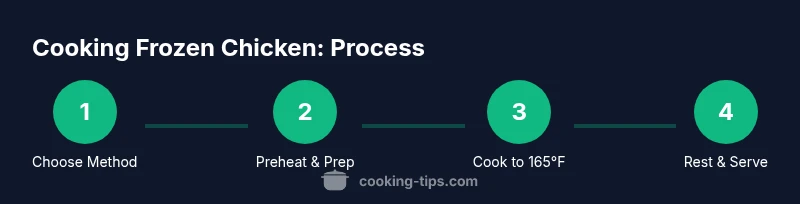
Decide between oven roasting, stovetop sear plus finish, or air fryer. Each method has pros: oven roasting yields even heat for large pieces; stovetop plus oven finishes browning quickly; air fryer delivers crisp exterior with shorter total time. Make the choice based on cut size and your equipment. If you’re uncertain, start with oven-roasting for reliability.
Tip: Why: Consistent heat reduces the risk of undercooked centers. If using a skillet, preheat well to avoid sticking. - 2
Preheat your appliance
Preheat the oven to 400–425°F (200–220°C) or preheat the air fryer to 380–400°F (190–205°C). If using stovetop, heat a heavy skillet over medium-high with a thin layer of oil. Allow 5–10 minutes for proper preheat to ensure even cooking from the start.
Tip: Why: A hot start seals edges and promotes browning while helping the interior heat evenly through the frozen mass. - 3
Arrange chicken in a single layer
Place your frozen pieces on the sheet or skillet in a single layer, with space between them for air flow. Do not overcrowd; this ensures even cooking and reduces steaming. For bone-in pieces, consider smaller pieces or cutting to ensure the interior reaches 165°F.
Tip: Pro tip: If using the oven, a light brush of oil on the surface promotes browning; use parchment to reduce sticking on a sheet. - 4
Add seasoning and light oil
Lightly season the frozen surface with salt and pepper or a dry rub, then drizzle a small amount of oil to help browning and texture. Since you’re starting from frozen, plan on seasoning more toward the end of cooking if needed.
Tip: Note: You can skip heavy marinades, which can dilute heat penetration; dry rubs tend to adhere better on frozen surfaces. - 5
Cook until the interior is safe
Cook until the thickest part reaches 165°F (74°C). Expect longer times than thawed chicken—typically 1.5x to 2x depending on thickness and method. For bone-in pieces, check near the bone, as heat lags there.
Tip: Warning: Don’t rely on color alone to judge doneness. Always use a thermometer in multiple spots. - 6
Flip or rotate for even browning
Turn pieces once halfway through cooking to promote even browning and heat distribution. If you’re using an air fryer, shake or flip the basket halfway for consistent results.
Tip: Pro tip: Rotating or flipping prevents a steamed top and a dry bottom, ensuring uniform texture. - 7
Rest briefly after cooking
Let the chicken rest 3–5 minutes before serving. Resting helps juices redistribute and improves juiciness, especially after longer frozen-to-heat cooking. During resting, you can prepare sides or sauces.
Tip: Note: Resting is as important as cooking for flavor and moisture conservation. - 8
Handle leftovers safely
Cool any leftovers promptly, store in airtight containers, and refrigerate within 2 hours. Reheat to at least 165°F before consuming. Do not reheat more than once.
Tip: Warning: Bacteria can thrive if cold temps linger; prompt cooling minimizes risk.
Quick Answers
Is it safe to cook frozen chicken directly from the freezer?
Yes, it is safe to cook frozen chicken directly if you use methods that heat evenly and reach 165°F (74°C) throughout. Avoid thick, dense cuts without checking multiple internal spots.
Yes, you can cook frozen chicken directly if you verify it reaches 165 degrees throughout.
How long does frozen chicken take to cook in an oven?
Frozen chicken generally requires about 1.5x to 2x the time of thawed chicken, depending on cut and size. Check the thickest part and near bones with a thermometer.
Expect about 1.5 to 2 times longer in the oven; use a thermometer to confirm doneness.
Should I thaw chicken before cooking if I have time?
If you have time, thawing in the fridge yields more even cooking and can reduce overall time once cooking begins. Thawing under cold water is faster but requires more hands-on attention.
If possible, thaw in the fridge; it makes even cooking easier.
Can I use a microwave to cook frozen chicken?
Microwaving frozen chicken is possible but can lead to uneven doneness. If you choose this method, start with a shorter cook time, stir or flip, and finish in a conventional oven or skillet for browning.
Microwave can work, but finish with an oven or pan to brown evenly.
What is the safe internal temperature for frozen chicken?
The safe internal temperature for cooked chicken is 165°F (74°C) in the thickest part. Always verify with a reliable thermometer before serving.
Cook chicken to 165°F and verify with a thermometer.
Top Takeaways
- Choose a heat method with even heat distribution.
- Always reach 165°F (74°C) internal temperature.
- Expect longer cook times when starting from frozen.
- Use a thermometer and rest the meat for juicier results.
- Avoid crowding and practice safe handling to prevent contamination.