Can You Cook Frozen Chicken? A Practical Guide for Home Cooks
Learn how to safely cook frozen chicken without thawing. Explore oven, skillet, air fryer, and microwave methods, temps, times, and tips from Cooking Tips.


Yes, you can cook frozen chicken safely without thawing first. The key is warming evenly to an internal temperature of 165°F (74°C) to avoid undercooked spots. Start with boneless cuts or keep bone-in pieces separate; adjust cooking times to account for the frozen state, and use a meat thermometer to verify doneness.
Why you can cook frozen chicken safely
If you've ever wondered whether you can cook frozen chicken, the answer is yes. According to Cooking Tips, you can cook frozen chicken safely without thawing first, as long as you follow proper heat methods and verify doneness with a thermometer. The Cooking Tips team found that the key is warming the meat evenly and avoiding cold spots that can harbor bacteria. By choosing the right method for your cut and equipment, you can finish with juicy, safe chicken in a reasonable time. The guiding principle is simple: reach an internal temperature of 165°F (74°C) throughout the thickest part of the piece, with juices run clear and no pink in the center. Do not skip safety checks, and avoid cross-contamination by using clean boards and utensils. In the end, can cook frozen chicken is a reliable approach for quick meals when thawing is impractical, as long as you stay attentive to temperature, timing, and method.
For home cooks, the takeaway is that thawing is convenient for some recipes, but it is not mandatory for basic safety. If you choose to cook from frozen, plan a slightly longer timeline and prioritize even heat distribution to prevent overcooked exteriors and undercooked interiors. This approach works well with versatile cuts—bone-in thighs, boneless breasts, and even breaded chicken—so you can adapt based on what you have in the freezer.
Methods at a glance: oven, skillet, air fryer, and microwave
Cooking frozen chicken offers flexibility. Each method has its own heat source behavior, so choose based on time constraints, desired texture, and the cut you’re using. The oven provides even heat for larger pieces and helps avoid scorch marks. A skillet delivers quick searing, which you can finish in the oven or on the stove. An air fryer gives a crispy exterior with relatively short times, great for boneless pieces. A microwave can save time for smaller pieces or thin slices, but it requires careful monitoring to prevent uneven heating. Regardless of method, always verify doneness with a reliable thermometer and maintain clean surfaces to prevent cross-contamination. The aim is a safe 165°F (74°C) throughout the meat, with the juices running clear.
Temperature and doneness: what to aim for
Internal temperature is the ultimate safety checkpoint. For all cooking-from-frozen chicken, you should aim for an internal temperature of 165°F (74°C) in the thickest part of the meat. Color is not a reliable indicator, so use a calibrated digital thermometer. Check at the thickest portion, away from bone, and recheck after any resting period. If you’re cooking different cuts at once, measure at least one sample piece from each type to ensure they’ve all reached 165°F. This practice aligns with USDA guidelines and Cooking Tips recommendations for safe poultry handling.
Step-by-step timing by method (general guidelines)
Because every oven, skillet, and air fryer behaves a little differently, use these as starting points and rely on a thermometer to confirm doneness. Boneless breasts typically cook faster than bone-in thighs; thinner or breaded pieces may finish sooner, while thick pieces take longer. Expect roughly 25–45 minutes in a conventional oven for most frozen bone-in or larger pieces, 15–25 minutes for small boneless slices, and shorter times for air-fryer cook times. In all methods, begin checking at the 20-minute mark if you’re uncertain, and finish with a quick rest before serving. Always prioritize a safe, even temperature as your guide rather than time alone.
Practical tips for even cooking and moisture retention
Spread pieces in a single layer with space between them to promote even heat exposure. Do not stack or crowd the pan, which can create uneven zones and extend cooking time. If you’re using a skillet, give the meat a quick sear on high heat to seal in juices, then finish in the oven or on lower heat to avoid drying out the exterior. Use a thermometer rather than a clock to determine doneness, and consider finishing on a rack to promote airflow. If you’re aiming for crispy edges, a brief final blast under the broiler can help, but watch closely to prevent scorching.
Common mistakes and how to avoid them
Overcrowding is the most common mistake and leads to uneven cooking. Thawing a portion partially before cooking can create a paradox where you have a hot exterior but a still-frozen interior. Relying on color to judge doneness is risky; always use a thermometer. Skipping the rest period after cooking can leave juices inside and result in dry, less flavorful meat. Finally, refrigerating leftovers in a shallow container helps cool quickly and safely, reducing the risk of bacterial growth during cooling.
Storing, reheating, and leftovers
Cooked frozen chicken, if cooled rapidly and stored in shallow containers, can be safely refrigerated for 3–4 days or frozen for 2–3 months. Reheat leftovers to 165°F, ideally using a gentle method that preserves moisture, such as a quick reheat in a skillet with a splash of broth or water, covered, until the center thermometer reads 165°F. Label leftovers with date and contents to avoid confusion. For best texture, reheat in small portions and avoid overheating, which can dry out the meat.
Tools & Materials
- Oven(Preheat to 350–425°F depending on method and piece size)
- Stovetop skillet or pan(Heavy-bottomed preferred for even heat)
- Baking sheet with rack(Useful for crispy edges when roasting)
- Meat thermometer (digital)(Check thickest part; target 165°F (74°C))
- Tongs(For safe handling and flipping)
- Cutting board and knife(For portioning and safe prep surfaces)
- Air fryer (optional)(Great for boneless pieces with less oil)
Steps
Estimated time: Estimated total time: 40-60 minutes
- 1
Prepare your workspace
Clear the counter, gather your tools, and set up your thermometer. Having everything within arm’s reach reduces the chance of cross-contamination and keeps the process smooth. Clear labeling helps when you’re cooking multiple pieces.
Tip: Place a rimmed tray under the rack to catch drips and keep surfaces clean. - 2
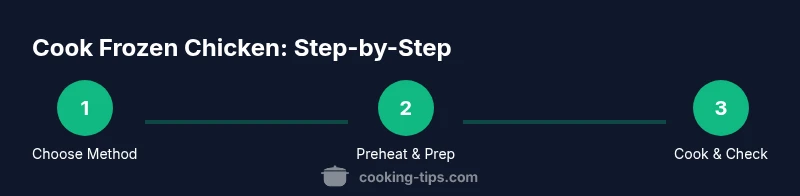
Choose your cooking method
Decide whether you’ll roast in the oven, sear then finish on the stove, or use an air fryer. The cut size and desired texture should guide your choice. This step determines overall time and heat levels.
Tip: Boneless pieces finish faster; bone-in parts need longer, but can stay juicier. - 3
Preheat and prepare the chicken
Preheat your heat source to the target range for the method chosen. Pat the pieces dry to promote browning, and season evenly. Do not rinse frozen chicken; moisture can steam the surface and hinder browning.
Tip: Dry surface = better sear and flavor development. - 4
Cook frozen chicken in your chosen method
Place pieces in a single layer with space between them. Monitor heat to prevent scorching. If using the oven, rotate trays halfway for even cooking; if using a skillet, flip at least once for even browning.
Tip: Avoid jumping between very high and very low heat; steady heat yields consistent doneness. - 5
Check temperature and rest
Insert the thermometer into the thickest part without touching bone. When it reaches 165°F (74°C), remove from heat and rest for 3–5 minutes. Resting helps juices redistribute for juicier chicken.
Tip: If a piece is under 165°F, continue cooking in short increments and recheck. - 6
Serve or store safely
Serve immediately or cool quickly and refrigerate within two hours. Store leftovers in shallow containers for rapid, safe cooling. Label with date to track freshness.
Tip: Reheat to 165°F before serving to maintain safety and texture.
Quick Answers
Can you safely cook frozen chicken in a standard oven?
Yes. An oven can safely cook frozen chicken when you adjust time and temperature and verify doneness with a thermometer. Preheat properly and cook in a single layer to promote even heating.
Yes, you can safely cook frozen chicken in an oven by adjusting time, using a thermometer, and cooking in a single layer.
Is thawing before cooking ever necessary?
Thawing is not strictly necessary for safety, but it can improve evenness and texture. If you thaw, plan accordingly and still verify doneness with a thermometer.
Thawing isn’t required for safety, but it can help with even cooking and texture.
Can I cook frozen chicken in a microwave?
Yes, you can. The microwave is fastest for small pieces, but it can heat unevenly. Use lower power settings and check the center with a thermometer to ensure 165°F throughout.
Yes, you can cook frozen chicken in a microwave, but check with a thermometer to ensure it’s fully cooked.
What internal temperature should frozen chicken reach?
The safe internal temperature for all poultry is 165°F (74°C) in the thickest part. Use a digital thermometer and verify during the final stage of cooking.
165°F is the safe internal temperature for poultry.
Can you cook frozen chicken with skin on?
Yes. Skin-on pieces may brown more slowly from frozen, but they still reach the safe internal temperature. You might need a longer initial sear or oven time.
Skin-on pieces can be cooked from frozen; expect a longer cook time.
How can I tell if it’s done without slicing?
Use a meat thermometer inserted into the thickest part. If it reads 165°F, it’s done. Rely on temperature rather than color or texture alone.
Check the thickest part with a thermometer until it hits 165°F.
How should I store cooked frozen chicken?
Cool to room temperature no more than two hours, then refrigerate within two hours. Freeze portions in shallow containers to speed cooling and maintain quality.
Cool quickly and refrigerate or freeze leftovers promptly.
Top Takeaways
- Cook frozen chicken safely by reaching 165°F internally.
- Choose the method that fits your cut and time constraints.
- Use a thermometer as your primary doneness guide.
- Rest the meat to retain juiciness and flavor.
- Practice safe handling to avoid cross-contamination.