When to Cook Defrosted Chicken: A Practical Guide
Learn practical, science-based guidelines for cooking defrosted chicken safely, including thawing windows, target temperatures, cooking methods, and storage tips to prevent waste and foodborne illness.


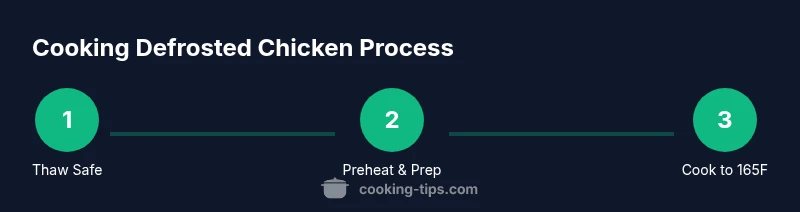
With defrosted chicken, plan to cook it within one to two days when refrigerated, and never leave thawed poultry at room temperature. After thawing, cook to an internal temperature of 165°F (74°C) to ensure safety, then serve promptly. If you won’t cook within two days, consider refreezing thawed chicken using safe methods.
Why timing matters for when to cook defrosted chicken
Timing is a critical factor in food safety. Defrosted chicken has moved from a frozen state to a perishable product that can support bacterial growth if not handled promptly. The question when to cook defrosted chicken often boils down to two simple rules: keep it cold during thaw and cook it promptly after thawing. In most home kitchens, the recommended window is one to two days when the chicken is stored in the refrigerator at or below 40°F (4°C). If your fridge is warmer than that, reduce the window accordingly. Avoid any defrosted chicken being left on the counter or in warm water, which accelerates bacterial activity. Beyond safety, timing also affects texture and flavor; defrosted chicken that sits too long may dry out or become less juicy. By planning ahead, you’ll minimize waste and ensure that every chicken dish tastes as good as possible. Throughout this guide, we’ll reference practical, evidence-based guidelines from Cooking Tips to help you determine when to cook defrosted chicken and how to do it with confidence.
Thawing and safe handling basics
Thawing should be done with safety in mind. The safest method is in the refrigerator, which allows defrosted chicken to thaw gradually while staying cold. Place the poultry in a leak-proof container or sealed bag to avoid cross-contamination. For smaller pieces such as breasts or thighs, thaw in the fridge for 12 to 24 hours; larger pieces or whole birds will require longer. If you need to speed up, use the cold water method: seal the chicken in a leak-proof bag and submerge in cold water, changing the water every 30 minutes until thawed. Never thaw on the countertop or in warm water, as warm environments support bacterial growth. Once thawed, cook promptly or keep cold and cook within the safe window. Remember to wash hands and all surfaces after handling raw poultry.
Temperature targets and doneness checks
The safety standard for chicken is an internal temperature of 165°F (74°C) in the thickest part of the meat. Use a digital instant-read thermometer for accuracy, inserting it into the center of the meat without touching bone. After you reach 165°F, let the meat rest for 3-5 minutes; carryover heat will continue to raise the internal temperature slightly and improve juiciness. Resting also helps redistribute juices, leading to a more evenly cooked result. Different cuts may show doneness differently, so use the thermometer as your primary guide rather than relying solely on color. For a more precise process, record the thickest portion’s temp and confirm across multiple spots if you’re cooking a whole piece or multiple pieces.
Cooking methods: oven, stovetop, grill, and air fryer
Defrosted chicken can be cooked using several methods depending on your equipment and desired texture. Oven roasting at a high temperature creates a crispy exterior while preserving moisture inside. Pan searing followed by finishing in the oven yields a golden crust and juicy interior. Grilling adds a smoky flavor, especially nice for thighs and drumsticks. An air fryer can deliver a quick, evenly browned finish with less oil. Regardless of method, begin with a preheated surface and a bit of oil to prevent sticking. The key is to monitor internal temperature and remove from heat as soon as 165°F is reached. Adjust times based on thickness and cut, and always verify doneness with a thermometer to ensure safety and quality.
Safety steps and preventing cross-contamination
Handling defrosted chicken demands strict hygiene. Always wash hands before and after handling raw poultry and sanitize cutting boards, knives, and countertops. Use separate utensils for raw and cooked meat to avoid cross-contamination. Keep defrosted chicken refrigerated until you’re ready to cook, and never return defrosted meat to the fridge after cooking unless it has cooled to below 40°F (4°C) promptly. If you marinate raw poultry, discard any leftover marinade that touched raw meat. Following these safety steps reduces the risk of foodborne illness and keeps your meals delicious.
Storing leftovers after cooking
Leftovers should be cooled quickly and stored in shallow, airtight containers to maximize safety and quality. Refrigerate within two hours of cooking to minimize bacterial growth, and use leftovers within 3-4 days. When reheating, heat to at least 165°F (74°C) throughout, and stir to ensure even heating. If you anticipate not finishing leftovers within a few days, you can freeze cooked pieces for future meals, then thaw in the fridge before reheating. Proper cooling and storage preserve texture and flavor while maintaining safety standards.
Quick reference checklist for when to cook defrosted chicken
- Thaw in refrigerator or use cold water method, never on counter
- Cook within one to two days of thawing if refrigerated
- Target internal temperature of 165°F (74°C)
- Use a thermometer, rest meat briefly, and reheat to safe temps when leftovers are consumed
Tools & Materials
- Digital instant-read thermometer(Choose a model with quick response time and a metal probe tip)
- Separate cutting board for raw poultry(Avoid cross-contamination with other foods)
- Sharp chef's knife(For portioning after cooking if needed)
- Nonstick skillet or baking sheet(Depends on the chosen cooking method)
- Food-grade storage containers(For leftovers and quick cooling)
Steps
Estimated time: 30-45 minutes
- 1
Inspect thawed chicken for safety
Check that the thawed chicken looks and smells normal. Discard any that are off smell, slimy, or discolored. This step ensures you don’t start with compromised meat.
Tip: If in doubt, throw it out and start with fresh poultry. - 2
Choose your cooking method and preheat
Decide whether to roast, pan-sear, grill, or use an air fryer. Preheat the appliance to the appropriate temperature so your chicken begins cooking immediately when it hits the heat.
Tip: Preheating prevents uneven cooking and helps achieve a proper crust. - 3
Season and prepare the chicken
Pat dry to promote browning, season evenly, and apply a light coating of oil if needed. Seasoning enhances flavor while helping surface texture stay inviting.
Tip: Even thickness improves uniform doneness; consider pounding thinner pieces to reduce uneven cooking. - 4
Cook until thermometer hits 165°F
Monitor with a digital thermometer and insert into the thickest part, avoiding bone. Remove when 165°F is reached to prevent overcooking.
Tip: If cooking multiple pieces, check several spots for even temps. - 5
Rest the meat briefly
Let the chicken rest for 3-5 minutes after cooking. Carryover heat will finish cooking and juices will redistribute for juicier meat.
Tip: Cover loosely with foil to retain warmth without steaming the crust. - 6
Serve or store leftovers safely
If serving later, store leftovers in shallow containers and refrigerate promptly. Reheat to 165°F before consuming.
Tip: Label containers with date to track freshness.
Quick Answers
How long can defrosted chicken stay in the fridge before cooking?
Defrosted chicken should be cooked within one to two days when kept refrigerated at or below 40°F (4°C). If kept colder, you may have a slightly longer window, but plan to cook sooner rather than later to preserve quality.
Defrosted chicken should be cooked within one to two days when kept refrigerated. If your fridge is colder, you might have a bit more time, but aim to cook soon for best quality and safety.
Can you refreeze thawed chicken?
You can refreeze thawed chicken if it thawed in the refrigerator and has not been left out at room temperature. For best quality, repackage promptly and freeze as soon as possible after thawing.
You can refreeze thawed chicken if it thawed in the fridge and hasn't sat out at room temperature. Repackage and freeze as soon as possible for best quality.
What is the safest internal temperature for cooking chicken?
The safe internal temperature for all chicken is 165°F or 74°C. Use a thermometer to verify the thickest part reaches this temperature.
Cook chicken to 165 degrees Fahrenheit to be safe, and check with a thermometer.
Is it okay to thaw chicken in cold water for cooking day meals?
Yes, cold water thawing is faster than fridge thawing but requires more attention. Submerge in a sealed bag and change the water every 30 minutes until thawed, then cook promptly.
If you need it faster, you can thaw in cold water, changing the water every 30 minutes, then cook promptly.
Do different cuts require different cooking times after thawing?
Yes. Thinner pieces cook faster to 165°F, while thicker pieces or bone-in portions may take longer. Always verify with a thermometer to ensure even doneness.
Yes, different cuts need different times; use a thermometer to ensure they reach 165 degrees.
Watch Video
Top Takeaways
- Cook thawed chicken within one to two days when refrigerated.
- Always reach 165°F internal temperature and rest briefly.
- Choose a cooking method you can monitor with a thermometer.
- Prevent cross-contamination with separate utensils and surfaces.
- Store leftovers safely and reheat to safe temperatures.