Prime Rib How to Cook: A Home Cook's Step-by-Step Guide
Learn a reliable sear-and-roast method to cook prime rib at home. Prep, timing, doneness targets, resting, and serving ideas for a restaurant-quality roast.


This guide shows you how to cook prime rib using a reliable sear-and-roast method to achieve a juicy, evenly cooked center and a crusty exterior. You’ll need a prime rib roast, a large roasting pan, a meat thermometer, and an oven. We cover prep, searing, roasting, resting, and carving to help you serve a standout holiday roast.
Why prime rib is a classic centerpiece
Prime rib has long been the star of holiday and celebratory meals because of its impressive presentation and deep beefy flavor. According to Cooking Tips, the best prime rib starts with selecting a well-marbled roast and treating it with a light, strategic approach to heat. The goal is a deeply caramelized crust on the outside while preserving a juicy, rosy center. A bone-in roast often delivers more flavor and easier carving, but a boneless version also works well if you prefer easier handling. When prepared correctly, prime rib requires minimal hands-on effort, making it a forgiving centerpiece for cooks who want restaurant-quality results without a full kitchen staff. The science behind the method is simple: initial high heat forms a crust, then moderate roasting finishes the interior with controlled doneness while the meat’s juices stay locked inside. The result is a dramatic, crowd-pleasing roast that remains tender and flavorful even after slicing.
Choosing the right cut and resting
Selecting the right cut is the first step to success. For most home cooks, a bone-in rib roast in the 6 to 8-pound range serves 8 to 12 people. If you’re feeding fewer guests, a smaller roast can work, but plan for a little more bone-to-meat ratio in bone-in cuts to maximize flavor. Look for good marbling throughout the meat; those intramuscular fat streaks melt as the roast cooks, delivering moisture and richness. If you opt for a boneless roast, ensure it’s well-trussed so it cooks evenly. Regardless of bone status, allow the roast to come to room temperature for 2 to 3 hours before cooking. This step reduces dramatic temperature gaps between the exterior and interior, helping the meat cook more evenly and finish with a uniform roast.
Temperature targets and doneness
Doneness targets guide how long you cook prime rib, but the most reliable method is using a meat thermometer. For a traditional center-cut prime rib, aim for a final internal temperature around 120–125°F for rare, 130–135°F for medium-rare, and 140–145°F for medium after resting. Remember that carryover cooking will raise the temperature by about 5–10°F, so pull the roast from the oven a little early if you want precise doneness. If you’re cooking for guests with diverse preferences, you can plan to pull two roasts at different stages or give guests the option to add a touch more heat after resting. Cooking Tips analysis shows that thermometer-guided roasts deliver far more consistent results than time-based methods alone, especially for thicker cuts like prime rib.
Searing vs roasting methods
There are two common approaches. The classic method starts with a hot sear to form a crust, followed by lowering the oven temperature to finish cooking. A popular alternative is the reverse-sear method: slow-roast at a lower temperature first, then finish with a high-heat sear to develop crust just before serving. The sear-first method yields a stronger exterior crust, while the reverse-sear approach offers more forgiving doneness with less risk of overcooking the outer layer. If you choose searing, limit the initial high-heat phase to 15–20 minutes to avoid overcooking the outer edges while achieving a deep crust. Whichever method you pick, monitor internal temperature closely for best results.
Seasoning, rubs, and pan sauces
Salt is the backbone of prime rib seasoning, complemented by cracked black pepper and optional aromatics like garlic and fresh herbs. Generously salt the roast at least 45 minutes to an hour before cooking; salt helps draw out moisture and then reabsorbs it, resulting in better crust formation. Pepper and aromatics are added after salting if you prefer a cleaner crust. Pan drippings can be transformed into a luxurious jus or gravy by deglazing the pan with stock or wine and reducing to a glossy finish. If you’re short on time, a simple pan sauce of red wine, beef stock, and a splash of cream can be made quickly while the roast rests.
Practical cooking timeline and timing tricks
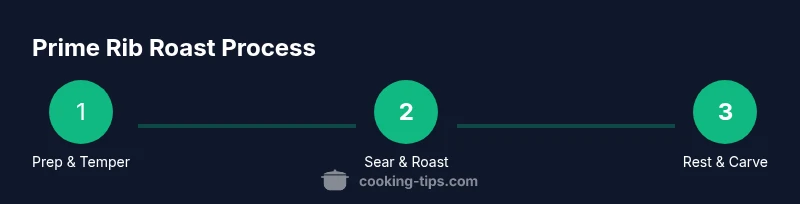
Plan for a total cooking window of about 2.5 to 3 hours for an 6–8 pound roast, plus at least 20–30 minutes of resting. Start by letting the roast come to room temperature, then season and prepare your setup. Preheat to a high temperature for the initial sear, then reduce to a moderate roasting heat and monitor with a thermometer. Rest the meat for 20–30 minutes before carving to allow juices to redistribute. If cooking for a larger crowd, consider cooking two roasts in parallel or using a two-stage schedule: one roast finished to medium-rare and another to medium to accommodate different doneness requests. Planning ahead minimizes last-minute chaos and ensures even cooking across the entire roast.
Common mistakes and troubleshooting
Common pitfalls include cooking from cold straight to a long roast without warming, which leads to uneven doneness; under-seasoning or uneven salt distribution; and relying solely on time rather than temperature. Opening the oven door frequently drops the temperature and can hinder crust formation. Another frequent issue is slicing too soon after cooking, which allows juices to run out and leaves meat dry; always rest. If the roast finishes early, tent it with foil and keep it warm in a low oven while you prepare sides. With careful planning and thermometer-guided roasting, you’ll avoid these mistakes and produce a prime rib that pleases every guest.
Tools & Materials
- Prime rib roast (bone-in or boneless)(Choose 3–5 rib roast; 6–8 pounds is a typical size for 8–12 servings.)
- Roasting pan with rack(Rack keeps the meat elevated for even air circulation during roasting.)
- Oven(Ensure oven is accurate with a thermometer; preheat as directed.)
- Meat thermometer (instant-read or probe)(Critical for hitting doneness targets; insert into the thickest part away from bone.)
- Carving knife(Sharp blade (8–10 inches) makes clean slices against the grain.)
- Cutting board(Large, stable board to accommodate a full roast for carving.)
- Aluminum foil(Tent the roast during rest to retain heat without steaming the crust.)
- Kosher salt and freshly ground black pepper(Salt is essential for crust; pepper adds depth of flavor.)
- Optional: cast-iron skillet(Useful for extra searing if you want an ultra-crusty exterior.)
Steps
Estimated time: Total time: about 2h 45m (varies with roast size).
- 1
Bring roast to room temperature
Remove the roast from the fridge 2–3 hours before cooking. A gradual rise in temperature helps cook more evenly, preventing a cold center. If your kitchen is warm, shorten this to 1–2 hours.
Tip: Proper tempering reduces the risk of a gray ring around the edge and ensures even browning. - 2
Season generously and rub
Pat dry the meat, then salt the surface generously. Add a pepper rub and optional aromatics like minced garlic or herbs. Let the seasoning sit on the meat for 30–60 minutes to intensify flavor.
Tip: Use kosher salt for optimum crust; coarse grains melt into the meat and create a flavorful sear. - 3
Preheat and sear the roast
Preheat the oven to a high temperature (typically around 450°F / 232°C). Sear the roast on a rack in a roasting pan for 15–20 minutes to form a deep crust.
Tip: Sear quickly to avoid overcooking the outer layer; watch closely to prevent burning. - 4
Roast at a moderate temperature
Reduce oven temperature to 325°F (165°C) and continue roasting until the probe thermometer reads the desired internal temperature.
Tip: Monitor temperature rather than time; roasts vary widely by size and bone presence. - 5
Check temperature and plan resting
Begin checking at the lower end of doneness; plan for 5–10°F of carryover after removal from the oven. Remove when slightly under target, as rest will finish the job.
Tip: If cooking multiple roasts, manage temperatures to keep a steady oven environment. - 6
Rest the roast
Tent loosely with foil and rest for 20–30 minutes. Resting redistributes juices, resulting in a moister slice and easier carving.
Tip: Carving too soon leads to juice loss; give the meat time to reabsorb moisture. - 7
Carve properly
Slice against the grain in thick portions for tenderness; coordinate with pan jus or gravy as you plate.
Tip: If you have bone-in roast, slice along the bone to maximize portion sizes and presentation. - 8
Serve with a simple pan sauce
Deglaze the pan with stock or wine after removing the roast. Reduce to a glossy jus to accompany slices, plus horseradish or a mustard cream if desired.
Tip: Keep the sauce warm while you carve; a quick whisk helps emulsify the fats.
Quick Answers
What is prime rib and how does it differ from a ribeye?
Prime rib is a bone-in rib roast that’s prepared whole and served in slices. Ribeye is the boneless steak cut from the same primal rib, typically cooked as individual portions. Prime rib offers a dramatic presentation and shared experience, while ribeye is convenient for quick cooking.
Prime rib is a bone-in roast served in slices; ribeye is a boneless steak. Both come from the same rib section, but prime rib is typically a larger, centerpiece cut.
How long should I cook prime rib?
Cooking time depends on roast size, bone presence, and oven temperature. Rely on a thermometer rather than time alone, aiming for the desired internal temp plus carryover. Plan for about 2.5 to 3 hours for a 6–8 pound roast plus resting.
Time varies; use a thermometer to guide you and plan for a few hours total, including resting.
What internal temperature should prime rib reach?
Aim for about 120–125°F for rare, 130–135°F for medium-rare, and 140–145°F for medium. Expect 5–10°F of carryover after removal from the oven. Let the roast rest before carving to finish cooking gently.
Target temps are around 125 for rare, 130 to 135 for medium-rare, then rest to finish cooking.
Should I rest prime rib after cooking?
Yes. Resting allows juices to redistribute, resulting in juicier slices. Tent loosely with foil for 20–30 minutes before carving.
Resting is essential for juicy slices; cover lightly with foil and give it time.
Can I cook prime rib in a standard oven without special equipment?
A standard home oven works well. Use a roasting pan with a rack and a meat thermometer to guide doneness. A cast-iron skillet can help with extra searing if you have one.
A regular oven is fine; a thermometer is key for accuracy.
Bone-in vs boneless prime rib—what should I pick?
Bone-in roasts often deliver more flavor and are easier to carve, but boneless roasts cook more evenly and are easier to portion. Choose based on your preference for ease of carving or maximal flavor.
Bone-in tends to be tastier and easier to carve; boneless is simpler to handle.
Watch Video
Top Takeaways
- Choose a well-marbled roast and plan room-temperature tempering.
- Use thermometer-guided timing for consistent doneness.
- Sear for a crust, then roast to finish; rest before carving.
- Create pan sauce from drippings for a flavorful finish.