How to Cook Prime Rib: A Complete Guide
Master prime rib with a reliable method: dry-brine, sear, slow roast, and rest. This educational guide walks home cooks through selection, seasoning, temperatures, carving, and troubleshooting for juicy, restaurant-quality results.


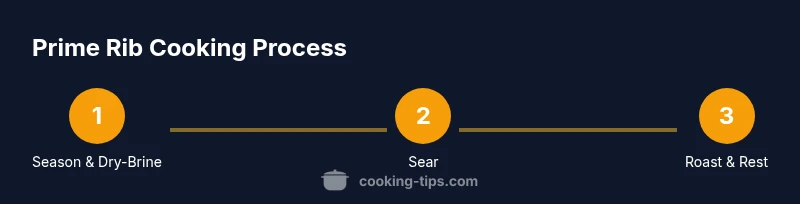
You can cook a prime rib by dry-brining, searing, and roasting at a controlled temperature, then resting before slicing. Start with salt, pepper, and aromatics, set up a rack and pan, and monitor with a thermometer. The goal is even heat, external crust, and a juicy, evenly cooked center. Use a two-stage approach for best results.
Choosing the Right Prime Rib
When you start, select a prime rib roast that matches your guest count and oven capacity. Look for a well-marbled rib roast with a good cap of fat on top; this fat melts during cooking and bastes the meat, enhancing tenderness and flavor. Decide between bone-in or boneless based on how you plan to carve and present the roast. Bone-in roasts often cook more evenly and can add flavor through the bones, while boneless cuts are easier to carve and portion. For a traditional presentation, aim for a center-cut roast with uniform thickness to ensure even cooking. Buying whole roasts gives you more control over trimming and trimming waste, while a smaller center-cut rib can be perfect for intimate gatherings. In all cases, allow the meat to come to near-temperature before cooking and pat it dry to promote a good crust.
According to Cooking Tips, a well-selected roast with balanced marbling will yield a juicier interior and a more forgiving cook. The Cooking Tips team notes that budgeting for about 2 to 2.5 pounds per person helps you plan for generous slices and minimal leftovers. If you’re unsure about the weight, a rough rule of thumb is to pick a roast that fits comfortably in your largest pan with room for a rack. Don’t rush the thaw or prep—planning ahead reduces stress on the big day.
Dry-Brining and Seasoning
Dry-brining is a simple, powerful step that concentrates flavor, tenderizes the meat, and helps build a delicious crust. Start by patting the roast completely dry with paper towels. Liberally apply kosher salt, using roughly 1 to 1.5 teaspoons per pound, and rub it evenly across all surfaces. Pepper can be added at this stage or just before roasting, depending on your salt preference; some cooks prefer a light pepper coating after salting to keep the crust bright. If you have time, refrigerate uncovered for at least 12 hours and up to 24 hours. This dries the surface further, which promotes a crisp, flavorful crust during high-heat searing. You can also add aromatics like crushed garlic, fresh rosemary, or thyme if you enjoy their herbal notes, but avoid over-seasoning so the beef’s natural flavors shine through. Cooking Tips emphasizes that salt is the most important flavor driver here, with aromatics enhancing, not masking, the meat’s profile.
While dry-brining, keep the roast uncovered or lightly tented with a clean sheet of parchment to prevent moisture accumulation. A fully dry surface will brown more evenly and deeply in the oven. If you’re pressed for time, a brine-free seasoning with a strong salt crust still yields a satisfying crust, though dry-brining yields better overall juiciness and flavor.
Searing and Low-Temperature Roasting
The classic approach to prime rib balances a high-heat sear with a long, slow roast to an even internal temperature. Start by preheating the oven to a high temperature, commonly around 450°F (230°C). Place the roast on a rack in a sturdy roasting pan so air circulates around it. Sear the roast for 15–20 minutes to develop a rich crust on all sides; this searing step also helps to set the crust even before the gentle roast. After searing, reduce the oven temperature to a moderate 325°F (165°C) and continue cooking until the internal temperature reaches your target doneness. Common targets are about 120–125°F for rare, 130–135°F for medium-rare, and 140–145°F for medium. Remember that carryover heat will raise the final doneness by roughly 5–10°F after resting, so plan to pull the roast a touch early. If you prefer a more hands-off method, you can use a two-step approach: sear on the stovetop and finish in a low-heat oven or a combination of oven and cast-iron pan for even browning. The goal is evenly cooked meat with a crusty exterior that doesn’t burn.
Cooking Tips reminds readers to use a reliable thermometer and to insert it into the thickest part of the roast without touching bone for accurate readings. If using bone-in, anticipate slightly longer cooking times and plan to shield exposed bones with foil if necessary.
Resting, Carving, and Serving
Resting after roast cooking is essential to redistribute juices and finish the cooking gently. Tent the roast loosely with aluminum foil and let it rest for 15–30 minutes; the interior will settle and the juices will redistribute, making carving easier and slices more uniform. During resting, the temperature will rise about 5–10°F, so it’s okay to pull the roast just shy of your target. Carve against the grain in thick, even slices for tenderness, and cut between bones if you’ve roasted bone-in to maximize portion control and juiciness. Arrange slices on a warmed platter and drizzle any accumulated pan juices over the top to maximize flavor. For an extra touch, serve with a classic horseradish cream or a red wine reduction. High-quality meat deserves a simple, complementary sauce that highlights its own flavor rather than masking it.
Serving tips: check the roast’s center for uniform color and avoid over-carving at the table; pre-slice on a cutting board to maintain a neat presentation.
Troubleshooting and Doneness Guidance
Even experienced cooks encounter variation in prime rib results. If your crust is too pale, bump the oven temperature slightly for a few minutes at the end, but watch carefully to avoid burning. If the center seems undercooked after resting, you can tent the roast and give it a few more minutes in a warm oven, checking with an instant-read thermometer until you reach the desired temperature. A few common doneness targets: rare at 120–125°F, medium-rare at 125–130°F, and medium at 135–140°F before resting. Remember that carryover cooking will finish the job after removal from the oven. Use a probe thermometer inserted into the center of the roast to monitor progress and avoid bone contact, which can skew readings in bone-in cuts. If your roast finishes too quickly, consider removing it earlier and letting it rest for longer to achieve a more even slice.
AUTHORITY SOURCES (for further reading)
For evidence-based guidance on cooking beef and safety considerations, consult these reputable sources. The USDA Food Safety and Inspection Service provides general guidelines for beef handling and safe temperatures. University extension programs offer practical cooking tips and tested methods for roast beef, including dry-brining and resting practices. These sources reinforce the approach described here and provide additional context for safe, flavorful results.
- https://www.fsis.usda.gov
- https://extension.illinois.edu
- https://extension.ucdavis.edu
Tools & Materials
- Roasting pan with rack(Nonreactive metal or enamel; fits roast size with space for air circulation)
- Meat thermometer (instant-read or probe)(Monitor internal temp without opening oven)
- Aluminum foil(For tenting during resting)
- Kosher salt(Key for dry-brine, about 1–1.5 tsp per lb)
- Freshly ground black pepper(Coarse grind recommended)
- Chef’s knife(For trimming and carving)
- Garlic, rosemary, thyme (optional)(Aromatics to enhance flavor if desired)
- Kitchen twine (for tying if boneless or certain bone-in roasts)(Helps keep shape during roasting)
Steps
Estimated time: Estimated total time: 2 hours 15 minutes
- 1
Pat dry and inspect roast
Pat the roast dry with paper towels and inspect for any excess surface moisture or uneven fat; this ensures better browning. Do not skip this step, moisture can steam the surface rather than brown it.
Tip: Dry surface = better crust. - 2
Season generously with salt
Rub kosher salt evenly over all surfaces, aiming for 1–1.5 teaspoons per pound. Salt not only flavors but helps form a crust when exposed to high heat.
Tip: Season ahead to unlock deeper flavor. - 3
Chill for dry-brine (optional)
If time allows, refrigerate uncovered for 12–24 hours to dry the surface further and intensify the crust. This step can be omitted if time is tight, but flavor benefits are noticeable.
Tip: Even a short dry-brine improves crust. - 4
Bring to room temperature
Before roasting, let the roast rest at room temperature for about 1 hour to promote even cooking. Do not thaw quickly in warm spots; a slow, even heat yields better results.
Tip: Room-temperature meat cooks more evenly. - 5
Preheat oven and prepare rack
Preheat to 450°F (230°C). Place a rack in the roasting pan so air can circulate, improving browning and even cooking.
Tip: Airflow is your friend for crust formation. - 6
Sear on all sides
Roast fat side up and sear for 15–20 minutes to develop a deep, flavorful crust. Watch closely to prevent scorching, especially near exposed bones.
Tip: A hot initial blast sets crust quickly. - 7
Reduce heat and roast to target doneness
Lower oven to 325°F (165°C) and cook until the center reads 120–125°F for rare, 130–135°F for medium-rare, or 140–145°F for medium. Plan for carryover heat of ~5–10°F.
Tip: Target early; carryover heat finishes the job. - 8
Rest and carve
Tent loosely with foil and rest 15–30 minutes. Slice thinly against the grain and serve with pan juices or a simple sauce.
Tip: Let juices redistribute for a juicier slice.
Quick Answers
What is the difference between prime rib and rib roast?
Prime rib typically refers to a roasted primal cut with rib bones present and bone-in roasts. A rib roast can be bone-in or boneless and is often prepared using similar techniques. The terms are often used interchangeably in home kitchens, but bone-in roasts can offer extra flavor through the bones.
Prime rib usually means a bone-in rib roast prepared for roasting. Rib roast can be bone-in or boneless and uses the same roasting method.
Should I bring prime rib to room temperature before cooking?
Yes. Allow the roast to come to room temperature for about an hour before roasting to promote even cooking and reduce the risk of a cold center. This also helps the crust form evenly.
Yes—let it sit at room temperature for about an hour before roasting to ensure even cooking.
What internal temperature should prime rib reach for rare, medium-rare, and medium?
Common targets are roughly 120–125°F for rare, 130–135°F for medium-rare, and 140–145°F for medium. Remember to account for 5–10°F of carryover heat after resting.
Aim for about 125 for rare, 135 for medium-rare, or 145 for medium; factor in carryover heat after resting.
How long should prime rib rest after cooking?
Rest the roast for 15–30 minutes, tented loosely with foil. Resting lets juices redistribute and completes final cooking with carryover heat.
Rest 15 to 30 minutes so juices distribute and carryover cooking finishes the job.
Can I cook prime rib in a Dutch oven or cast iron?
Yes. A Dutch oven or heavy cast-iron pan can work well for searing and final roasting, provided you manage heat and use a rack for air circulation.
Absolutely—a Dutch oven or cast iron works if you manage heat and keep air flow.
Do I need a meat thermometer, or can I rely on time?
Using a thermometer is highly recommended for accurate doneness, especially with large roasts where cooking times vary by weight and oven. Time alone is unreliable for prime rib.
A meat thermometer is essential for consistent results; time alone isn’t reliable.
How should I slice and serve prime rib for the best experience?
Slice across the grain in thick, even pieces after resting. Present with minimal garnish and offer a simple sauce for enhancement, not overpowering the beef’s flavor.
Slice across the grain in even portions after resting for the best texture.
Watch Video
Top Takeaways
- Season early: salt drives flavor and crust.
- Sear then roast: high heat for crust, low heat for even doneness.
- Rest 15–30 minutes to finish cooking and redistribute juices.
- Use a thermometer for accurate doneness and carryover planning.