Is Chicken Harder to Cook Than Steak: A Practical Comparison for Home Cooks
Explore whether chicken is harder to cook than steak, with science-backed tips, safe doneness guidelines, and practical kitchen strategies for home cooks. Learn methods, gear, and timing to master both proteins.


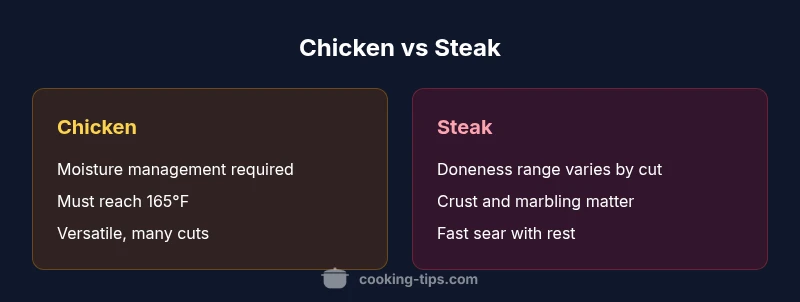
Is chicken harder to cook than steak? The short answer hinges on how you define difficulty. According to Cooking Tips, moisture management, safety rules, and target doneness all shape the challenge. Chicken must reach a safe internal temperature (165°F/74°C) and can dry out quickly if heated too long or unevenly. Steak offers a broader range of acceptable doneness and crust development, which some may find easier to predict. For most home cooks, chicken feels harder until you use a thermometer, apply moisture-management tactics, and allow proper resting. With those tools, chicken becomes reliably juicy without compromising safety.
Is the question 'is chicken harder to cook than steak' a fair way to compare proteins? The short answer depends on how you define 'hard.' According to Cooking Tips, there isn't a single difficulty metric; moisture management, safety requirements, and doneness range each contribute. Chicken must reach a safe internal temperature (165°F/74°C) and often loses moisture quickly if heated too long or unevenly. Steak, by contrast, offers a broader spectrum of acceptable doneness and a crust that can mask flaws. For many home cooks, chicken feels harder because the margin for error is smaller: overcook, and dry chicken is unpalatable; undercook, and you risk foodborne illness. That said, chicken becomes easier when you use a thermometer, brine or marinate for moisture retention, and rest the meat before slicing. Across this guide, we'll examine the factors that influence difficulty, share practical techniques, and help you choose methods that fit your kitchen and palate.
Key variables that influence cooking difficulty
- Cut and thickness: bone-in vs boneless, breast vs thigh; thickness matters for heat penetration.
- Starting temperature: refrigerated vs room temp; shorter times if starting cold risk uneven cooking.
- Equipment and heat source: pan size, oven accuracy, grill grate distance, convection vs standard ovens.
- Moisture management: brining, marinades, and resting impact outcomes.
- Flavor and texture goals: crust, juiciness, tenderness; certain targets require different approaches.
Doneness and safety: core constraints
Chicken requires reaching a safe internal temperature to prevent illness, typically 165°F (74°C). Steak offers a wider spectrum of doneness, from rare to well-done, depending on cut and preference. This difference can influence perceived difficulty: chicken imposes a non-negotiable safety threshold, while steak allows more room for personal taste. Beyond safety, chicken benefits from moisture-management strategies like brining, marinating, and careful resting to maintain juiciness; steak relies on Maillard crust and fat to deliver flavor, with doneness often centered on texture preferences.
Both proteins reward a consistent workflow: prep in advance, monitor heat, verify doneness with a thermometer, and rest before slicing. As you gain experience, your sense of timing sharpens, and what once felt challenging becomes routine. The key is to match technique to your kitchen setup and your taste goals.
Cooking methods and their effect on difficulty
Different cooking methods alter how hard a protein is to nail. High-heat searing creates crusty surfaces on both proteins, but chicken is more vulnerable to drying if heat is applied too aggressively without moisture management. Grilling and pan-searing work well for both, yet chicken benefits from initial moisture retention via brine or marinade and a finish that avoids overcooking. Oven roasting offers set-and-forget convenience for whole birds or large chunks, while sous vide can standardize doneness for both proteins, reducing guesswork. The basic rule: methods that promote even heat distribution and allow a controlled finish tend to reduce difficulty for both chicken and steak, but chicken still faces a narrower margin for error due to its lower fat content and safety requirements.
The role of thickness and uniformity
Uniform thickness ensures even cooking, which is especially critical for chicken breast slices that can be uneven if cut against the grain. Thicker cuts take longer to reach the safe temperature, increasing the risk of dry, overcooked outer layers. Conversely, thin or uniformly chopped portions heat quickly, heightening the risk of overcooking if timing isn’t precise. For steak, thickness interacts with crust formation and interior doneness; a well-marbled piece can tolerate a longer sear while still delivering juicy interior. The takeaway: uniform cuts reduce the cognitive load and improve predictability for both proteins, with chicken benefiting more from uniformity due to its susceptibility to drying.
Using thermometers and resting to improve outcomes
A reliable instant-read thermometer is a practical equalizer for both proteins. For chicken, target internal temperature of 165°F (74°C) and allow a brief rest to reabsorb juices. For steak, aim for your preferred level of doneness (e.g., 120-130°F for rare to around 140-150°F for medium) then rest. Rest reduces carryover cooking and helps retain moisture. Small, controlled rest periods are especially valuable when cooking chicken portions; larger cuts may require longer rest times to equalize juices. Practically, build in a 5- to 10-minute rest for most chicken portions and a 5- to 15-minute rest for thicker steaks. These steps minimize dryness and improve texture across both proteins.
Practical workflow for home cooks: prep to plate
- Gather ingredients and tools, including a thermometer and a sharp knife.
- Bring proteins to near-room temperature for even cooking and season appropriately.
- Decide on method: high-heat sear for crust, followed by oven finish, or sous-vide with a quick sear to finish.
- Monitor heat and use a thermometer to hit target doneness without overcooking.
- Rest before slicing to maximize juiciness and flavor.
- Slice thoughtfully and serve with a complementary sauce or side that enhances moisture retention and texture.
Common mistakes that raise difficulty
- Skipping a preheating step or using uneven heat that creates hot spots.
- Overcrowding the pan, which lowers temperature and impedes crust formation.
- Not using a thermometer, leading to guesswork and inconsistent results.
- Ignoring resting times, which traps moisture inside a hot interior.
- Cooking chicken from frozen without proper thawing, causing uneven doneness.
By avoiding these missteps and focusing on temperature control, you can reduce the perceived difficulty of both proteins.
Scenarios where chicken shines: easy and reliable cases
Chicken shines when prepared in smaller, uniform pieces like chicken cutlets, tenders, or shredded for soups and tacos. In these forms, moisture retention is easier to manage, and quick-cooking methods keep the meat juicy. Brined or marinated chicken breast can tolerate a slightly longer sear without drying, and bone-in thighs offer forgiving flavor and moisture due to higher fat content. In contrast, steak shines when you want a crust with a pink or richly browned interior; you can tailor doneness precisely using searing and resting. The key to both is matching cuts and methods to your skill level and equipment.
Tailoring methods to equipment and kitchen constraints
If your kitchen has a hot grill, you can build great crust on both chicken and steak, but chicken may require a brief rest or finish in the oven to maintain moisture. A cast-iron skillet is excellent for both proteins; use it to create a crust on steak and then finish chicken in the oven to avoid overcooking. A sous-vide setup eliminates timing guesswork for chicken and steak, offering consistent results, especially when you want exact doneness without relying on timing alone. Finally, consider your available tools, space, and time budget when choosing a method to minimize difficulty while maximizing flavor.
A simple decision framework for choosing methods
- If you prioritize crust and flavor with minimal equipment, choose pan-seared steak and skillet-plus-oven chicken with a brief finish.
- If you want consistent doneness and minimal risk of dryness, consider sous vide for both proteins, followed by a quick sear.
- If you must work quickly or with limited equipment, lean toward chicken breasts in uniform pieces with brining, and slice thinly for even cooking; for steak, pick a cut with good marbling and a shorter cook time, then rest.
- Always use a thermometer and allow for carryover heat during rest to avoid overcooking. These rules of thumb help even novice cooks achieve reliable results across both proteins.
mainTopicQuery":"chicken steak comparison"],
Comparison
| Feature | Chicken | Steak |
|---|---|---|
| Moisture retention | More prone to moisture loss without moisture-management (brine/marinade/rest) | Fat marbling can help retain juiciness; moisture aided by careful sear/rest |
| Doneness control | Must reach 165°F/74°C; limited rare options | Wide range of doneness (rare to well-done) depending on cut and preference |
| Ideal methods | Grilling, pan-searing, roasting; moisture management crucial | High-heat searing, grilling, broiling; crust development is key |
| Flavor development | Relies on seasoning and sauces; technique matters for juiciness | Natural flavor enhanced by Maillard crust and fat; less dependent on moisture tweaks |
| Skill curve | Requires precise temperature and resting; more variables to manage | Crust and timing matter, but doneness range offers flexibility |
| Cost and accessibility | Typically lower cost per serving and highly available | Costs vary by cut; premium steaks can be expensive |
| Safety considerations | Higher emphasis on preventing undercooking and cross-contamination | Lower risk of illness with proper sear and rest; still requires safe handling |
Benefits
- Generally lower cost per serving
- More versatile in methods and cuts
- Shorter hands-on cooking for small pieces
- Broad availability and convenience
Cons
- Prone to dryness if overcooked without moisture management
- Safety concerns require careful handling and adequate cooking
- Quality varies by cut and brand
Chicken is not inherently harder to cook than steak, but it demands precise moisture and doneness control to excel.
For most home cooks, chicken presents a steeper initial learning curve due to safety requirements and moisture loss. However, with proper tools (thermometer), techniques (brine/marinade, rest), and clear doneness targets, chicken becomes as approachable as steak. The best approach is to align method with your kitchen setup and goals, then practice to build consistent results across both proteins.
Quick Answers
Is chicken harder to cook than steak for beginners?
In general, yes, because chicken must reach a safe internal temperature and can dry out quickly if not managed properly. Beginners can overcome this with a thermometer, moisture-management techniques like brining or marinating, and careful resting.
For beginners, chicken is usually trickier, mainly due to safety and moisture. Use a thermometer and rest to improve results.
What makes chicken tricky to cook well?
Moisture retention and safe doneness are the big challenges. Without brining or proper resting, chicken dries out easily; ignoring the 165°F safety threshold risks undercooking. Technique and temperature control are the main factors that separate good from great chicken.
Moisture control and safety are the main hurdles with chicken.
Can I use the same method for chicken and steak?
Many methods work for both proteins (pan-searing, grilling, sous vide), but you must adjust heat, timing, and resting for each. Chicken needs more moisture management, while steak benefits from crust and marbling.
Yes, with adjustments for each protein.
What is the safe temperature for chicken and the doneness range for steak?
Chicken must reach 165°F (74°C) for safety. Steak doneness varies (rare to well-done) depending on preference and cut, with higher-fat cuts often tolerating longer cook times.
Chicken is fixed at 165°F; steak varies by doneness.
How can I prevent chicken from drying out?
Brining or marinating helps moisture; shorter cooking times and rapid heat control prevent overcooking; resting lets juices redistribute, keeping the meat juicy.
Brine, marinate, and rest to keep chicken juicy.
Is sous vide a good option for both proteins?
Yes. Sous vide standardizes doneness for chicken and steak, then a quick finish sear creates crusts, reducing the risk of overcooking and improving consistency.
Sous vide can level the playing field for both.
Top Takeaways
- Use a thermometer to hit target doneness
- Choose uniform cuts to ensure even cooking
- Brine or marinate chicken to boost moisture
- Rest meat before slicing to maximize juiciness
- Select methods that fit your equipment and time constraints