Is Turkey Harder to Cook Than Chicken? A Practical Comparison for Home Cooks
Explore whether turkey is harder to cook than chicken. This detailed comparison covers size, timing, doneness, prep, and cooking methods to help home cooks master both birds with confidence.


Is turkey harder to cook than chicken? The short answer is not inherent, but size, timing, and technique create distinct challenges. According to Cooking Tips, the core difficulty comes from managing a much larger bird, ensuring even doneness, and allowing sufficient resting time. With careful planning, proper equipment, and thermometer-based doneness checks, both birds can be cooked reliably. This quick comparison highlights the key differences in anatomy, heat management, prep, and roasting methods so you can choose the best approach for holidays or weeknights.
Is turkey harder to cook than chicken? A quick, practical overview
Is turkey harder to cook than chicken? The quick answer is that it isn’t inherently more difficult, but the size and structure of a turkey introduce different requirements for timing, heat control, and resting. The Cooking Tips team emphasizes that success hinges on planning and technique more than raw cooking prowess. In this section we’ll establish the frame for a fair comparison, defining what we mean by difficulty, and outlining the major decision points home cooks face: choosing the right cut or whole bird, selecting a roasting method, and using a reliable thermometer to prevent undercooking or overcooking. We’ll also set expectations about leftovers, safety, and the practical realities of thawing and preparation. If you want juicier results, you’ll want to think in terms of process rather than just time, and how resting and carving affect final texture. By the end, you should be able to decide which approach fits your occasion and skill level while keeping both birds delicious and safe to eat.
Anatomy and size: why turkey feels harder
Turkey is physically larger and has more bones, which changes how heat travels through the meat. A chicken’s smaller size heats more quickly and cooks more uniformly, while a turkey can have uneven zones—breast meat staying pale while legs and thighs finish cooking. This difference matters because white meat dries out faster if you push the pan too hard, while dark meat benefits from slightly higher heat or longer, slower cooking. For home cooks, the practical implication is simple: plan extra time, use a thermometer, and consider techniques like brining or starting heat high then finishing at a lower temperature to promote even doneness. Understanding the bird’s anatomy helps you tailor your method, whether you roast, fry, or braise. In short, the perception of difficulty comes from scale, not from a mysterious culinary obstacle. According to Cooking Tips, the key is to break the job into stages and manage moisture through resting, seasoning, and appropriate heat exposure.
Temperature, doneness, and safety: temperatures that matter
Doneness and safety drive all poultry decisions, but the cooling-off reality differs by bird size. The central temperature target for both turkey and chicken is to achieve a safe internal temperature. While many cooks memorize a single number, the best practice is to verify with a reliable thermometer in the thickest part of the meat, away from bone. For most home roasts you want the thermometer to approach a safe range and then rest the meat to distribute juices. The USDA guidelines emphasize continuing to monitor the meat until it reaches a safe internal temperature, followed by a period of rest to reabsorb moisture. This is especially crucial for turkey, where a longer rest can help the meat stay juicy. For chicken, you still want thorough doneness but can sometimes pull a touch earlier if you’re slicing smaller portions. The practical takeaway is a thermometer in the right place, not a clock on the oven. That’s how you maintain juicy texture across both birds.
Prep and planning: thawing, brining, and resting
Thawing properly is the foundation of a successful roast, and turkey usually requires more consideration than chicken due to its size. Plan ahead on thaw times; a whole bird may need several days in the refrigerator, depending on its weight. Brining is a frequently recommended step for turkey because the extra moisture helps counteract the dryness risk during long cooks. If you skip brining, compensate with careful seasoning and a slower roast. Resting is non-negotiable for turkey: slice too soon and you’ll lose juiciness as juices run out. Even chicken benefits from rest, but the relative impact is more noticeable with a larger bird. In both cases, you’ll improve texture by letting the meat reabsorb moisture and by carving after a brief rest. The goal is to reduce moisture loss and create an even bite, which you achieve through methodical prep planning and proper thawing windows.
Roasting methods: best approaches for turkey vs chicken
Roasting is the classic method for turkey, while chicken is versatile across roasting, pan-searing, and quick sautés. For a turkey, an initial blast of higher heat can help brown the skin, followed by a gentler finish to avoid overcooking the breast. Chicken can tolerate a range of roasting temperatures, and it often finishes quickly with stable juiciness in breast meat when not overcooked. Some cooks favor a foil tent or basting routine to control surface moisture, while others prefer dry heat for crisp skin. In all cases, the method should reflect your plan for doneness, resting, and carving. The upshot: choose turkey when you need a large, impressive centerpiece; choose chicken when you want speed, versatility, and easier control over moisture. Both can be delicious with precise heat management and appropriate resting.
Common mistakes and how to avoid them
A common pitfall with turkey is under-seasoning and neglecting rest. Under-seasoning leads to bland flavor, while insufficient resting causes juices to pool during carving, resulting in dry slices. Another frequent error is relying on time alone instead of a thermometer; birds vary in size, which makes clock-time unreliable. Overcooking breast meat while thighs remain underdone is a typical problem for beginners. The solution is simple: season adequately, thaw fully, use a thermometer for the final temperature, and invest in a modest resting window. A well-planned roast, whether turkey or chicken, hinges on counting on heat and moisture rather than chasing a precise clock.
Decision guide: turkey vs chicken for meals
When deciding between turkey and chicken, consider the occasion, the number of guests, and how you’ll use leftovers. Turkey shines for holiday gatherings or events with many mouths to feed, where leftover meat can become future meals. Chicken excels for weeknights or smaller households, offering quick turnaround and flexibility in cooking styles. If you want the best of both worlds, you can opt for turkey breast or smaller turkey parts for speed while maintaining the flavor profile you enjoy with whole birds. The ultimate decision comes down to your schedule, your appetite for planning, and how much you value leftovers versus immediate convenience. The Cooking Tips approach is to tailor technique to the situation rather than insisting that one bird is harder to master than the other, because each bird has its own set of required skills.
Authority sources and further reading
For further guidance on safe handling and cooking techniques, consult authoritative sources. The U.S. Department of Agriculture (USDA) provides foundational safety guidelines for poultry, including turkey. Public health and food-safety resources from university extensions also offer practical, kitchen-tested tips for thawing, brining, and roasting. For broader context on nutrition and cooking methods, reputable health and medical publications provide additional perspectives on how to balance flavor, texture, and safety when cooking either bird. These sources complement the practical advice shared here and help home cooks build confidence in handling poultry.
Comparison
| Feature | Turkey | Chicken |
|---|---|---|
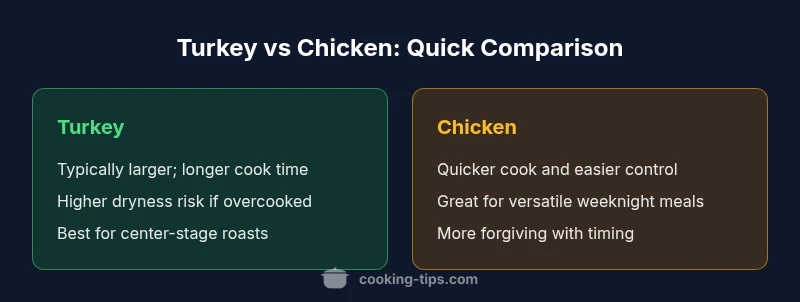
| Size and cook-time influence | Typically larger; longer overall cook time | Smaller; quicker cook time and faster heat distribution |
| Best final internal temperature | Target 165°F (74°C) in the thickest part; resting improves juiciness | Target 165°F (74°C) with resting; smaller portions may seem juicier when cooked properly |
| Ease of prep and handling | More planning and space for thawing, brining, and carving | Easier to manage single portions and shorter prep time |
| Moisture risk if mismanaged | Higher risk of dryness if overcooked or carved too soon | Lower baseline risk, but still vulnerable if overcooked or sliced hot |
| Cost and availability | Bird is larger and seasonally available; plan for leftovers | Widely available; generally cheaper per unit, great for everyday meals |
| Best use-case | Large gatherings, holiday meals, and leftovers | Weeknight meals, quick week-at-a-glance dinners |
Benefits
- Ideal for feeding a crowd with leftovers for future meals
- Versatile flavor profile accepts a range of seasonings and marinades
- Longer planning builds confidence and yields impressive presentation
- Resting after cooking preserves juices and improves texture
- Both birds can be cooked well with thermometer-guided technique
Cons
- Turkey requires more planning, thawing, and equipment
- Higher risk of dryness if not rested or properly brined
- Longer cooking times tie up oven space and energy
- Inconsistent doneness can occur if heat is not managed carefully
Turkey offers a reliable, scalable option for groups; chicken remains the easiest choice for speed and everyday meals
Is turkey harder to cook than chicken? Not inherently, but the larger size demands careful planning and heat management. If you plan, brine, use a thermometer, and rest properly, both birds can be delicious. For holiday crowds, turkey shines; for quick dinners, chicken wins on convenience.
Quick Answers
Is turkey harder to cook than chicken?
Not inherently; it’s larger and requires more time and careful handling, but with planning and proper technique you can achieve moist, safe meat.
Not inherently harder—size and timing matter more. Plan ahead and use a thermometer for best results.
What is the safest target internal temperature for turkey and chicken?
Both should reach an internal temperature of 165°F (74°C) in the thickest part, then rest briefly before carving.
Aim for 165°F and rest a bit to keep the juices in.
Should I brine turkey?
Brining can improve moisture and flavor, especially for larger birds. It’s optional but worthwhile for beginners.
Brining helps keep turkey moist, especially if you’re new to roasting.
Which cooking method is best for turkey vs chicken?
Roasting is standard for turkey; chicken is versatile and works well roasted, baked, or sautéed depending on the cut and time.
Roast turkey for a centerpiece; chicken shines with quick, flexible methods.
How can I test doneness without overcooking?
Use a reliable digital thermometer; check the thickest part away from bone and remove from heat just before 165°F, letting it rest.
Thermometer first, then rest the meat to keep it juicy.
Can I cook turkey like a chicken for a quick weeknight meal?
Whole turkey isn’t practical for weeknights; consider turkey breast or cutlets for faster results.
For quick meals, use turkey breast or cutlets instead of a whole bird.
Top Takeaways
- Plan thawing and brining for turkey before cooking
- Use a digital thermometer to ensure safe doneness
- Rest the meat before carving to maximize juiciness
- Choose roasting for turkey and versatile methods for chicken
- Evaluate your schedule to choose the right bird for the meal