Is Chicken Harder to Cook Than Beef? A Practical Comparison
A analytical, step-by-step comparison of cooking chicken vs beef, examining safety temps, methods, moisture control, and common pitfalls to help home cooks master both proteins.


Is chicken harder to cook than beef? Not inherently. The real difference lies in safety concerns, moisture management, and the thickness of the cut. According to Cooking Tips, with precise heat control, proper resting, and appropriate methods, both proteins become manageable for home cooks. The goal is to prevent undercooking poultry while avoiding overcooking lean beef—and the right approach makes the task approachable rather than intimidating.
The Core Question: is chicken harder to cook than beef?
This headline question frames the central debate of this guide. The short answer is nuanced: is chicken harder to cook than beef? The perception often arises from poultry’s stricter safety requirements, which demand an accurate internal temperature to avoid Salmonella. Meanwhile, beef benefits from a broader range of doneness preferences, but its various cuts demand different techniques to maximize tenderness. The Cooking Tips team emphasizes that success with either protein starts with understanding heat, moisture, and cut geometry. In this article, we compare the two side by side, offering practical steps, tested methods, and evidence-based guidance to help you choose the right approach for your weeknight dinners and weekend roasts.
To keep the focus actionable, we’ll use the exact phrase is chicken harder to cook than beef occasionally as a reference point, but the core lessons apply regardless of the protein. The goal is a reliable, repeatable result whether you’re cooking chicken breast, thighs, or a beef steak, roast, or ground beef. By the end, you’ll know when the task is simply a matter of technique and when safety dictates a different approach.
-1-placeholder?null?0n/a?null?
Comparison
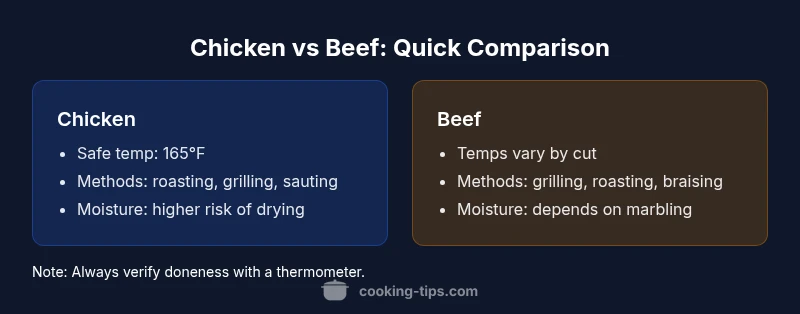
| Feature | Chicken | Beef |
|---|---|---|
| Safe internal temperature | 165°F (74°C) for poultry | Varies by cut; common targets include 130-145°F for medium rare to 160°F for ground beef and well-done roasts |
| Typical cooking methods | Roasting, grilling, sautéing, poaching, braising (boneless cuts) | Grilling, pan-searing, roasting, braising, slow cooking (varies by cut) |
| Moisture sensitivity | Higher risk of drying out with overcooking; moisture hinges on cut and thickness | More forgiving with fat marbling and cut selection; thickness matters |
| Resting time | Breast meat rests 5-10 minutes; thighs may rest slightly longer | Roasts rest longer (10-20 minutes); steaks vary by thickness |
| Prep considerations | Cross-contamination risk with poultry; wash hands and surfaces | Beef carries lower Salmonella risk but may require trimming of fat and connective tissue |
Benefits
- Both proteins reward careful heat control and proper resting.
- A wide range of flavors can be achieved with either protein using marinades, rubs, and sauces.
- Clear safety guidelines exist for both (temperature, resting, and handling).
- Versatile cooking methods cover most home kitchens.
Cons
- Chicken is more prone to dryness when overcooked or cooked too quickly.
- Beef cuts vary widely; timing and technique must align with the cut (tats vary).
- Poultry requires stricter hygiene to avoid cross-contamination and foodborne illness.
- Over-simplified rules can lead to uneven results if thickness and bone-in vs boneless are ignored.
Chicken and beef are not inherently harder to cook; the difference is in technique, safety, and cut-specific handling
With precise temperature control and appropriate resting, both proteins become approachable. Chicken demands strict doneness and moisture management, while beef’s challenges hinge on cut, marbling, and desired doneness. A solid recipe toolkit makes either protein straightforward for home cooks.
Quick Answers
Is the safe internal temperature for chicken higher than for beef?
Yes. Chicken should reach 165°F (74°C) to be safe, while beef targets vary by cut (roughly 130-170°F depending on doneness and whether the cut is ground or whole).
Chicken needs 165 degrees; beef temperatures depend on the cut and preferred doneness.
Can chicken be cooked faster than beef, and is that a signal of difficulty?
Speed depends on thickness and cut. Thin chicken fillets can cook quickly, but thickness and bone presence affect time; beef cuts vary widely in speed as well. The key is consistent heat and thermometer use.
Yes, thickness matters more than protein type; use a thermometer to avoid guesswork.
What are beginner-friendly methods for both proteins?
Searing and finishing in the oven for chicken; searing and quick roasting or pan-searing followed by a gentle finish for beef are reliable. Start with boneless, skinless cuts to simplify moisture control.
Try searing, then finish in the oven for chicken; do similar for beef with careful timing.
Does marinating affect difficulty differently for chicken and beef?
Marinating can help chicken stay moist and flavorful and is less essential for lean beef cuts that rely on fat for moisture. Both benefit from proper timing and acidity balance.
Marinades help chicken a lot for moisture; beef benefits too depending on cut and fat.
Why does resting matter, and should I rest both proteins?
Resting allows juices to redistribute. Chicken and beef both benefit; the duration depends on cut size. Avoid slicing too early to prevent juice loss.
Resting is essential for both; slice too soon and lose juices.
Top Takeaways
- Master temperature with a reliable thermometer
- Match method to cut (bone-in vs boneless, thickness)
- Rest meat to reabsorb juices
- Prioritize safe handling for poultry to avoid cross-contamination
- Use proven techniques (roasting, searing, braising) to balance flavor and moisture