Is Lamb Harder to Cook Than Beef? A Practical Comparison
Explore whether lamb is harder to cook than beef. This objective comparison covers flavor, tenderness, cuts, and common cooking methods with practical tips and a side-by-side table from Cooking Tips.


Is lamb harder to cook than beef? Not inherently. Lamb presents distinct flavor and leaner fat distribution that can dry out quickly if overcooked, and some cuts require gentler heat or longer, low-and-slow methods. Beef generally offers more forgiving marbling and a wider range of acceptable doneness, depending on cut. With proper technique—temperature control, rest, and appropriate method—lamb and beef are equally cookable.
Flavor, Fat, and Commercial Realities
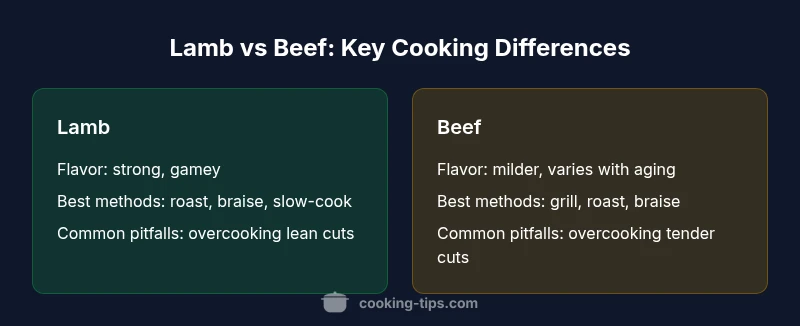
Lamb and beef diverge in flavor profiles and fat distribution, and these differences are often the main reasons home cooks perceive one as harder to cook. Lamb typically carries a stronger, more pronounced flavor that can overwhelm delicate seasonings if used indiscriminately. It also tends to be leaner in some cuts and more fatty in others, which means moisture loss can happen more quickly if you overcook a lean shoulder or leg. Beef, by contrast, often features more consistent marbling in common cuts like rib and chuck, which helps maintain moisture during searing and roasting. This marbling can make beef feel more forgiving when heat fluctuates or when a cook errs on the side of higher doneness. The practical takeaway: the difficulty isn’t about the species, but about the cut’s fat distribution, moisture retention, and the cooking method chosen.
Temperature Control and Resting as Equalizers
Temperature control is the great equalizer for both meats. Lamb benefits from gentler heat or shorter high-heat phases, especially for lean cuts, to prevent surface drying while the interior comes up to a safe level. Beef can tolerate a broader range of temperatures, but overcooking roasts or tougher cuts still leads to dryness. Resting is equally important for lamb and beef. Resting lets juices redistribute, which dramatically improves juiciness and tenderness. A focused approach—monitoring internal temperature, choosing the right doneness for the cut, and resting before slicing—reduces the perceived difficulty of cooking either meat.
Cut Types Drive Difficulty More Than Species
The most influential factor is the cut you select. Lamb shoulder and leg are superb for braising or slow roasting, and these methods help preserve moisture and develop flavor. Lamb loin or rack, if seared and finished with moderate heat, can be exquisitely tender but risk dryness if overcooked. Beef has equally diverse cut types; ribeye and tenderloin are very forgiving at a range of doneness when handled with proper searing and rest, while tougher cuts like chuck or brisket demand longer cooking and moisture retention strategies. In short: learn the cut’s characteristics, then apply the technique that suits it best.
Practical Techniques That Boost Success
Regardless of meat, a few kitchen habits dramatically improve results. Use a reliable thermometer to catch the exact moment of doneness rather than relying on time alone. Favor cast-iron pans for even searing and oven finishing, and consider a braise for tougher cuts to ensure tenderness. Marinades, when used correctly, can enhance flavor and tenderness for lamb without masking its natural character, while beef benefits from dry-aging notes or simple seasoning to accentuate its inherent beefiness. Finally, ensuring you have a calm cooking environment helps you react to natural variances in meat quality and thickness.
Common Mistakes to Avoid (Lamb and Beef)
Two recurring errors can ruin both meats: cooking on too high heat for too long and skipping resting time. For lamb, the lean cuts dry out quickly if you don’t monitor internal temperature closely. For beef, overcooking a tender cut like a ribeye turns a juicy piece into a dry disappointment. Another pitfall is seasoning too aggressively in an attempt to mask meat flavors; balance is key. Start with moderate seasoning, taste as you go, and adjust to the cut and method you’ve chosen.
Tools and Timelines that Help You Stay Consistent
A few kitchen tools make a big difference: a reliable digital thermometer, a sturdy cast-iron skillet, a good roasting pan, and a heavy-bottom pot for braising. Timelines aren’t universal, but you can build confidence by cooking a few reference recipes with similar thickness and fat content. Track how your meat responds to heat and resting times, then refine your approach. Over time, you’ll see that the real determinant of success is technique, not species.
Substitutions and Flavor Pairings to Consider
If you don’t have lamb on hand, beef can work as a substitute in many dishes where the cooking method and regional flavors are in harmony. When substituting, consider adjusting seasonings to better match the meat’s profile—earthy herbs like rosemary and thyme pair nicely with both, but lamb often takes stronger herbs like cumin or coriander in certain regional preparations. For flavor pairings, think of balance: bright acidity to counter fat, and aromatics that accommodate the meat’s character.
Wrapping It Up: A Practical Guide for Home Cooks
In practice, the decision about which meat is harder to cook should start with the recipe and the cut. A braised lamb shoulder that’s properly seared, braised slowly, and rested will rival any beef dish in tenderness and depth of flavor. Conversely, a well-chosen beef cut finished with a quick, hot sear and a short rest can deliver extraordinary juiciness and complexity. By focusing on cut characteristics, temperature control, resting, and appropriate cooking methods, you can achieve excellent results with either meat.
Comparison
| Feature | Lamb | Beef |
|---|---|---|
| Flavor profile | Lamb: distinct, gamey notes; pairs with bold herbs | Beef: milder flavor; depends on cut and aging |
| Texture and fat distribution | Lamb: variable; leaner in some cuts, variable marbling in others | Beef: typical marbling in common cuts aids moistness |
| Common cooking methods | Lamb: braise, roast, slow-cook; pan-sear for quick service | Beef: grill, roast, braise, pan-sear; many options by cut |
| Doneness guidance | Lamb: often best at medium to maintain moisture; some cuts favor gentler heat | Beef: broad range; depends on cut and preferred texture |
| Best for | Lamb: flavorful, family-style roasts or slow-cooked dishes | Beef: versatile across grills, roasts, and stews |
Benefits
- Flavorful and versatile when paired with bold herbs
- A wide range of cuts enables different cooking styles
- With proper technique, both meats deliver excellent results
- Proper tools and practice improve outcomes for either meat
Cons
- Lean lamb cuts can dry out quickly without careful handling
- Some lamb cuts require longer cooking times and moisture management
- Beef can be overwhelming in flavor if over-seasoned in certain dishes
Lamb is not inherently harder to cook than beef; success hinges on cut and technique
For most home cooks, selecting the right cut and applying proper methods—resting, temperature control, and appropriate cooking techniques—determines success more than meat type. Beef can be more forgiving in some scenarios, but with the right approach, lamb yields exceptional results too.
Quick Answers
Is lamb harder to cook than beef?
Not inherently. The difficulty depends on the cut and cooking method. Lean cuts of lamb require closer temperature control, while beef cuts vary in forgivingness based on marbling and thickness.
Lamb isn’t inherently harder; it’s about the cut and method.
Which lamb cuts are most forgiving for beginners?
Shoulder and leg are generally more forgiving when braised or slow-roasted, while loin can dry quickly if overcooked. Start with shoulder for braises to gain confidence.
Shoulder and leg are great for beginners.
What is the best doneness for lamb and beef?
Many lamb cuts benefit from medium doneness to retain moisture, whereas beef varies by cut, with tougher cuts best braised and tender cuts enjoyed medium to medium-rare.
Lamb is often best at medium; beef varies by cut.
Can I substitute beef for lamb in a recipe?
Yes, with attention to flavor and fat. Adjust seasonings and cooking times; some dishes rely on lamb’s fat for moisture, so monitor texture carefully.
Substitute, but expect flavor and moisture differences.
What kitchen tools help with lamb cooking?
A cast-iron skillet, a reliable thermometer, a roasting pan, and a Dutch oven are especially helpful for searing, roasting, and braising lamb.
Cast-iron, thermometer, and a roasting pan do wonders.
Does marinating affect lamb tenderness?
Marinating can add flavor and help tenderness, especially for tougher cuts; avoid overly long times that can overpower delicate lamb flavor.
Marinades help flavor and tenderness when used wisely.
Top Takeaways
- Match cut to method: shoulder and leg for braise; loin for finishing sear
- Use a thermometer and rest meat for juiciness
- Marinades can help lamb flavor and tenderness
- Practice makes perfect: technique matters more than species