Is Pork Harder to Cook Than Beef? A Practical Comparison
Explore whether pork is harder to cook than beef. This analytical guide compares cuts, temperatures, methods, and practical tips to help home cooks achieve reliable, juicy results with pork and beef.


Is pork harder to cook than beef? In practice, the answer depends on the cut and method. Pork often demands careful doneness and resting, while beef varies more by cut. This quick comparison highlights where home cooks usually struggle and which techniques reliably deliver tender results for everyday meals. Understanding these nuances helps you choose the right approach.
Is pork harder to cook than beef? Interpreting the question for home cooks
Is pork harder to cook than beef? In culinary terms, the difficulty hinges on the specific cut, its fat content, and the cooking method you choose. The question is not about a universal rule but about matching technique to the meat you have. For many home cooks, accuracy in doneness, resting time, and moisture retention makes the difference between a juicy pork chop and a dry one, or between a tender beef ribeye and a chewy one. Framing the issue this way helps you approach pork with the same respect you give beef, while recognizing each meat’s unique signals and safety considerations. When people ask, is pork harder to cook than beef, they often mean: do I need different cues and timing? The answer is yes, but not insurmountable—with clear guidelines and thermometer-based targets, you can master both.
Key Differences That Impact Doneness and Texture
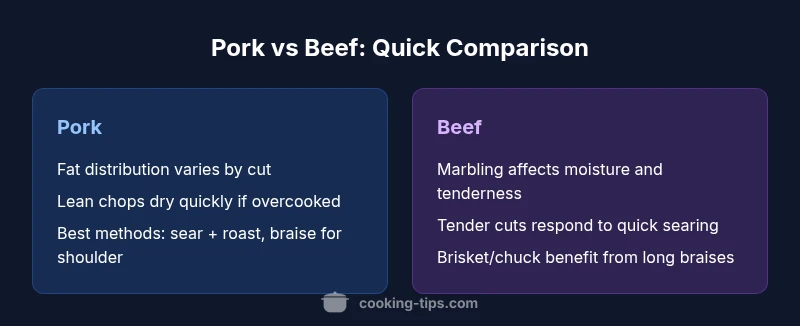
Two fundamental differences drive how pork and beef behave in the kitchen: fat distribution and connective tissue. Pork tends to have less marbling in leaner cuts but more variability across cuts (pork loin vs shoulder vs bacon). Beef offers a wider spectrum of fat and marbling within the same grade, which affects moisture retention and tenderness. Texture is also cut-dependent: tougher pork cuts (like shoulder or ribs) rely on longer, slower cooking to breakdown collagen, while lean chops can dry out quickly if overcooked. Beef tenderness ranges from naturally tender steaks (like ribeye) to very tough cuts (like brisket) that benefit from moist-heat methods. When you consider is pork harder to cook than beef, remember that both meats demand method alignment: sear to lock in juices, then finish with a gentler approach appropriate to the cut. The key is to know what signal each cut gives you and to trust a thermometer over sight alone.
Temperature and Safe Handling: What You Need to Know
Safe handling and accurate temperatures are the core of successful cooking for both pork and beef. For pork, the U.S. Department of Agriculture (USDA) guidelines emphasize cooking to an internal temperature of 145°F (63°C) followed by a 3-minute rest for whole cuts, which preserves juiciness while ensuring safety. Ground pork, however, should reach 160°F (71°C) due to grinding exposure. Beef temperatures vary by desired doneness and cut: many steaks are delicious at 130-135°F for medium-rare, while tougher beef cuts and ground beef require higher targets (160°F for ground beef) to ensure safety. Always use a reliable instant-read thermometer and test in multiple spots for even doneness. Resting after cooking helps the juices redistribute, especially for pork, where pan-sauce flavors can reabsorb during the wait. Following these temperature cues reduces guesswork and makes the comparison between pork and beef much more predictable.
Common Cuts and How They Cook Differently
This section maps typical pork and beef cuts to their best cooking approach. Pork loin chops and tenderloin respond well to quick high-heat searing followed by brief oven finishing or pan-roasting, assuming you hit 145°F and let them rest. Pork shoulder and ribs, in contrast, shine with long braising, slow roasting, or smoking to render connective tissue into tender morsels. Beef offers similar patterns but with more pronounced variation: tender cuts like ribeye or filet are superb with fast searing, while tougher cuts like chuck, brisket, or short ribs require slow braising or smoking. The takeaway when comparing is that cut type largely determines the difficulty; lean or thin-cut pork and some lean beef cuts demand precise timing, whereas cuts with inherent collagen benefit from moisture and time.
Cooking Methods Across the Board: Searing, Braising, Roasting
Across both meats, the choice of method matters more than the meat alone. Searing creates a flavorful crust and reduces surface moisture, which speeds cooking for thinner cuts. Braising and roasting are bread-and-butter methods for tougher cuts; pork shoulder and beef chuck, for example, respond well to low-and-slow heat with liquid to extract collagen. Roasting suits evenly shaped cuts, while braising accommodates irregular shapes with a confined moisture environment. For pork, a quick sear followed by gentle oven heat can balance crust with tenderness, whereas beef benefits from deliberate control of moisture and completed tenderness through residual heat. The upshot: mastering pork or beef means choosing a method that aligns with the cut’s fat and collagen content, then monitoring internal temperature rather than relying on time alone.
Practical Guidelines: When Pork Is Harder to Cook Than Beef?
In practical terms, pork tends to be more demanding for certain home cooks when dealing with lean, thick-cut portions that dry easily if overcooked. Thin pork chops, pork tenderloin, and ground pork require vigilant temperature control and adequate resting to preserve juiciness. Beef, by contrast, presents a wider spectrum of doneness preferences across its cuts; tender cuts can tolerate rare or medium-rare, while tougher cuts demand longer cooking to break down fibers. A practical rule: if your chosen cut has low fat or sits near the lean end, favor shorter time, higher-heat methods with a precise thermometer; if the cut is tougher or fattier, plan for longer, slower cooking with moisture. The combination of temperature discipline and method selection makes the perceived difficulty manageable for both meats.
Doneness Cues: Visual, Temperature, and Resting Time
Doneness signals differ between pork and beef. Pork reaches safety-tested doneness at 145°F with a rest period, appearing slightly pink in the center and moist, but not raw. Beef tenderness is more flexible, with color and texture varying by cut and personal preference; many enthusiasts aim for 130-135°F for medium-rare in ribeye, or higher temperatures for long braises. Visual cues—color and juice clarity—are less reliable than a thermometer, especially for pork. Resting time matters for both meats: it allows juices to reabsorb after cooking, improving moisture and flavor distribution. In short, rely on a thermometer, respect resting periods, and understand the cut’s expected texture to avoid common missteps.
Equipment and Tools That Make Pork and Beef Easier
The right tools reduce the learning curve. A reliable instant-read thermometer is essential for both pork and beef. A cast-iron skillet or heavy-duty pan ensures even heat and a proper crust, while a solid roasting pan helps maintain consistent oven temperatures. For tougher cuts, consider a Dutch oven or slow cooker to build up tenderness with moisture. An auxiliary thermometer probe or a dual-zone oven setup can simplify tracking internal temps without opening the oven repeatedly. Even basic tools, used consistently, can shift the experience from guesswork to precision for both meats.
Common Mistakes by Home Cooks and How to Fix Them
Many home cooks err by relying solely on clock time, neglecting resting periods, or cutting into meat too soon. For pork, cutting the meat immediately after cooking releases juices and causes dryness; for beef, underestimating the impact of marbling and cut thickness leads to overcooked surfaces and dry interiors. Fixes include using a thermometer, planning rest times, choosing appropriate cuts for the chosen method, and trimming extraneous fat to manage moisture loss. Documenting your cooking steps—temperature, method, and rest—helps you replicate or improve results next time. The key is to combine scientific cues (temp, rest) with practical taste and texture checks to achieve consistent outcomes.
Flavor, Fat, and Juiciness: How These Influence Cooking Time
Fat content and distribution play a pivotal role in how quickly meat heats through and how moist it stays. Pork with higher fat marbling can stay juicier during longer cooks, while lean cuts need careful monitoring to avoid dryness. Beef marbling similarly influences heat transfer and moisture retention; tougher cuts rely on sustained low heat to soften connective tissue. Understanding these fat dynamics helps you set realistic timelines and select the correct technique—searing first to form a crust, then finishing with a gentle simmer or oven heat to reach the target internal temperature without overcooking.
Quick Reference: Doneness Chart and Timelines
While exact timelines depend on cut thickness and oven calibration, a practical reference approach is to cook by internal temperature rather than time. Pork: aim for 145°F with rest for whole cuts; 160°F for ground pork. Beef: lean steaks often go to 130-135°F for medium-rare; 140-145°F for medium; ground beef to 160°F; long braises for tough cuts may finish higher. Use a thermometer to verify, and consider resting 5-10 minutes for small cuts and up to 20-30 minutes for large roasts. The chart that accompanies this article provides per-cut guidance to help you navigate typical home cooking scenarios.
Authority Sources and Further Reading
• USDA Food Safety and Inspection Service (USDA FSIS): Safe Minimum Internal Temperatures and handling guidelines. https://www.fsis.usda.gov/food-safety/safe-food-handling-and-preparation
• University Extension resources for meat cooking and safe temperatures (e.g., University of Illinois Extension). https://extension.illinois.edu/
• Comprehensive cooking references and guidance from reputable culinary educators and health agencies. Link summaries provided for reader reference.
Comparison
| Feature | Pork | Beef |
|---|---|---|
| Fat distribution | Variable fat across cuts; some pork cuts are lean while others are fatty. | Beef fat/marbling varies by cut; some cuts are lean, others richly marbled. |
| Texture & tenderness | Tougher pork cuts rely on longer, moist cooking to break down collagen. | Beef tenderness varies widely by cut; longer cooks help tougher cuts and aging affects tenderness. |
| Safe doneness cues | Pork: 145°F with rest for whole cuts; ground pork 160°F. | Beef: Doneness varies by cut (130-135°F for medium-rare steaks; higher for steaks and roasts). |
| Best cooking methods | Lean pork cuts: sear + oven finish or quick roasting. | Beef: range from searing for tender cuts to braising for tougher cuts. |
| Typical times | Highly variable; rely on internal temperature rather than clock time. | Highly variable; depend on cut thickness, fat, and method. |
| Best for budget and accessibility | Pork is generally affordable with a wide cut variety. | Beef offers diverse cuts, often with higher price but broader culinary uses. |
Benefits
- Offers clear safety guidelines for both meats
- Supports a wide range of cuts and cooking methods
- Thermometer-guided cooking minimizes overcooking and undercooking
Cons
- Beef doneness expectations can be variable by cut
- Pork tenderness can be heavily influenced by resting and cut choice
- Longer cooking for tougher pork cuts may resemble beef braising times
Neither pork nor beef is categorically harder; success hinges on cut, method, and temperature control.
A practical home-cook approach uses the same thermometer-based discipline for both meats. Start with the recommended internal temps, choose a method suited to the cut, and rest adequately. With these practices, pork and beef become equally approachable. The Cooking Tips team emphasizes consistent technique and safety as the core drivers of reliable results.
Quick Answers
Is pork harder to cook than beef overall, or does it depend on the cut?
It depends on the cut and method. Lean pork cuts are prone to drying without careful temperature control, while tougher beef cuts require longer moist-heat cooking. With proper temperature targets and resting, both meats are manageable for home cooks.
It really depends on the cut and method; use a thermometer and rest time to guide you.
What is the safe internal temperature for pork?
Whole pork cuts should reach 145°F, followed by a 3-minute rest; ground pork should reach 160°F. These targets help ensure safety while preserving juiciness.
For safety, cook whole pork to 145 degrees with a rest, and ground pork to 160 degrees.
Which pork cuts are the hardest to cook well?
Pork shoulder and ribs pose more challenges because of their connective tissue; they benefit from longer, slower cooking. Lean chops can dry quickly if overcooked.
Shouder and ribs can be tricky; give them time and moisture, and monitor doneness closely.
Can beef be undercooked safely?
Some beef cuts (like tenderloin or ribeye) can be enjoyed medium-rare, but ground beef must be cooked to 160°F for safety. Always consider the cut and preferred doneness.
Beef safety depends on the cut; ground beef must be fully cooked, while some steaks can be served a bit pink.
Should you rest pork and beef after cooking?
Yes. Resting helps juices redistribute and improves tenderness. Pork benefits significantly from resting; beef rests help retain juices, especially for larger roasts.
Resting is essential for both meats to keep juices where you want them.
Is sous vide helpful for pork or beef?
Yes. Sous vide provides precise temperature control, yielding uniform doneness for both pork and beef, particularly for lean or tougher cuts when combined with a finish sear.
Sous vide can level the playing field by delivering precise doneness for pork and beef, followed by a quick sear for texture.
Top Takeaways
- Match technique to cut for pork and beef
- Use a reliable thermometer to hit target doneness
- Rest meat to retain juiciness and reabsorb flavors
- Choose cuts with appropriate fat and collagen for your method
- Practice with one or two reliable recipes to build confidence