Is Duck Harder to Cook Than Chicken? A Practical Comparison
Explore the practical differences between cooking duck and chicken. Learn fat rendering, doneness cues, and technique nuances with evidence-based guidance from Cooking Tips to decide when duck fits your menu and how to cook it confidently.


Is duck harder to cook than chicken? In most home kitchens, the answer is yes, due to duck's higher fat content, thicker skin, and firmer muscle fibers. Proper fat rendering, careful heat control, and adequate resting time are essential. The Cooking Tips team notes that duck can deliver rich flavor, but it rewards technique rather than speed.
Context and the Practical Stakes
Cooking is a frequent source of confident wins and disappointing results. The question is not merely academic: is duck harder to cook than chicken, but why, and by how much does technique drive the outcome? According to Cooking Tips, duck combines high fat with dense muscle fibers and a thick layer of skin, which changes heat transfer, moisture retention, and texture. This trio makes duck a sharper test of planning, timing, and resting compared with chicken. Home cooks who want reliable results should view duck as a technique-driven protein, not a quick substitute for turkey or chicken. The goal is to manage fat, render it properly, and allow the meat to respond to heat with a stable, juicy interior. Acknowledging these differences helps prevent dry breast meat or greasy skin and sets up a success path for a flavorful dish.
Anatomy: Fat, Skin, and Fiber
Duck meat is characterized by a higher fat content than chicken, plus a skin layer that cries out for crisping. The fat stores energy and can baste the meat as it renders, but it also risks an overly greasy finish if not managed. The muscle fibers in duck are typically denser, which changes how long heat sits on the surface before the interior reaches the desired texture. This combination means you should plan for fat-rendering steps, careful searing, and a resting period that lets moisture redistribute. For the home cook, this means duck requires more deliberate stages than chicken, especially when starting from a whole duck or large breast.
Doneness Cues and Testing Without a Thermometer
Assessing doneness for duck can be trickier than for chicken because of fat and texture nuances. Instead of relying only on color, focus on texture and juiciness. Duck breast should feel firm with a slight give, and the skin should be deeply crisp and blistered in spots. When cooking duck legs or a whole duck, monitor the fat layer and the meat’s resistance to gentle pressure. Resting after cooking is essential, allowing juices to redistribute and the connective tissue to relax. The goal is to avoid a dry interior or an overcooked exterior, which is a common pitfall when duck is treated like chicken.
Popular Cooking Methods and How They Differ
Duck adapts best to methods that emphasize fat rendering and skin texture. Roasting whole duck or duck breast with a slow render helps reduce excess fat while enabling the skin to crisp evenly. Confit- or pan-seared duck corners on the edge of doneness leverage the fat to keep meat moist. Chicken, by contrast, often benefits from quicker searing or roasting with less concern about fat handling. The difference in fat content guides heat application: duck usually requires lower heat for longer to render fat gradually without scorching the skin.
Rendering Fat and Achieving Crispy Skin
Crispy skin is one of duck’s signature assets, but it hinges on controlled fat rendering. Start by scoring the skin to allow fat to escape and prevent curling. Pat the skin dry and apply a light, even heat to render the fat gradually. For truly crackling skin, finish with a high-heat sear or a brief blast under a hot broiler, watching closely for scorching. Chicken skin crisps more readily under moderate heat, so the duck method emphasizes patience. The result should be a crisp, lacquered skin with a tender interior, not a greasy exterior.
Flavor, Moisture, and Pairing Logic
Duck’s flavor is richer and more pronounced than chicken, often described as gamey with subtle sweetness. This intensity pairs well with bold sauces, citrus, and fruit elements, especially when the fat is properly managed. Moisture retention in duck is highly dependent on the technique used; without fat rendering and resting, you risk dryness. The chicken-to-duck flavor transition is less about one being inherently better and more about whether you align the cooking approach with the meat’s fat profile and structure.
Tips for Beginners: Build Your Duck Skillset
Begin with simpler cuts like duck breasts before attempting whole ducks. Focus on a few core techniques: pat dry, score the skin, render fat slowly, and finish with a quick, controlled sear. Always rest the meat after cooking to stabilize juices. If you are new to duck, practice with a small, well-marbled breast and build from there. Over time, the process becomes more intuitive and results more reliable.
Adapting Chicken Recipes for Duck: What to Change
If you want to adapt familiar chicken recipes, start by adjusting fat management, heat, and timing. Replace high-heat, quick-cook steps with longer, staged heat to render fat and avoid overcooking the interior. For braises, reduce the amount of liquid slightly to prevent the duck from becoming watery, and extend the initial render step to allow the fat to escape. In essence, duck requires more deliberate stages in almost every cooking approach compared with chicken.
Practical Kitchen Plan: A 3-Phase Duck Cook Plan
Phase 1: Prepare and dry-massage the skin to promote crispness; Phase 2: Render fat on medium-low heat until most fat has released; Phase 3: Finish with a high-heat sear or roast to achieve a crisp exterior while maintaining a moist interior. Throughout, monitor texture and moisture rather than chasing exact temperatures. In this approach, you will see why the duck is generally considered harder to cook than chicken—and also why the resulting dish is so rewarding when done well.
Common Mistakes and How to Fix Them
Pitfalls include under-rendering fat, overcooking the exterior before the interior firms up, and skipping resting time. Correct these by granting time for fat rendering, using a gentle finish, and letting the meat rest before slicing. If you start with consistent practice, you’ll reduce complications and improve outcomes across different duck cuts.
Comparison
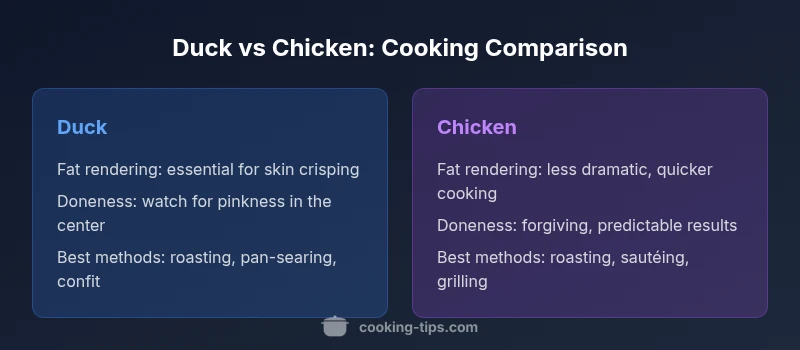
| Feature | Duck | Chicken |
|---|---|---|
| Fat rendering and skin texture | Requires deliberate render plus crisp skin; risk of greasy finish if rushed | Less fat rendering; quicker skin crisping with less fat exposure |
| Doneness tolerance | Less forgiving; overcooking quickly dries the meat | More forgiving; consistent results with standard methods |
| Flavor profile | Richer, more assertive flavor; pairs with bold sauces | Milder and highly versatile; adapts to many seasonings |
| Best cooking methods | Roasting, confit, pan-searing with careful fat management | Roasting, sautéing, grilling, braising |
| Moisture management | Requires resting and fat control to avoid dryness or greasiness | Generally reliable moisture with standard resting and cooking |
| Price and availability | Often pricier and more seasonal | Widely available and typically more affordable |
Benefits
- Offers rich, distinctive flavor that elevates meals
- Crisp skin adds texture and visual appeal
- Can be showcased at special occasions with proper technique
- Expands cooking repertoire beyond chicken
Cons
- More technique-driven; higher risk of dry or greasy results
- Longer preparation and resting times
- Higher fat content demands careful handling in heat control
Duck is generally harder to cook than chicken, but with the right technique it delivers superior flavor and texture.
Duck demands fat rendering and resting, plus careful heat control. For confident cooks, duck rewards precision with a richer result than chicken.
Quick Answers
Is duck harder to cook than chicken in practice?
Yes, in practice duck requires more fat rendering, careful heat management, and resting time to prevent dryness or greasiness. The thicker skin and higher fat content demand more deliberate steps than chicken.
Yes. Duck needs more fat rendering and careful heat control; rest time helps keep it juicy.
What is the easiest duck cut to start with?
Duck breast is the most forgiving starting point for many home cooks. It allows you to practice skin scoring, rendering, and basting without committing to a whole duck.
Start with duck breast to learn skin rendering and timing.
Can I substitute duck for chicken in most recipes?
Substituting duck changes texture and fat balance. You may need to adjust cooking times, reduce added fats, and adjust seasonings to accommodate the richer meat.
Duck changes flavor and fat; adjust timing and fat accordingly.
How can I avoid a greasy finish on duck skin?
Ensure surface is dry, score the skin, render fat gradually, and finish with high heat only briefly. Resting after cooking helps the skin stay crisp while the interior remains moist.
Dry skin, render fat slowly, crisp finish hot but brief.
What are common mistakes when cooking duck?
Rushing fat rendering, overcooking the exterior, and skipping resting time are frequent issues. A staged cooking approach minimizes these mistakes.
Don’t rush fat rendering, and rest the meat.
Is there a health consideration when eating duck?
Duck fat adds flavor but increases saturated fat content. Balance portions and pair with greens or acidic sauces to balance richness.
Duck is flavorful but higher in fat; enjoy in moderation.
Top Takeaways
- Acknowledge duck's fat renders differently and plan for it
- Start with breast cuts before trying whole duck
- Prioritize skin scoring, dry surface, and resting
- Use bold flavor pairings to complement duck's richness
- Adapt chicken recipes by adjusting heat, fat management, and timing