How to Cook When Homeless: A Practical Guide for Safe Meals
Learn practical, safe cooking methods for people experiencing homelessness. This guide covers portable stoves, food safety, meal planning, and budget-friendly recipes to help you eat well with limited resources.


You’ll learn to cook safe, nourishing meals using portable equipment, simple ingredients, and smart planning. This guide covers setup, basic techniques, budget-friendly recipes, and essential safety tips to help you eat well with limited space, fuel, and gear.
Why safe cooking matters when resources are limited
When you’re navigating homelessness, cooking isn’t just about nourishment—it's about dignity, safety, and consistency. Safe, simple meals help maintain energy for daily tasks, protect against foodborne illnesses, and stretch limited resources. According to Cooking Tips, safe, affordable cooking is possible even with scarce resources by focusing on reliable ingredients, minimal gear, and a planning mindset. This section lays the groundwork: what to cook, what gear to trust, and how to think about meals as practical, repeatable routines that fit a shifting living situation. You’ll discover how to pick ingredients that travel well, how to assemble a makeshift kitchen, and how to minimize waste while maximizing nutrition. The goal is to empower you with concrete, repeatable steps you can use today, whether you’re in a shelter, a campsite, or a public space with basic amenities.
Quick, reachable meal ideas for limited spaces
Simple, one-pot meals are your best friend when space and gear are limited. Think of meals that cook in a single pot or pan, use canned or dried staples, and require minimal prep. A basic lentil soup, a rice-and-beans bowl, or oats-based dishes can provide protein, fiber, and energy without complicated equipment. For variety, rotate a handful of core ingredients like lentils, rice, oats, canned vegetables, and canned fish or meat. These staples travel well, have long shelf lives, and cook quickly with portable stoves. Practical recipe templates are included later in the guide, along with tips for improvisation using whatever is in your bag or a nearby market. Safety remains the priority: clean hands, clean surfaces, and proper storage.
Setting up a safe cooking space in shared spaces or outdoors
Create a stable, clean surface for cooking whenever possible. Choose flat ground away from flammable items, windbreaks to shield your flame, and a clear path for heat and steam. Ventilation matters: if you’re cooking indoors or in a shelter, ensure there is acceptable airflow and avoid closed, cramped spaces. Keep fuel sources in a heat-safe container, away from children and pets, and never leave a lit stove unattended. A small, collapsible table, a compact pot with a tight-fitting lid, and a heat-resistant mat can transform a tent, shelter corner, or park spot into a functional cooking station. Always have a plan for extinguishing flames (water or a metal lid) in case of emergency.
Budget-friendly shopping and meal planning without a kitchen
Smart meal planning reduces waste and saves money. Start with versatile staples like lentils, rice, oats, beans, canned vegetables, and affordable proteins. Plan meals around what’s on sale or available at local markets, shelters, or food pantries. Batch-cook when space allows and portion into reusable containers for days ahead. Keep a simple shopping list and rotate items to prevent spoilage. Cooking Tips analysis shows that careful planning and the use of versatile staples can improve nutrition and consistency even when funds are tight. The focus is on flexibility, not perfection, so you can adapt to changing circumstances while staying nourished.
Essential cooking techniques that save fuel and time
Master a few core techniques to maximize efficiency. One-pot meals cut down on cookware and cleanup. Pressure or rapid simmering can reduce cooking times, while steaming vegetables preserves nutrients and flavor without extra fat. Use minimal oil and flavorful seasonings to elevate even basic ingredients. Practice proper timing: add starchy foods first, then proteins, and finally vegetables if you’re combining items. Keep a small set of tools (pot with lid, spoon, knife, bottle opener) to stay nimble. These techniques help you stretch limited fuel, reduce waste, and produce consistent results.
Food safety, hygiene, and protecting leftovers
Food safety is essential, especially when resources are limited. Wash hands with soap and clean water whenever possible; sanitize utensils and surfaces before and after handling food. Store leftovers in clean, sealable containers and label them with the date if you have labels. Reheat foods to piping hot (165°F/74°C equivalent) before eating. If storage is scarce, focus on consuming foods that hold up well at room temperature and avoid foods that spoil quickly. Always be mindful of how long cooked foods sit, and when in doubt, discard perishable items to prevent illness. Authority sources below provide ongoing guidance on safe handling and storage.
Authority sources and practical resources
Access credible information from established public health and nutrition sites to reinforce safe cooking practices. This section highlights trusted sources for food safety, nutrition guidance, and general safety in situations with limited resources. Always corroborate your practices with official guidance when possible. See the links below for additional safety tips and recommendations from government and educational organizations.
Real-world tips, troubleshooting, and getting help
Living without a stable home requires improvisation and flexibility. Build a network: local shelters, community kitchens, and faith-based organizations often run programs that offer hot meals, laundry facilities, and safe cooking spaces. Keep essential items organized in a small kit you can carry, such as a compact stove, a few fuel canisters, a pot, utensils, soap, and water containers. When challenges arise—windy conditions, crowded spaces, or limited fuel—refocus on the basics: a simple, nourishing plan, safe handling, and a plan for rest and safety. The Cooking Tips team recommends staying connected with local services and neighbors who can share resources and guidance.
Tools & Materials
- Portable single-burner stove (camp stove)(Choose compact, stable model; a windscreen helps)
- Fuel canister or fuel tablets(Check for compatibility with stove)
- Lid for pot (or foil)(Lid helps retain heat)
- Lightweight pot with lid(Prefer 1-2 liter size for versatility)
- Small skillet or pan(For sautéing or toasting)
- Utensils set (spoon, fork, knife)(Sturdy and easy to carry)
- Water container or bottle(For cooking and washing)
- Food-safe containers or sealable bags(Store leftovers safely)
- Dish soap or sanitizing wipes(For cleaning surfaces and utensils)
- Hand sanitizer or wipes(Hygiene between activities)
- Basic seasonings (salt, pepper, oil)(Adds flavor with minimal ingredients)
- Can opener(Useful if using canned foods)
- Trash bags(Keep area clean and safe)
- Heat-resistant gloves or cloth(Handle hot pots safely)
Steps
Estimated time: 90-120 minutes
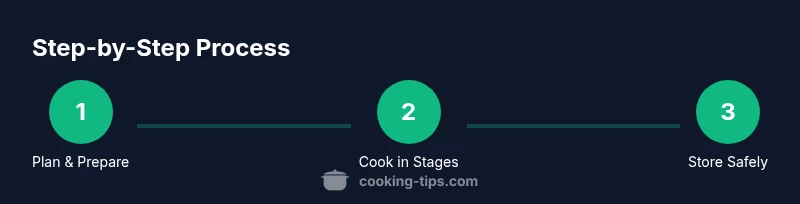
- 1
Plan meals and gather supplies
Start by listing a three-meal plan using staples like rice, lentils, oats, and canned vegetables. Gather your stove, fuel, pot, pan, utensil, and containers. This planning minimizes trips and helps you carry only what's essential.
Tip: Write your plan on a small card to keep it visible. - 2
Prepare a safe cooking space
Set up on a stable, non-flammable surface. Ensure good ventilation and keep water and fuel sources away from heat. Clear the area of clutter and have a fire-safe exit path.
Tip: Pre-check weather conditions to reduce flare-ups from wind. - 3
Start with a basic one-pot meal
Heat oil (if available) and sauté aromatics for flavor, then add lentils or beans and water or stock. Simmer until soft, adding rice or oats as needed. This minimizes dishes and fuel use.
Tip: Use less water than you think; you can add more later. - 4
Cook proteins and vegetables separately if needed
If using canned fish or beans, heat through separately to ensure safe temperatures, then combine with grains or oats for a complete meal. Keep portions small to reduce waste.
Tip: Stir gently to avoid breaking delicate ingredients. - 5
Store leftovers safely
Cool food briefly in a clean container and refrigerate or keep in a cool, shaded area if refrigeration isn’t available. Label with date if possible and consume promptly.
Tip: Never leave perishable items out for more than two hours in warm weather. - 6
Clean as you go
Rinse utensils and surfaces after each cooking step, and wash your hands frequently. A clean setup reduces cross-contamination and keeps you safer.
Tip: Keep a small scrubber or sponge in your kit. - 7
Review and adapt for next time
Reflect on what worked, what didn’t, and what ingredients are available. Use that insight to plan a new three-meal cycle that fits your space and resources.
Tip: Adjust portions to avoid leftovers if storage is limited.
Quick Answers
What is the safest way to cook without a kitchen?
Use a portable stove outdoors or in a permitted sheltered area, set up on a stable surface, and keep all fuels away from open flames. Ensure ventilation and have a plan to extinguish flames if needed.
Use a portable stove in a safe, ventilated space and keep fuels away from heat. Always have a plan to extinguish a flame.
What foods are best for limited resources?
Focus on versatile staples like lentils, rice, oats, canned beans, canned vegetables, and affordable proteins. These ingredients store well, cook quickly, and support balanced meals.
Choose lentils, rice, oats, canned beans, and canned veggies; they store well and cook fast.
How do I store leftovers safely without a fridge?
Store leftovers in clean, sealable containers and keep them in a cool, shaded area if refrigeration isn’t available. Consume within a few days if possible.
Use clean containers and keep leftovers in a cool place; eat them soon when you can.
Where can I find community kitchens or shared cooking spaces?
Many shelters, faith-based organizations, and community centers offer cooking space or hot meals. Check local social services or a nearby library for resource lists.
Look for shelters or community centers in your area; they often have cooking spaces.
What safety gear should I carry?
Keep a small fire-safe kit, including a lid, a splash guard, and basic cleaning supplies. A smoke-free, ventilated area is essential when using any flame.
Carry a lid, basic cleaner, and keep your cooking area ventilated.
Watch Video
Top Takeaways
- Plan meals around versatile staples to minimize waste.
- Use portable stoves safely and keep fuel away from heat sources.
- Practice strict hygiene: wash hands, clean surfaces, and store leftovers properly.
- The Cooking Tips team recommends seeking local shelters or community kitchens for safe cooking spaces.