Cook Without a Stove: A Practical No-Stove Cooking Guide
Master no-stove cooking with practical tips, safe setups, and step-by-step methods using microwaves, slow cookers, grills, and more. Cooking Tips guides you every step.


Goal: cook without stove using accessible heat sources like a microwave, electric kettle, slow cooker, Instant Pot, toaster oven, grill, or solar cooker. This guide covers safe setup, accurate timing, and practical recipes that work with minimal equipment. By the end, you’ll prepare balanced meals, reheat leftovers safely, and adapt pantry staples into complete dishes without a traditional stovetop.
Why cook without a stove
Cooking without a traditional stovetop is not a throwaway skill; it’s a practical approach for real life. It helps during power outages, when you live in a tiny apartment, or when the weather makes heating the kitchen undesirable. The Cooking Tips team has consistently found that home cooks can create reliable, tasty meals with a measured plan and a small toolkit. The key is to understand what each no-stove appliance does best and to arrange your ingredients so that you can move from one task to the next without waiting for heat to come up.
With a no-stove strategy, you learn to heat liquids, hydrate grains, and finish dishes using finishing steps that add color and texture. For example, grains can be started in a microwave or kettle and finished in a slow cooker or grill. Vegetables may be steamed in a microwave or kettle, then tossed with herbs and a quick sauce. Leftovers can be quickly reheated in a toaster oven for a crisp edge or warmed through in a grill pan on a portable burner. The benefits include energy efficiency, less kitchen heat in warm weather, and a surprising variety of dishes that still feel fresh and satisfying. Once you practice a few base techniques, you’ll be able to assemble complete meals with minimal fuss and cookware.
No-stove heat sources explained
No-stove cooking relies on a mix of appliances that generate heat with different intensities and timings. A microwave excels at reheating, steaming vegetables, and cooking grains quickly if you adjust water ratios. An electric kettle is perfect for rapid water heating, rehydrating dried foods, or steaming. A slow cooker or Instant Pot handles long-simmered dishes and one-pot meals with minimal supervision. A toaster oven offers baking and browning in small batches, while a grill or portable burner adds a seared finish or outdoor flavor. Solar cookers provide an eco-friendly option when sunlight is available. Each method has its quirks, so pairing two or three sources in a single dish often yields the best results. As you explore, you’ll find that most pantry staples can be transformed into complete meals using combinations of heat sources and smart prep. Cooking Tips analysis shows that home cooks who experiment with multiple appliances tend to expand their weekly menus and reduce energy consumption.
- Microwave uses: quick grains, reheat, steamed veggies.
- Slow cookers/Instant Pots: stews, beans, and tougher cuts.
- Grills/toaster ovens: browning, roasting, small-batch baking.
- Water-based methods: simmering in kettle or pot for soups and sauces.
- Outdoors: grilling and solar cooking for flavor and efficiency.
Planning safety basics
Safety is the foundation of no-stove cooking. Always use microwave-safe containers; avoid metal in microwaves and do not seal containers tightly when heating liquids. Keep a water bath or heat-safe bowl ready for gentle heating, and monitor cookware for hot spots. Use a thermometer to verify that grains and proteins reach safe temperatures, and never leave appliances unattended when in use. If you’re charging multiple devices or planning longer cooks, place them on heat-resistant mats and maintain ventilation to prevent overheating. The goal is reliable results without compromising safety. With the right setup, you can prevent spills, burns, and cross-contamination while enjoying delicious meals. If you’re new to no-stove techniques, start with simple recipes and gradually increase complexity as you gain confidence.
Building a no-stove meal plan
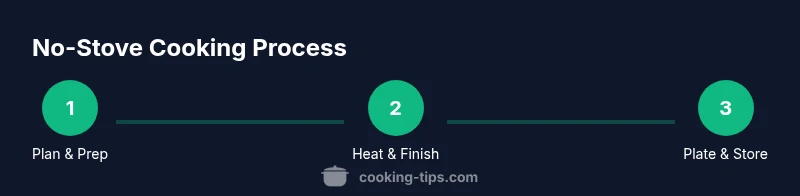
Constructing a no-stove meal plan revolves around three principles: hydrate, heat, and finish. Hydration means soaking grains or rehydrating dried beans so you can cook them quickly in a microwave or kettle. Heat involves using your primary heat source to bring components to temperature, while finish provides texture, color, and aroma—usually via grilling, broiling, or a brief bake in a toaster oven. Start with a balanced plate: a grain or legume, a protein, and vegetables. Prep components ahead of time (cook extra grains, soak beans) so dinners come together fast on busy nights. Use batch cooking to stock your fridge with ready-to-eat elements for multiple meals. The result is a flexible, week-long plan that doesn’t rely on a traditional stove. You’ll find it easier to maintain variety while controlling time and energy usage.
Recipe ideas: grains and legumes (no-stove)
No-stove cooking shines with grains like rice, quinoa, barley, and oats, as well as legumes such as lentils and chickpeas. A basic microwave quinoa recipe, when paired with steamed vegetables from a kettle steam basket, can become a complete lunch. Soaking beans overnight and finishing them in a pressure cooker or slow cooker dramatically reduces cooking time. For oats, a quick microwave porridge with fruit makes a satisfying breakfast. You can also prepare a pantry-friendly lentil soup using a kettle to heat the base and a slow cooker to finish flavors. The key is to maintain moisture with broth or water and to adjust seasonings after heating to taste.
- Use pre-soaked legumes to cut time.
- Keep a small arsenal of broths, canned tomatoes, and spices for flavor variety.
- Batch-cook grains for several meals.
Protein and vegetables without a stove
No-stove recipes thrive with protein sources that don’t require quick searing on a flame. Lentils, beans, canned tuna or salmon, eggs (microwave-friendly), and tofu work well with microwave or slow-cooker methods. Pair proteins with quick-steamed veggies produced in a kettle steamer, or grill or broil vegetables in a toaster oven for texture. You can also finish with a quick pan-sear on a grill for added color. When planning meals, balance protein, starch, and vegetables to ensure satiety. Always check that protein reaches safe temperatures and reheat leftovers to at least 165°F (74°C) when required.
- Lentils and beans adapt well to long, gentle heating.
- Eggs can be cooked in the microwave with proper containers.
- Vegetables should retain crunch and nutrients with gentle steaming.
Safety, reheating, and food safety
Reheating remains critical when no-stove cooking. Reheat leftovers to steaming hot, ideally to 165°F (74°C) if poultry or meat was involved. Store perishable ingredients in the fridge below 40°F (4°C) and use airtight containers to prevent contamination. When reheating, stir midway to ensure even heating and avoid cold centers. Use separate cutting boards and utensils for raw vs. cooked foods to prevent cross-contamination. Practice mindful hand hygiene and clean surfaces after handling raw ingredients. These steps help maintain flavor and safety while you build confidence with no-stove techniques.
Authoritative sources
- https://www.fsis.usda.gov/food-safety
- https://www.cdc.gov/foodsafety/index.html
- https://extension.osu.edu/food-safety-resources
No-stove meal ideas for different occasions
- Quick weekday lunches: microwave quinoa bowls with roasted veggies and canned beans.
- Weekend brunch: oats cooked in the microwave with chopped fruits and nuts.
- Outdoor dinners: foil packets on a grill with vegetables, potatoes, and fish or chicken.
- Power outage meals: canned legumes simmered in a kettle with herbs and starch from ready-cooked grains.
- Student-friendly meals: mug omelets, instant oats, and spice-based lentils that reheat well.
Tools & Materials
- Microwave(Ensure turntable rotates; use microwave-safe containers.)
- Electric kettle(For rapid water heating and steaming.)
- Slow cooker / Instant Pot(Choose one; Instant Pot can do multiple functions.)
- Toaster oven(Small-batch baking and browning.)
- Grill or portable burner(Searing or outdoor cooking.)
- Microwave-safe bowls/containers(Glass or ceramic with vented lids.)
- Thermometer(Check internal temps for safety.)
- Heatproof gloves(Protect hands when handling hot vessels.)
Steps
Estimated time: 60-90 minutes
- 1
Assess your meal plan
Define what you want to cook and list ingredients. Consider which components can be prepared ahead of time using no-stove methods and identify the primary heat source you'll rely on.
Tip: Start with 1-2 simple meals you can master in a day. - 2
Select your heat source
Choose the appliance that best suits the dish (microwave for grains, slow cooker for stews, grill for browning). Align cooking times to the appliance’s strengths.
Tip: Match the dish to the stove-free method that minimizes steps. - 3
Prep ingredients and containers
Wash, chop, and arrange ingredients in microwave-safe bowls. Have measuring cups, spoons, and lids ready to keep everything organized.
Tip: Use uniform cuts for even cooking. - 4
Cook base components
Cook grains or beans in the microwave or kettle according to package directions. Use broth to boost flavor and adjust water as needed to prevent drying.
Tip: Check water levels halfway through cooking. - 5
Finish with heat and texture
Finish in toaster oven or grill to brown edges or crisp toppings. If using a slow cooker, switch to a high-heat setting for a quick finish.
Tip: Don’t skip the finish; it adds flavor and texture. - 6
Check safety and temperatures
Verify that grains and proteins reach safe temperatures with a thermometer. Reheat leftovers to 165°F (74°C) when needed.
Tip: If unsure, reheat longer and stir to avoid cold spots. - 7
Plate and serve
Let hot dishes rest briefly, then serve with fresh vegetables or a squeeze of citrus. Use airtight containers to store leftovers.
Tip: Label with date and contents for easy future use. - 8
Clean up and plan next meal
Wash utensils, wipe surfaces, and plan your next no-stove meal using the same approach for consistency.
Tip: Build a mini library of go-to no-stove recipes.
Quick Answers
Is it safe to cook with a microwave as a stovetop substitute?
Yes, many foods cook well in a microwave when using microwave-safe containers and proper power levels. Avoid sealed containers and follow product guidelines for timing.
Yes. Use microwave-safe containers and follow guidelines to cook safely.
Can I rely on a slow cooker for all meals?
Slow cookers excel at long-simmered dishes, beans, and stews, but not all meals. Pair with other appliances for quick components and browning.
Great for stews and beans, but not ideal for quick meals.
What foods are best for no-stove cooking?
Grains like rice and quinoa, lentils, canned beans, vegetables, eggs, and pantry staples work well with no-stove methods.
Good options include grains, legumes, vegetables, and eggs.
How should I reheat leftovers safely?
Reheat to steaming hot, ideally to 165°F (74°C) for safety, and stir to heat evenly. Use microwave or oven toaster for best results.
Reheat until steaming hot and evenly heated.
Do I need special cookware?
No-stove cooking works with microwave-safe glass/ceramic, silicone, and nonstick containers. Avoid metal in microwave and select cookware designed for high heat.
Use microwave-safe containers and avoid metal.
What about safety with electricity and gas?
Carefully monitor appliances, avoid overloading outlets, and ensure proper ventilation. For outdoor grilling, follow gas or charcoal safety guidelines.
Be mindful of electrical safety and proper ventilation.
Watch Video
Top Takeaways
- Master no-stove basics with core heat sources.
- Plan meals around available appliances to save time.
- Prioritize safety with temperatures and containers.
- Finish with texture for flavor and appeal.
- Practice builds confidence and expands meal options.