How to Cook Without a Stove
Discover stove-free cooking with microwaves, kettles, grills, and no-heat options. This guide covers gear, safety, meal ideas, and a step-by-step approach to reliable stove-free meals anywhere.


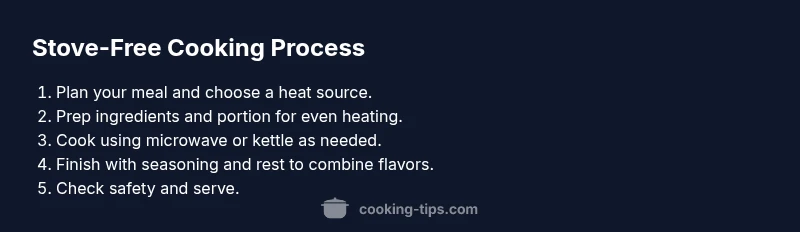
How to cook without a stove is entirely doable with common tools and smart planning. You’ll learn stove-free methods using a microwave, electric kettle, hot plate, or grill, plus no-heat options. This quick answer outlines practical steps to prepare reliable meals when a stove isn’t available, including safe temperature guidelines, tool tips, and meal ideas you can start today.
Stove-free cooking fundamentals
Food safety and reliable flavor start with smart planning when you don’t have a traditional stove. The core idea is to maximize heat efficiency and minimize wasted steps. Begin with a simple meal plan that uses one primary heat source and a couple of quick techniques. Microwaves heat foods by targeting moisture, while an electric kettle heats water rapidly for soups, grains, and hydration. A portable hot plate can substitute for sautéing and simmering, and a compact grill imparts char and flavor to vegetables and proteins. No-stove cooking isn’t about shortcuts; it’s about choosing methods that preserve texture, nutrients, and safety. In this guide you’ll learn a practical framework: select the right heat source, prep ingredients in advance, and follow precise timing to avoid overcooking. You’ll also see how to pair no-heat steps with fast-heating methods to finish meals in a single, efficient workflow. The goal is confidence: plan, execute, and adjust meals on the fly, even when a traditional stove isn’t available.
According to Cooking Tips, stove-free cooking works best when you treat heat sources like tools rather than constraints. With the right gear and a clear routine, you can craft meals that satisfy cravings without bending over a hot stove. Use this section as your blueprint for choosing approaches that fit your space, budget, and lifestyle.
Equipment and heat sources that actually work without a stove
The following tools and devices are the workhorses of stove-free cooking. Each heat source has strengths and limits, so mix and match to fit your kitchen or travel scenario.
- Microwave: Great for quick reheats, steaming vegetables, steaming fish, and rehydrating grains. Tips: use microwave-safe containers with a vented lid; cover to trap steam.
- Electric kettle: Ideal for boiling water for instant oats, cup noodles, soups, and blanching vegetables. Pros: fast, energy-efficient for small portions. Cons: limited to liquids or dishes that tolerate simmering after addition of hot water.
- Portable electric hot plate: Enables sautéing and skillet-cooking with minimal equipment. Use a nonstick pan or cast-iron for better heat distribution. Always preheat before adding ingredients.
- Grill or portable grill pan: Adds smoky flavor and char; suitable for proteins and veggies. Manage heat carefully to prevent burning and ensure even cooking.
- Oven (as a secondary heat source): If you have access to a dorm or office oven, you can finish dishes that started on microwave or kettle. It’s slower but reliable for baking or roasting small portions.
- Solar or alternative cooking methods: In sunny conditions, solar ovens or sunlit jars can cook simple meals. This is more niche but handy for outdoor living.
When choosing a heat source, consider your food type, time, safety, and portability. For beginners, start with the microwave and kettle duo, then layer in the hot plate for sautéing and the grill for flavor. The combination makes stove-free meals feel familiar rather than experimental.
No-cook meals and quick-heat options for busy days
No-cook meals are perfect when time is tight or a power outage occurs. They rely on safe, ready-to-eat ingredients with minimal handling. Think sandwiches, salads, grain bowls assembled with pre-cooked staples, yogurt parfaits, and dips that pair with vegetables, nuts, and crackers. For hot meals, you can heat components that truly benefit from heat using fast methods: pre-cooked grains, canned beans, and pre-cut vegetables, with heat applied to only the necessary parts.
- Grain bowls: Use pre-cooked rice or quinoa and heat briefly with hot water in a bowl or kettle to rehydrate, then top with beans, roasted vegetables, and a drizzle of olive oil and lemon.
- Protein options: Canned tuna or chicken, or beans, offer protein without heavy cooking. Combine with chopped vegetables and a quick vinaigrette.
- Fresh produce and dairy: Pre-washed greens, sliced fruit, yogurt, and hummus provide texture, moisture, and flavor without heating.
- No-cook breakfast ideas: Overnight oats, yogurt parfaits, and chia puddings with fruit and nuts.
- Quick heat with a kettle: For a warm bowl, pour boiling water over quick-cook oats, couscous, or instant polenta and let sit until tender.
Safety note: If you heat foods that require thorough cooking (like chicken or turkey), ensure they reach a safe internal temperature. When in doubt, opt for pre-cooked proteins and reheat briefly rather than starting raw. With practice, you’ll assemble nutritious stove-free meals in minutes.
Safety and best practices for stove-free cooking
Safety is the foundation of stove-free cooking. Without a traditional oven or stovetop, you must pay closer attention to handling, heat, and timing. Always wash hands and surfaces before prep, use separate cutting boards for raw meats and vegetables, and keep cold ingredients chilled until use. When heating, use heatproof containers and lids to prevent splatters and preserve moisture.
- Temperature awareness: Use a food thermometer when reheating or handling proteins. Safely cooked proteins should reach appropriate internal temperatures for safety, even if heat sources are limited.
- Cross-contamination prevention: Use separate utensils for raw vs. cooked foods, and clean equipment between steps.
- Safe reheating practices: Reheat leftovers to steaming hot and avoid multiple reheating cycles which degrade texture and flavor.
- Fire prevention: Never leave heat sources unattended, especially kettles and grills. Have a small fire-safe area free of flammable materials and keep a lid ready to smother small flare-ups.
- Safe storage: Keep perishables cold or in insulated bags while traveling. If you won’t eat a dish in one sitting, refrigerate promptly to slow bacterial growth.
Troubleshooting common issues: uneven heating in microwaves can be improved by stirring and rotating foods, using shallow containers for even exposure, and cutting ingredients into uniform sizes. When using a kettle or hot plate, cut foods into evenly sized pieces so heat penetrates evenly. These practices help you maintain texture and flavor while keeping safety at the forefront.
Planning meals and sample stove-free menus
Planning helps you cook confidently without a stove. Start with a simple weekly plan that targets a single heat source per meal and uses pantry staples. Build a rotating set of go-to meals you can mix and match to avoid repetition and keep your energy high.
- Breakfast ideas: Oatmeal or overnight oats prepared with hot water from an electric kettle; yogurt with fruit and granola; toast with avocado and tomato toasted in a grill pan.
- Lunch ideas: Microwave veggie rice bowls with canned chickpeas, chopped veggies, and a lemon-tahini dressing; tuna salad served with whole-grain bread; cold pasta salad using pre-cooked pasta and vinaigrette.
- Dinner ideas: Quick-grill chicken or tofu with roasted veggies; sizzling vegetables on a hot plate with soy-ginger glaze; soups or stews started on the kettle and finished in the microwave.
- Grocery list strategy: Prioritize ready-to-eat proteins, canned goods, fresh produce with longer shelf life, and whole grains that only need hot water. Keep a stock of condiments and seasonings to customize meals.
Sample 5-day plan: Day 1 microwave veggie curry with pre-cooked rice; Day 2 tuna wrap with crunchy veggies; Day 3 chickpea and quinoa bowl heated with hot water; Day 4 grilled veggie skewers; Day 5 yogurt and fruit bowl with nut mix. Adjust portions to fit your appetite and energy needs.
Troubleshooting common stove-free cooking challenges
- Uneven heating: Break ingredients into uniform pieces and stir to distribute heat.
- Texture gaps: If vegetables are underdone, finish with a quick steam cycle using a covered container.
- Flavor development: Use acids (lemon juice, vinegars) and added fats to finish sauces, which helps elevate flavor without long cooking times.
- Equipment limitations: If you don’t have a grill, finish with a hot plate or bake small portions in an alternative way.
- Power outages or travel: Rely on cold snacks, enhanced shelf-stable foods, and portable heat sources for safe meals when power is limited.
If you’re ever unsure about technique, start with a simple base recipe and adjust heat step by step, testing flavors and textures as you go. Practice builds confidence, and over time stove-free cooking becomes second nature.
Quick tips for traveling or dorm living
- Pack compact, multi-use gear: folding cutting board, reusable containers, and a small knife.
- Plan meals around available power outlets: Many dorms allow microwaves and kettles; coordinate with house rules.
- Use shelf-stable ingredients: canned beans, grains, nuts, and dried fruit to stock a flexible pantry.
- Keep a zero-waste plan for busy days: Pre-cut veggies and pre-cooked grains reduce prep time dramatically.
- Label leftovers with date and reheating instructions; refrigerate promptly to maintain safety and quality.
- Master a few core stove-free recipes you can rotate to stay energized and satisfied.
Tools & Materials
- Microwave-safe bowl(Glass or ceramic, with a lid or vented cover)
- Microwave-safe plate or lid(To cover and trap steam)
- Electric kettle(Boils water quickly for tea, oats, soups)
- Portable electric hot plate(For sautéing and pan-searing when available)
- Grill pan or small grill(Adds flavor and char; use safely on balcony or countertop)
- Cutting board(For safe prep and reducing cross-contamination)
- Sharp knife(Keep blades dull-free; essential for prep)
- Measuring cups/spoons(Important for accurate hydration and seasoning)
- Food thermometer(Ensure proteins reach safe internal temperatures)
- Thermal insulated bag or lunch cooler(Keeps perishables cold when traveling)
Steps
Estimated time: 30-45 minutes
- 1
Gather stove-free ingredients
Collect all ingredients you’ll need for the meal, preferring pre-cooked grains, canned proteins, vegetables, and simple seasonings. This reduces on-the-spot prep and keeps the process smooth.
Tip: Lay out ingredients by type (protein, grain, veg) to speed assembly. - 2
Choose your heat source
Decide whether the microwave, kettle, hot plate, or grill will be your main heat. Align the choice with the dish’s texture needs (creamy vs. crisp) and the time available.
Tip: If in doubt, start with the microwave for even heating and finish with a grill or hot plate for texture. - 3
Prep ingredients
Dice vegetables into uniform pieces, rinse greens, and measure seasonings. Uniform pieces ensure even heating and predictable results.
Tip: Use a single board for all prep to minimize cleanup later. - 4
Heat the base component
Place grains or proteins in the microwave or kettle to heat, following package directions. For grains, rehydrate with hot water until tender.
Tip: Stir halfway through heating to prevent cold centers. - 5
Add the secondary components
Introduce vegetables or sauces as needed to build flavor and texture. Keep delicate greens or sauces for the end to prevent overcooking.
Tip: Add sauces after heating to preserve bright flavors. - 6
Finish and season
Taste and adjust salt, acidity, and richness. A brief rest lets flavors meld before serving.
Tip: A splash of citrus or a drizzle of good oil elevates the dish instantly. - 7
Check safety
If you used meat, confirm it’s fully reheated or cooked through. Use a thermometer when in doubt.
Tip: When reheating, aim for steaming hot in the center. - 8
Serve and clean up
Plate with care and store any leftovers promptly. Clean as you go to keep your workspace safe and tidy.
Tip: Label leftovers with date and reheating instructions.
Quick Answers
Is it truly safe to cook meat without a stove?
Yes, meat can be cooked or reheated safely without a stove if you use adequate heat and monitor internal temperatures with a thermometer. Prefer pre-cooked proteins when possible and reheat until steaming hot.
Yes. Use a thermometer and heat to safe temperatures, or opt for pre-cooked proteins when stove-free.
What can I cook without any heat at all?
No-heat meals rely on ready-to-eat ingredients like canned beans, pre-cut vegetables, grains that require only hot water, yogurt, fruit, nuts, and sandwiches. These rely on assembly rather than cooking.
No-heat meals are built from ready-to-eat ingredients assembled together.
Which method is best for beginners?
Starting with a microwave for reheating and a kettle for hot water is easiest. Add a hot plate later for sautéing to expand your stove-free repertoire.
Begin with microwave and kettle, then add other tools as you gain confidence.
How can I cook rice without a stove?
Use microwave-ready rice or pre-cooked rice and hydrate with hot water from a kettle. Fluff with a fork and season to taste.
Hydrate pre-cooked rice with hot water or microwave-ready rice for quick results.
Do I need special equipment for stove-free cooking?
Basic kitchen tools (knife, cutting board, bowls) plus a microwave and kettle are enough to begin. Additional gear like a hot plate or grill expands options.
Start with essentials and add gear as you need more cooking options.
Watch Video
Top Takeaways
- Plan around one main heat source per meal.
- Use microwave and kettle as entry points, then add hot plate or grill for texture.
- Prioritize safe handling and proper reheating temperatures.
- Stock versatile staples to keep stove-free meals flexible.
- Practice builds confidence; stove-free cooking becomes second nature.