Powerless Cooking: A Practical Guide for Home Emergencies
Learn practical methods to cook without power during outages, storms, or camping. Discover safe heat sources, smart meal planning, and a reliable step-by-step approach to stay fed safely.


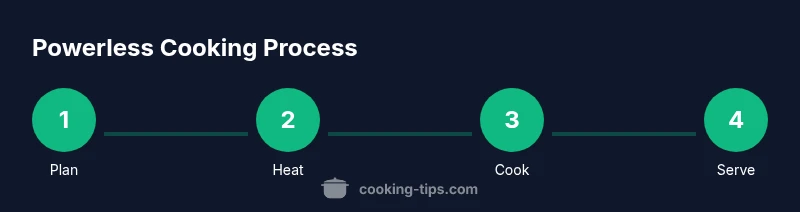
Learn how to cook without power by using safe heat sources and simple techniques. Gather a camping stove or charcoal grill, a cast-iron skillet or Dutch oven, water, and nonperishable ingredients. Then follow these steps: pick a method (camping stove, grill, or solar), preheat safely, control temperature, and finish with safe food handling and cooling.
How to cook without power: fundamentals
Power outages, extreme weather, or camping trips can disrupt meals. How you respond defines whether you stay fed and safe. According to Cooking Tips, the goal is to use safe heat sources, plan simple meals, and minimize risk rather than improvising on the fly. The Cooking Tips team found that a small, well-organized setup reduces stress when you have to cook with limited energy. Start by assessing your heat options, your space, and your pantry. Then map out a short list of go-to meals that rely on shelf-stable ingredients and minimal electricity-dependent steps.
In practice, successful no-power cooking hinges on three pillars: safety, efficiency, and food safety. First, establish a safe outdoor or well-ventilated cooking area and keep flammables away. Second, choose heat sources that match your environment—camp stoves for outdoors, a solar oven if sun is strong, or a grill for limited weather. Third, stick to simple recipes: one-pot meals, stews, or sheet-pan meals that cook evenly with consistent heat. With those basics, you can feed your family without power while reducing waste and preserving flavor.
Tools and safety prerequisites
Before you start, assemble a compact, reliable setup that can travel with you. A camping stove or a portable charcoal grill is ideal for outdoors, while a properly vented indoor countertop setup can work with a propane stove. Always prioritize ventilation and fire safety. Keep a metal surface to work on, a bucket of water or sand, and a fire extinguisher or a dedicated extinguisher for cooking fires. The goal is to minimize smoke, prevent flare-ups, and ensure you can quickly put out any incident. Remember, never leave heat sources unattended and keep children and pets away from the cooking zone. This practical mindset helps you stay safe while cooking without power.
Heat sources: comparing options
No-power cooking hinges on choosing heat sources you can trust in your environment. Outdoor environments benefit from a camping stove or a small grill, both relatively easy to control with adjustable flames. A solar oven is a great option on sunny days, though it requires longer cooking times and careful planning. For those with access to a BBQ or fireplace, a well-seasoned cast-iron skillet or Dutch oven can deliver impressive results. Whichever option you pick, practice handling hot equipment, managing ventilation, and maintaining a steady flame. The right choice depends on weather, space, and your family’s appetite.
Safe food handling and storage without electricity
Without a fridge, plan for shelf-stable foods and quick cooling methods. Use canned vegetables, beans, tuna, nut butters, cereals, dried fruit, and shelf-stable milk or boxes. Cook foods to safe temperatures, then cool quickly by spreading into shallow containers or placing in a cooler with ice if available. Avoid leaving perishables out in the open for more than two hours (one hour in hot temperatures). When possible, portion leftovers into small containers to help rapid cooling and safer storage. Always wash hands, utensils, and surfaces with clean water or hand sanitizers before and after handling food.
Step-by-step power-outage cooking plan
In a power outage, it's essential to have a clear plan. Start by choosing your heat source based on current conditions. Prepare cookware and ingredients, ensuring the heat surface is stable and protected. Use a thermometer to monitor food temperature when feasible and cook to safe internal temperatures. Maintain steady heat and avoid overcrowding your pan to ensure even cooking. Cool leftovers promptly and store in cooling containers if refrigeration is available. Finally, clean and sanitize surfaces and tools to prevent cross-contamination. This plan helps you stay organized and safe when power is unavailable.
No-cook meals and minimal-heat ideas
No electricity doesn’t mean no flavor. No-cook meals like peanut butter and tuna wraps, canned bean salads, or cold pasta salads with olive oil and lemon can be satisfying. For minimal heat, heat soups or stews on a small stove for 10-15 minutes, then finish off with ready-to-eat grains or rice that have been pre-cooked and cooled. Stock a few ready-to-eat grains, canned legumes, and shelf-stable vegetables for quick meals. These meals are reliable when you don’t have access to electricity and still provide nourishment.
Cooking techniques with a camp stove: temperature control
A camp stove allows fine-tuning of flame and heat. Start on a low flame and gradually increase to medium for simmering; reduce again for slow braises. Preheat cast iron or Dutch oven properly to prevent sticking, then add oil and ingredients. Use water to regulate heat if necessary by placing a pot on a double-boiler setup to avoid direct flame contact with food. Practice makes perfect: test heat with water first, then time your cooking to ensure doneness without power.
Pantry-friendly menu ideas and meal planning
Create a rotating menu from pantry staples to minimize last-minute trips to the store. Canned soup with pre-cried rice, beans and corn salsa with tortillas, oats with dried fruit for breakfast, and canned fish seasoned with spices are reliable baselines. Plan a two-day cycle where you prepare a hearty stew on day one and reheat portions for day two. The key is to choose straightforward recipes with few ingredients and simple cooking steps that don’t require constant attention.
Cleaning up and safety after cooking without power
After cooking, let surfaces cool before cleaning. Wipe down with a clean, damp cloth or soap and water where safe; if water is scarce, use sanitizing wipes. Store leftovers promptly in sealed containers in a cool, dry place, and label with date. Dispose of single-use plastics responsibly. Keeping your cooking area clean reduces the risk of pests and cross-contamination when days stretch without electricity.
Tools & Materials
- Camping stove or portable grill(Keep fuel canisters or charcoal dry; ensure stable footing.)
- Cast-iron skillet or Dutch oven(Pre-seasoned if possible; thick-walled for even heat.)
- Water container for cleaning and cooking(Keep a minimum of 2 liters per person per day.)
- Lighters or long matches(Strike safely away from your body and flammables.)
- Long-handled tongs and heatproof spoons(Maintain a safe distance from flame.)
- Metal or silicone food thermometer(Optional but recommended for meat and soups.)
- Coolers or insulated bags(Use for safe storage of leftovers if available.)
- Aluminum foil and parchment paper(Helpful for covering and reheating.)
- Non-perishable ingredients(Canned vegetables, beans, tuna, grains, and shelf-stable milk.)
Steps
Estimated time: Total time: 90-120 minutes
- 1
Choose your heat source
Select a heat source appropriate to your environment. Outdoors, a camping stove or charcoal grill is reliable. Indoors, use a vented propane setup in a designated area. The goal is safe, controllable heat that won’t overwhelm your space.
Tip: Test the flame on a small amount of water to gauge steady heat. - 2
Set up a safe cooking area
Clear a stable surface, away from flammables and walls. Keep kids and pets at a safe distance. Have a bucket of water or sand nearby in case of flare-ups.
Tip: Always have a fire extinguisher accessible and know how to use it. - 3
Preheat cookware safely
Preheat your cast-iron or Dutch oven gradually to avoid warping and sticking. Add a thin layer of oil, wipe excess, then add ingredients. Proper preheating improves browning and cooking times.
Tip: Avoid heating empty cookware; it can cause damage or fires. - 4
Cook with steady heat and temp control
Maintain a steady flame; avoid large temperature swings that can burn food. Use a thermometer when possible and adjust flame slowly. Do not overcrowd the pan to ensure even cooking.
Tip: Keep the lid on for faster heat retention during simmering. - 5
Finish and store leftovers safely
Cook to safe internal temperatures, then cool quickly in shallow containers. If refrigeration isn’t available, use a cooler with ice or consume within a day.
Tip: Label containers with date and contents to prevent waste. - 6
Clean up and sanitize
Wash utensils and surfaces with soap and hot water if available. If water is scarce, wipe with sanitizing wipes and dry thoroughly.
Tip: Sanitize cutting boards and knives between different foods to prevent cross-contamination.
Quick Answers
Is it safe to cook indoors during a power outage?
Cooking indoors without proper ventilation is risky. Use open outdoor spaces or a well-ventilated area and never leave heat sources unattended. If indoors, ensure you have a dedicated and ventilated setup and follow local safety guidelines.
It's generally unsafe to cook indoors without proper ventilation. Use outdoor spaces or a well-ventilated area and never leave heat sources unattended.
What heat sources are safest for indoor use?
Propane stoves designed for indoor use with adequate ventilation are the safest option when emergency power is needed. Outdoor-grade grills should remain outside. Always follow manufacturer safety instructions and keep flammables away.
Propane stoves designed for indoors with proper ventilation are safest; keep grills outside and always follow safety instructions.
How long can leftovers last without refrigeration?
Leftovers should be consumed within 1-2 days if kept in a cool, shaded area. If the outside temperature is high, reduce this window to within a few hours. When in doubt, discard to prevent foodborne illness.
Leftovers should be used within 1-2 days in cool conditions; in hot weather, eat within a few hours or discard.
What foods are best for cooking without power?
Canned vegetables, beans, tuna, ready-to-eat grains, nut butters, shelf-stable milk, and dried fruits are reliable staples. Keep spice blends handy to elevate flavor without added energy.
Canned goods, beans, tuna, grains, nut butters, and shelf-stable milk are reliable no-power staples.
How can I conserve water while cooking without power?
Plan meals that require minimal water for cooking and cleaning. Reuse cooking water for stock or rehydrating ingredients when safe, and use dishwashing methods that maximize efficiency.
Plan meals with minimal water use and reuse water where safe to do so.
Are there dangers using open flames indoors?
Yes. Open flames indoors increase fire risk and carbon monoxide exposure. Only use approved indoor-safe devices and ensure proper ventilation at all times.
Yes. Open flames indoors pose fire and CO risks; use only approved devices with good ventilation.
Watch Video
Top Takeaways
- Plan ahead with a no-power cooking kit and a short menu
- Choose heat sources appropriate to your space and weather
- Cook safely, monitor temperatures, and store leftovers promptly
- Prioritize safe food handling to prevent illness
- Practice these methods now to be prepared for outages