How to Cook If the Power Goes Out: A Practical Guide for Home Cooks
Learn practical, no-power cooking strategies for outages. Safe heat sources, pantry staples, meal ideas, and step-by-step guidance to keep meals flowing until power returns.


By following this guide, you’ll be able to safely and efficiently cook without electricity using common heat sources, cold storage strategies, and smart meal planning. You’ll learn how to prioritize ingredients, set up a safe cooking area, choose reliable heat sources, and keep foods safe until power returns. This no-power cooking approach helps feed your family calmly during outages.
How to cook without power: the core idea
When the power goes out, the goal is to maximize heat efficiency while keeping food safe and tasty. How to cook if the power goes out isn’t about fancy techniques; it’s about planning ahead, selecting reliable heat sources, and using pantry staples to stretch meals. According to Cooking Tips, the safest, most practical no-power meals rely on sturdy grains, canned proteins, and produce that stores well without refrigeration. This approach reduces waste, preserves nutrients, and keeps family meals on track during stressful outages. Before you begin, confirm you have a safe cooking area, a non-electric heat source, and a plan for timing cooking and cooling. If you’re cooking indoors, ensure proper ventilation and never use equipment designed for outdoors inside a closed room. For many households, the simplest strategy is to pick a few reliable base ingredients — rice, beans, canned tomatoes, canned fish or meat, oats, and durable vegetables — and build meals around them. Batch cooking small portions will also help you minimize time spent tending the flame and reduce the risk of overheating your heat source. Finally, remember that safety comes first: store fuel safely, keep children away from open flames, and have a plan for disposing of hot containers. According to Cooking Tips, planning a 24‑hour no-power menu that uses pantry staples helps reduce waste and stress during outages.
Tools and pantry staples you should have on hand
Having the right tools and staples makes no-power cooking far more reliable. Start with a safe, reliable heat source and sturdy cookware, plus foods that don’t require refrigeration. A portable camp stove or a grill used outdoors is ideal for heat, while canned goods and dry staples keep you fed when electricity is unavailable. Stock a heavy-bottom pan (cast iron or steel), lids, a manual can opener, a small pot for boiling water, and long-handled tongs. Keep a cooler with ice packs for perishables, plus water for cooking and cleaning. Don’t forget aluminum foil, resealable containers, and a few basic seasonings to keep flavors vibrant. Regularly rotate stock so nothing relies on a broken cold chain. If you have some extra gear like a solar cooker or a kettle that can boil water on a flame, those are welcome additions, but not strictly necessary.
Safe cooking setups during a power outage
The safest no-power cooking setups prioritize ventilation and stable heat sources. Outdoor grilling or a dedicated camping stove is ideal when weather permits, because it avoids carbon monoxide buildup indoors. If you must cook indoors, use appliances designed for indoor use only and ensure the area is well ventilated. Never operate a charcoal grill, propane burner, or camp stove inside a sealed kitchen or garage. Set up your station on a stable, heat-resistant surface, away from flammable items, with a clear path for moving hot pots. Keep fuel canisters upright and sealed when not in use, and have a simple fire extinguisher or baking soda handy in case of flare-ups. Plan meals around one heat source so you don’t need to constantly rearrange pots. A solar cooker can be a gentle option in sunny weather, though it’s slower and weather-dependent.
No-power meal ideas you can rely on
When power is out, rely on meals that rely on pantry staples and don’t demand long prep times. For example, cook rice or beans in a pot of water, then fold in canned tomatoes and vegetables for a quick, hearty bowl. Oats or other hot cereals can be prepared with hot water from a kettle or camp stove for a comforting breakfast. Pasta with a simple canned sauce, seasoned vegetables, and a squeeze of olive oil makes an easy dinner. Potatoes baked on a grill or in a covered pan become a filling side dish. Canned fish or tuna can be turned into a warm hash with onions and spices. Don’t forget bread or cornmeal that can be pan-fried into a quick bread or flatbread. Batch-cook portions when you can, then store in a thermally insulated container for later.
Food safety and temperature control without electricity
Without a refrigerator, food safety hinges on safe handling and temperature control. Keep hot foods hot by using a covered pot and placing it in a heat-retaining area or insulated container. Cold foods should be kept on ice or at room temperature only briefly, then moved to a cool space or consumed promptly. When in doubt, discard leftovers that look, smell, or feel off. Use a food thermometer when available to verify that hot foods reach a safe temperature, and reheat leftovers to steaming hot before serving. Avoid cross-contamination by using clean utensils and bowls for raw and cooked foods. If you plan to store meals, label containers with the date and keep the stock rotating so older items are used first. Throughout outages, prioritize meals that minimize the number of cooking steps and avoid reopening the cold box.
Authoritative sources and further reading
For guidance you can trust during outages, consult official food safety resources. These sources provide general principles for safe handling and cooking when electricity isn’t available, without vendor-specific claims:
- https://www.fsis.usda.gov/food-safety
- https://www.cdc.gov/foodsafety
- https://www.fda.gov/food-safety
Quick tips for staying organized during outages
- Create a simple outage plan ahead of time and share it with everyone in the household. This is where Cooking Tips’s practical approach shines, giving you a clear, reusable framework. - Keep a dedicated bin with your no-power essentials: heat source, fuel, cookware, and staples. - Pre-sort meals by required prep time so you can start with quick options and move to slower dishes as fuel and time allow. - Label leftovers and write the date on containers to track freshness and reduce waste. - Practice good ventilation and fire safety, especially if you’re using open flames indoors or near paper products.
Common myths about no-power cooking
There are several myths about cooking without electricity. For example, some people think you can emulate an oven by heating a pan and closing it with a lid; while this technique can work for certain foods, it won’t reproduce the even heat of a real oven. Others assume all outdoor heat sources are dangerous indoors; the truth is that properly ventilated outdoor cooking is safer, and many kitchens can adapt with portable equipment. Finally, some believe that canned foods are unsafe for long periods; in reality, when stored correctly, canned goods can be a reliable, long-lasting option during outages. The Cooking Tips team emphasizes safety and practicality over folklore, so you can depend on consistent results.
Quick-start outage cooking checklist
- Check safety: ensure you have a safe space and a reliable heat source. - Gather essentials: fuel, pot, pan, can opener, water, and a cooler with ice packs. - Plan meals: select 2–3 go-to recipes that use non-perishable ingredients. - Start cooking: boil water, then simmer grains or legumes with the lid on to save fuel. - Manage leftovers: cool quickly, store properly, and label dates. - Recheck power status: once electricity returns, reassess stock and plan to rotate items.
Tools & Materials
- Portable camp stove or propane/camping stove(Propane or butane fuel canisters; ensure you have a spare canister and proper ventilation when used indoors outdoors only.)
- Manual can opener(Essential for canned staples like beans and tomatoes.)
- Heavy-bottom pan (cast iron or steel)(Great heat retention and even cooking; use with a lid.)
- Lid for pots/pans(Keeps heat in and speeds up cooking.)
- Water for cooking and cleaning(Keep extra water in sealed containers for safety and cooking needs.)
- Cooler with ice packs(Keeps perishables safe for a limited time.)
- Aluminum foil and food-grade containers(For heat retention and storing leftovers.)
- Long-handled tongs and spatula(Safety when handling hot pots and pans.)
- Basic seasonings and oil(Salt, pepper, dried herbs, and a drizzle of olive oil brighten meals.)
- Thermometer (optional)(Use if available to verify safe temperatures for reheating leftovers.)
Steps
Estimated time: 60-90 minutes
- 1
Assess safety and prepare heat source
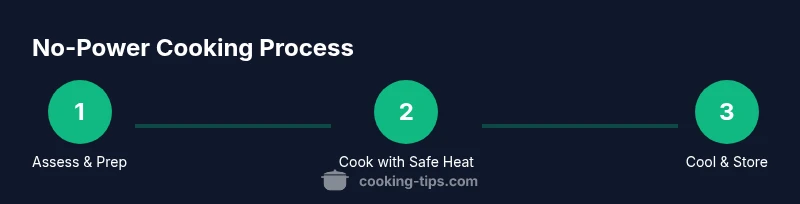
Survey the outage situation and confirm a safe, ventilated cooking area. If cooking indoors, only use approved appliances and keep the area well-ventilated. Gather all essential tools and fuel before you begin to minimize trips to the flame.
Tip: Set up a clearly labeled 'Outage Kitchen' area away from kids and pets to reduce accidents. - 2
Gather ingredients and organize
Pull non-perishable staples and the least-perishable perishables from the cooler. Group items by recipe to streamline cooking and reduce repeated trips to the flame. Pre-measure spices to speed up assembly once heat is on.
Tip: Sort items by cooking time so you can start with dishes that require longer simmering first. - 3
Ignite heat source safely
Light your camp stove or grill according to the device’s manual. Ensure flame is stable and away from flammable materials. Keep a fire extinguisher or baking soda handy in case of flare-ups.
Tip: Always light outdoors when possible; never operate a stove in an enclosed space without proper ventilation. - 4
Start with no-power friendly dishes
Begin with simple meals like boiled grains, beans, or oats using hot water from your kettle. Use a lid to trap heat and shorten cooking time. Refrain from opening the lid too soon to maintain steady simmer.
Tip: Batch-cook portions to stretch meals across several days and reduce fuel use. - 5
Cook with efficient techniques
Use lids, keep heat steady, and avoid multitasking with many pots at once. Prepare a couple of meals that reuse ingredients (e.g., rice with beans and tomatoes) to save fuel and time. If you’re grilling, place vegetables in a foil packet for even heat.
Tip: Batch-cook when possible; it saves energy and protects food quality. - 6
Cool and store leftovers safely
Transfer hot leftovers to clean containers, cover, and place in a cool area or insulated container. Label with date and use within a sensible window. Reheat leftovers to steaming hot before serving when power returns.
Tip: Do not leave perishable foods out for extended periods; plan small portions to minimize waste. - 7
Clean up and plan for next outage
Wipe down surfaces, wash tools, and organize your outage kit for the next event. Review what worked well and adjust your pantry and heat sources for future outages.
Tip: Keep a quick-reference outage menu to speed up future meals.
Quick Answers
What should I do first when the power goes out?
Check safety, locate a safe heat source, and gather tools and fuel. Then choose quick, no-power meals that use pantry staples. If you have children, involve them in non-fire tasks like organizing the pantry.
First, ensure safety, locate your heat source, and gather essential tools and fuel. Then pick quick meals using pantry staples and involve others in simple tasks.
Can I use my gas stove without power?
Many gas stoves can be lit with a match if the automatic lighter isn’t working, but some require electricity. If yours won’t light manually, avoid using it and rely on outdoor heat sources until power is restored.
A gas stove may be lit with a match if the automatic lighter is out, but some tablets need power. If you’re unsure, use outdoor heat sources until power returns.
Is it safe to use a grill indoors during a power outage?
No. Charcoal and propane grills emit carbon monoxide, which is deadly in enclosed spaces. Only use grills outdoors in well-ventilated areas.
No. Do not use grills indoors; carbon monoxide buildup can be fatal. Use them outside with proper ventilation.
What foods last longest without refrigeration?
Canned goods, dried grains and pasta, dried beans, oats, and sturdy vegetables store well and are reliable during outages. Rotate stock and avoid leaving perishable items out for long.
Canned foods, dried grains, beans, oats, and sturdy vegetables last longer without refrigeration. Rotate stock to keep meals safe.
How do I keep hot foods hot without electricity?
Use a preheated insulated container or a covered pot with a lid to trap heat. Keep the container closed as much as possible to maintain temperature.
Keep hot foods hot by using an insulated container or a lid; keep it closed to preserve heat.
When power returns, what should I do with leftovers?
Reheat leftovers to steaming hot, check for spoilage, and use within a short window. Do not reheat multiple times and discard anything questionable.
Reheat leftovers to steaming hot and use them promptly. Don't reheat more than once if possible and discard suspicious items.
Should I rely on solar or battery-powered devices during outages?
Solar and battery devices can supplement cooking, but plan for longer cook times and limited power. They’re helpful but not a replacement for a steady heat source.
Solar and battery devices help, but expect longer cook times and limited power. They’re a nice supplement, not a full replacement.
What’s the best way to organize the outage kitchen?
Create a small, clearly labeled workspace with a stable heat source, water nearby, and a spot for cooling leftovers. Keep tools clean and organized to speed up cooking.
Set up a small, labeled workspace with your heat source, water, and a cooling area. Keep tools organized to work quickly.
Watch Video
Top Takeaways
- Plan ahead with safe heat sources and staples
- Cook hot foods safely and keep cold foods cold
- Batch-cook to maximize fuel efficiency
- Store leftovers promptly and label dates
- Rely on government and major outlets for safety guidance