Cook Without Power: A Practical Off-Grid Cooking Guide
Learn reliable, no-power cooking methods using fire, solar, and heat-retaining pans. This guide from Cooking Tips covers gear, safety, and a step-by-step approach for off-grid meals during outages, camping, or any time electricity isn’t available.


Master the art of cooking without power by using safe heat sources, cast-iron cookware, and simple no-fire meals. With proper planning, gear, and heat-control techniques, you can feed your family confidently during outages, camping trips, or any time electricity isn't available. This quick answer signals the approach—full details follow in the article.
cook without power: Why it matters
According to Cooking Tips, the ability to cook without power isn't only for emergencies—it broadens your cooking repertoire and reduces energy dependence. Whether you’re facing a power outage, camping, or a busy day when the kitchen is temporarily offline, no-power techniques let you feed your family with confidence. This approach relies on heat sources that don’t require electricity, plus durable cookware that holds heat well. In practice, you’ll combine careful menu planning, safe ignition methods, and heat-retaining vessels to create flavorful meals with simple pantry staples. The Cooking Tips Team notes that success comes from thoughtful prep, clean fuel sources, and a calm, safety-first mindset. By embracing these principles, you’ll build a dependable routine that works at home, on a campsite, or in a blackout, without resorting to cold meals or takeout. Expect to use methods like solar ovens, charcoal fires, and heavy pans to maximize flavor with minimal fuel. Cooking Tips analysis shows that many households successfully improvise around available heat sources, making off-grid meals approachable for beginners and veterans alike.
cook without power: Core techniques
When you don’t have reliable electricity, you still have options. Cooking Tips analysis, 2026, shows that home cooks commonly combine sun-powered, fire-based, and gas-fueled methods to create complete meals with modest fuel. Solar ovens trap sunlight to bake or steam, offering a clean, quiet method with low fuel use. Ember cooking relies on charcoal or wood, arranged to maintain steady heat under a heavy pot. A portable gas burner or camp stove gives precise control for simmering sauces or boiling water when fire restrictions apply. Finally, heat-retaining vessels like a cast-iron skillet or Dutch oven turn a few hot coals into long-lasting warmth, letting you braise, bake, or slow-cook. The key is managing heat, using lids to conserve energy, and planning for residual heat after removing the heat source. With practice, you’ll reach consistent results that satisfy everyday meals and weekend feasts alike, even when power is scarce.
cook without power: Essential equipment
To cook without power comfortably, assemble a compact set of robust tools. A heavy cast-iron skillet and a Dutch oven are your core workhorses for even browning and long simmering. A portable gas stove or camp stove expands your options where wood fires aren’t permitted. For outdoor use, stock charcoal or dry wood and a fire pit with a safe surround. Heat-safe gloves and long tongs protect you when handling hot cookware. A metal lid or screen helps trap heat and regulate temperature. Optional accessories include a heat-proof tray for stable multi-pot setups and a thermometer to judge doneness without opening lids. With these essentials, you’ll be prepared for most no-power scenarios, indoors or outside.
cook without power: Quick-start plan
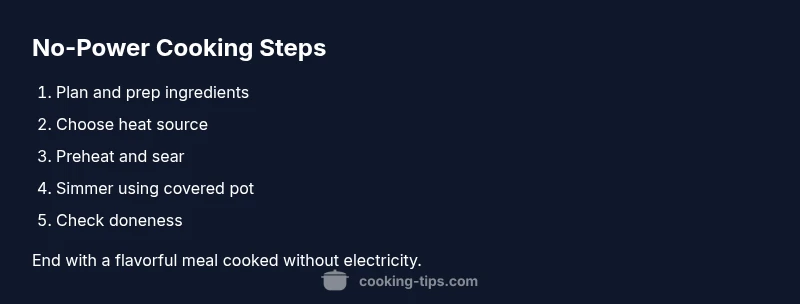
Plan meals around your heat sources and fuel availability, then gather gear and ingredients. Set up a safe cooking area, ignite your heat source, and preheat your pan for even browning. Use a lid to trap heat and maintain a steady simmer, checking doneness with sight or a thermometer if available. Finish by resting and serving, then clean and store cookware promptly to prevent rust. This plan keeps things simple, reproducible, and safe in home kitchens, campsites, or blackout situations.
cook without power: Safety and best practices
Ventilation is essential when cooking with flames indoors or near enclosed spaces. Keep a fire extinguisher and water source nearby, and never leave heat sources unattended. Maintain clear areas free of flammables and use heat-resistant gloves to prevent burns. When outdoors, respect local burn bans and keep pets and children away from the cooking zone. Properly extinguish fires after cooking and store fuels safely.
cook without power: Examples of no-power meals
No-power meals shine when you keep ingredients simple. Try a one-pot bean and rice dish using a Dutch oven; a skillet-cooked root vegetable medley; a pan-seared chicken thigh with quick vegetable braise; and a campfire-baked cornbread in a cast-iron pot. Each uses steady heat, a covered pot, and minimal active time. With practice, you’ll adapt recipes using pantry staples and whatever fuel is available. Remember, the goal is flavor, safety, and reliability, not perfection on the first try.
Tools & Materials
- Cast-iron skillet(Pre-seasoned preferred; heats evenly and retains heat well)
- Dutch oven with lid(Excellent for braises and baking; use coals on lid for even heat)
- Camp stove or propane burner(Gas heat is reliable and adjustable; ideal for controlled simmer)
- Charcoal or dry wood(Outdoor heat source; ensure safe fire pit setup)
- Heat-safe gloves(Protect hands when handling hot cookware)
- Long-tipped tongs(Easily move pots and coal beds without burns)
- Thermometer (instant-read optional)(Helpful to judge doneness without lifting lids)
- Ventilated space or outdoor setup(Maximize safety when cooking with flames)
Steps
Estimated time: 1 hour 15 minutes
- 1
Plan and assemble gear
Before you start, survey your space, gather heat sources, cookware, and ingredients. Align your menu with available fuels and cookware to minimize trips. This reduces wasted fuel and keeps the process calm.
Tip: Lay out everything within arm's reach before ignition. - 2
Set up heat source safely
Choose your primary heat source (camp stove or fire). Establish a safe cooking area, clear flammables, and have water on hand for emergencies. Verify wind direction to avoid smoke in your eyes.
Tip: Keep a bucket of water or sand nearby to quickly manage flare-ups. - 3
Preheat and sear cookware
Preheat your cast-iron skillet or Dutch oven to ensure even browning and reduce sticking. This step speeds up browning and builds flavor from the start.
Tip: Test heat with a few drops of water; they should dance and evaporate quickly. - 4
Cook with lids to trap heat
Use the lid to trap heat for simmering and to reduce fuel consumption. Monitor airflow to maintain a steady simmer; avoid lifting the lid too often.
Tip: Keep lids on during most simmering steps to maximize efficiency. - 5
Check doneness safely
Use a thermometer or visual cues to determine doneness. Consider residual heat when turning off the heat source and let dishes rest.
Tip: Carry a small instant-read thermometer for precise results. - 6
Rest and serve
Allow meats to rest so juices redistribute, ensuring tenderness. Slice after a short rest for better texture and flavor.
Tip: Tent with foil to retain heat without steaming the meat. - 7
Cleanup and storage
Cool leftovers safely, store in clean containers, and clean cookware promptly to prevent rust. Dry thoroughly before returning items to storage.
Tip: Wipe away seasoning residue while warm to avoid stubborn crusts.
Quick Answers
Is it safe to cook without power indoors?
Yes, with proper ventilation and non-electric heat sources. Use a vented area and keep a fire extinguisher nearby.
Yes, you can cook indoors safely if you vent the area and use non-electric heat sources with caution.
What heat sources are suitable for no-power cooking?
Gas burners, charcoal grills, wood fires, solar ovens, and camp stoves are common no-power options. Always follow safety guidelines.
Gas stoves or charcoal grills are common no-power options when electricity isn’t available.
What meals are easiest to start with?
One-pot stews, skillet-roasted vegetables, grilled sandwiches, and simple braises work well. Start with recipes designed for high heat efficiency.
Try one-pot stews or skillet meals that cook fast and use minimal fuel.
Can I bake without power?
Yes, using a Dutch oven or solar oven can bake bread or desserts outside or during outages.
A Dutch oven can bake bread or casseroles without electricity.
How do I manage safety around open flames?
Clear the area of flammable materials, keep water or sand handy, and never leave flames unattended.
Keep your cooking area clear and have water nearby for emergencies.
Which cookware is best for no-power cooking?
Heavy, heat-retaining vessels like cast-iron skillets and Dutch ovens perform best over non-electric heat sources.
Cast iron and Dutch ovens are ideal for no-power cooking.
Watch Video
Top Takeaways
- Plan heat sources and meals ahead.
- Use lids to conserve energy and control temperature.
- Choose cast-iron for steady, even heat.
- Prioritize safety and ventilation when indoor-outdoor cooking.
- Practice with simple meals to build confidence.