How to Cook Prime Rib in an Oven
Learn a reliable, juiciness-focused method for cooking prime rib in an oven. From selecting the roast to resting and carving, this guide covers temps, times, and practical tips for perfect slices.


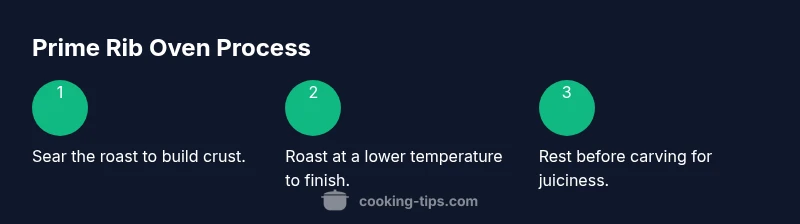
By following this guide, you will master how to cook prime rib in an oven to a juicy, flavorful finish. You’ll need a prime rib roast, a reliable meat thermometer, a roasting pan with a rack, and basic seasonings. Start with a high-heat sear to build crust, then finish at a lower temperature, checking doneness with a thermometer.
Understanding Prime Rib: What It Is and Why It’s Special
Prime rib is a tender rib roast prized for its marbling and rich flavor. When you learn how to cook prime rib in an oven, the goal isn’t just a rosy exterior and a pink center; it’s balance—crisp, well-seasoned crust with a juicy, evenly cooked interior. According to Cooking Tips, the key to consistent results is temperature control and mindful resting. The cut’s bone structure or lack thereof can influence heat transfer, so understand your roast before you begin. This section lays the groundwork for why prime rib deserves careful handling and patient cooking, especially when you’re aiming for medium-rare or medium doneness. You’ll also gain context for why using a thermometer matters more than merely estimating time.
Selecting the Right Roast and Sizing
Size and quality matter for prime rib roasted in the oven. A 4–6 pound roast serves about 6–8 people, while larger gatherings may prefer a 7–9 pound crown roast. Bone-in roasts often deliver deeper flavor and bone marrow juices, while boneless roasts slice more neatly at the table. Look for even marbling, a bright red color, and minimal surface moisture. If you’re unsure between grades, lean toward a moderately marbled choice, which yields robust flavor without excessive fat. Cooking Tips’ analysis highlights that even with bone-in roasts, adjusting cook times to the roast’s exact weight is essential for predictable results, and a thermometer helps verify doneness rather than relying on time alone.
Prepping: Rest, Season, and Bring to Room Temperature
Proper prep begins hours before the oven heat is turned on. Remove the roast from the fridge at least 2 hours before cooking and pat it dry with paper towels to promote crust formation. Generously season with kosher salt and black pepper, adding optional garlic or fresh herbs if desired. Resting at room temperature allows the meat to cook more evenly, reducing the risk of a cold center. A light drizzle of olive oil or a tiny amount of butter on the exterior can help achieve a crustier surface. Remember, consistent seasoning across the entire surface yields a uniform crust.
Searing vs. Roasting: Two Paths to Flavor
There are two common approaches: searing the roast first to develop a crust, or roasting low and slow from the start (reverse sear). Searing in a hot cast-iron pan for 2–4 minutes per side before the oven adds Maillard flavor and a visually appealing crust. The reverse-sear method minimizes surface scorching and can offer very even doneness, especially for thicker roasts. Either method benefits from a hot pan or oven moment to start the crust, followed by controlled roasting with a thermometer. The Cooking Tips team recommends choosing a method based on your roast size and your kitchen setup.
Roasting Protocol: Temperature, Time, and Monitoring
A reliable roasting protocol balances a strong initial flavor with a gentle finish. Start with a high oven temperature (around 450–475°F / 232–246°C) for 15–20 minutes to form a crust, then reduce to 325–350°F (163–177°C) for the remainder. The total time depends on weight and whether you’re bone-in or boneless, but rely on temperature rather than clock-watching alone. Insert a calibrated meat thermometer into the center of the thickest portion without touching bone. Plan for occasional thermometer checks and adjust the heat to maintain a steady roast.
Target Internal Temperature: Doneness Guide
Doneness is best guided by a thermometer rather than guesswork. For prime rib, a final internal temperature of roughly 120–125°F (49–52°C) yields rare, 130–135°F (54–57°C) yields medium-rare, and 140–145°F (60–63°C) yields medium after resting. Remember that the roast will rise 5–10°F (3–6°C) during resting. Pull the roast from the oven when it’s 5–10°F (3–6°C) below the target, then tent loosely with foil to rest. This approach ensures a juicy center with a well-formed crust.
Resting and Carving: Juiciness and Slices
Resting is just as important as cooking. Tent the roast lightly with foil and let it rest 15–20 minutes before carving. Resting allows juices to redistribute, yielding evenly juicy slices. Carve across the grain in thick, even slices to showcase tenderness. If you’re serving bone-in, slice around the bone to maximize portions. Use a sharp slicing knife and a steady hand for clean cuts that retain moisture.
Common Mistakes and How to Fix Them
Avoid common pitfalls: cooking too long leads to dry edges and a gray center, while under-seasoning dulls the exterior. If the crust fails to form, ensure the roast is completely dry and the oven is sufficiently hot for the initial sear. If you notice flare-ups or uneven doneness, rotate the roast mid-cook and avoid peeking too often, which can drop oven temperature. A reliable thermometer helps you track progress and prevent overcooking, a frequent issue with larger roasts.
Menu Pairings and Serving Ideas
Prime rib pairs beautifully with classic sides like roasted potatoes, creamed spinach, garlic butter escargot (optional), and a vibrant horseradish sauce. A light jus or pan drippings can elevate the sauce without masking the beef’s natural flavors. For a festive touch, offer two sauces—classic horseradish and a richer red wine reduction. Consider a simple roasted vegetable medley to balance richness with color and texture.
Authority Sources
For further guidance on safe handling and cooking temperatures, consult these trusted sources:
- https://www.fsis.usda.gov/food-safety/safe-food-handling-and-cooking/meat-and-poultry-ways-cook-meat
- https://extension.illinois.edu/
- https://extension.oregonstate.edu/
Tools & Materials
- Prime rib roast (bone-in or boneless)(4–6 lb for 6–8 servings; bone-in adds flavor via marrow and marrow juices.)
- Roasting pan with rack(Heavy-duty metal or aluminized steel with a rack to lift meat from pan juices.)
- Meat thermometer (instant-read or leave-in)(Probe should reach the center of the thickest portion without touching bone.)
- Chef’s knife(Sharp blade for trimming and carving.)
- Kosher salt(Generous seasoning for crust and interior flavor.)
- Freshly ground black pepper(Coarse grind for exterior crust.)
- Olive oil or softened butter(A thin coating helps crust formation.)
- Aluminum foil(Tent roast during resting to retain moisture.)
- Timetables and timer(Keep track of searing and roasting phases.)
Steps
Estimated time: 2 hours 30 minutes to 3 hours
- 1
Prepare the roast and tools
Remove the roast from the fridge and set up your station. Pat dry thoroughly, then arrange your rack in the roasting pan. Have salt, pepper, oil, thermometer, and a timer ready so you can move smoothly through the next steps.
Tip: Dry surface is essential for a good crust; don’t rush the pat-down. - 2
Season generously and rest
Season the meat all over with kosher salt and pepper, and optional herbs. Let it sit at room temperature for about 60–90 minutes to promote even cooking, which reduces hot spots inside the roast.
Tip: A room-temperature roast cooks more evenly than a cold one. - 3
Seared crust (optional)
If using a sear, preheat a heavy pan on high heat and sear the roast on all sides for 2–4 minutes per side to build a flavorful crust.
Tip: A good crust locks in juices and adds color. - 4
Roast at high then reduce heat
Place the roast in a preheated 450–475°F oven for 15–20 minutes, then lower the heat to 325–350°F for the remainder. Monitor with a thermometer throughout.
Tip: Temperature control is more reliable than time alone for doneness. - 5
Check internal temperature
Insert the thermometer into the center, avoiding bone. Target a final temp 5–10°F below your desired doneness, because the roast will rise during resting.
Tip: Use the thermometer as your guide, not clock time. - 6
Rest the roast
Remove from the oven and tent loosely with foil for 15–20 minutes to let juices redistribute before carving.
Tip: Resting prevents a dry center and helps slice cleanly. - 7
Carve and serve
Carve thin, even slices across the grain. Arrange on a warm platter and drizzle with pan juices or a light jus.
Tip: Serve promptly to maintain moisture and warmth. - 8
Store and reheat leftovers
Store leftovers in airtight containers for up to 3–4 days. Reheat gently in a low oven, not in a microwave, to preserve texture.
Tip: Low, slow reheating keeps crust and juiciness intact.
Quick Answers
What is the best temperature to cook prime rib in the oven?
A common method uses a high-temperature start (450–475°F) for crust, then a lower finish at 325–350°F. Always verify doneness with a meat thermometer rather than relying on time.
Start hot to form a crust, then finish lower and check with a thermometer to ensure the center is cooked to your preference.
Bone-in vs boneless—which should I choose?
Bone-in roasts add flavor and juiciness, while boneless are easier to carve. Both can turn out excellent with proper timing and a thermometer.
Bone-in offers extra flavor, but boneless roasts are simpler to slice; either works with careful cooking.
How long should I rest prime rib after cooking?
Rest the roast for 15–20 minutes to allow juices to redistribute, which yields moister slices. Cover loosely with foil during this period.
Rest for about 15 to 20 minutes before carving to keep the meat juicy.
Can I cook prime rib from frozen?
It’s not recommended to cook from frozen. Thaw the roast fully for even cooking and to avoid undercooked centers.
Thaw completely before cooking to ensure even doneness.
What sides pair well with prime rib?
Classic options include roasted potatoes, creamed spinach, and a bright horseradish sauce. A light jus from pan drippings enhances the meat’s flavor.
Pair with potatoes and greens; add a horseradish sauce for a traditional balance.
Is a reverse-sear method better for thick roasts?
Reverse-sear minimizes surface scorching and can yield very even doneness in thick roasts, but both methods can be excellent with proper timing.
Reverse-sear works well for thick roasts, but you’ll still get great results with the traditional method.
Watch Video
Top Takeaways
- REST the roast 15–20 minutes before carving.
- USE a thermometer to avoid guesswork.
- SEAR (or reverse-sear) to develop crust and flavor.
- ROAST at two temperatures for best doneness control.